


 English
  中文简体
中文简体  русский
  Español
  عربى
عربى  Français
  Português
  Deutsch
  Türk
Türk
JINYE
JINYE
JINYE
JINYE
JINYE
JINYE
JINYE
JINYE
JINYE
JINYE
JINYE
JINYE
JINYE
JINYE
JINYE
JINYE

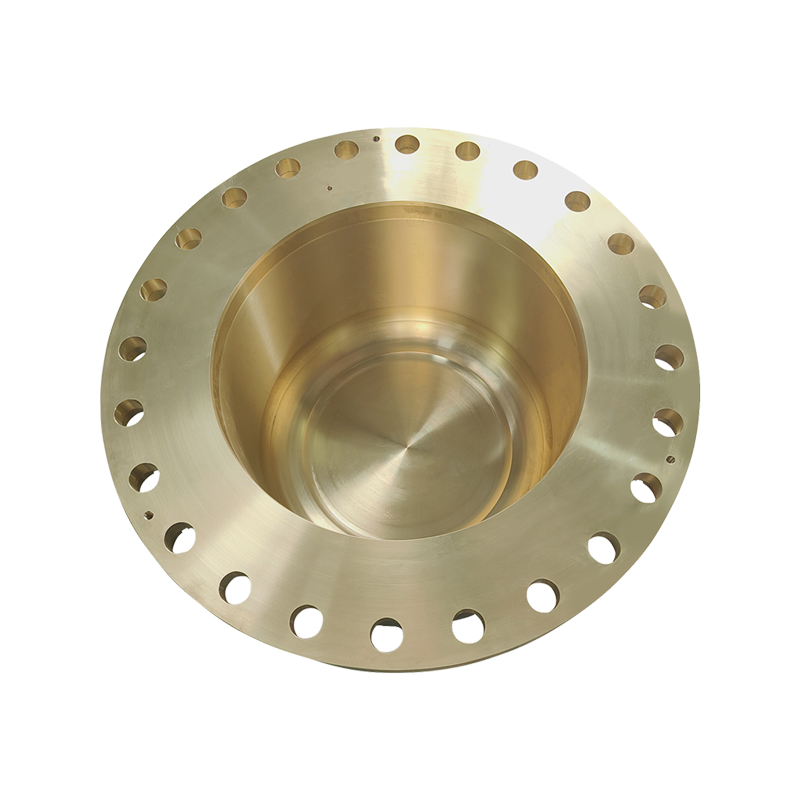
Controllable Pitch Propeller
Marine Controllable Pitch Propeller Oil Cylinder

Phone Number
+86-511-83386688-
To provide customers with quality products and services Obtain customer satisfaction.
-
Centering on customer needs, being honest and trustworthy, quick response, create value for customers and achieve win-win cooperation.
The propeller oil cylinder of a propeller usually refers to the cylinder part of the hydraulic system related to the propeller drive, which is mainly used to provide power to drive the propeller to rotate.
Core features:
Efficient power transmission: Optimized sealing structure and low-friction design ensure that hydraulic energy is efficiently converted into propulsion with minimal energy loss. Wide working pressure range, suitable for a variety of hydraulic system requirements.
Excellent durability: The cylinder body is made of high-quality materials, corrosion-resistant and wear-resistant.
Precise control: Achieve millimeter-level fine-tuning of propeller pitch or speed.
Environmental adaptability: Seawater-proof and salt spray-proof, suitable for ships, underwater equipment and extreme climatic conditions.
Modular design, easy maintenance, support for quick replacement of sealing components or piston rods.
Application scenarios:
Ship propulsion system: Adjust variable pitch propellers to optimize fuel efficiency.
Aviation propellers: Auxiliary power units or drone propeller drives.
Company
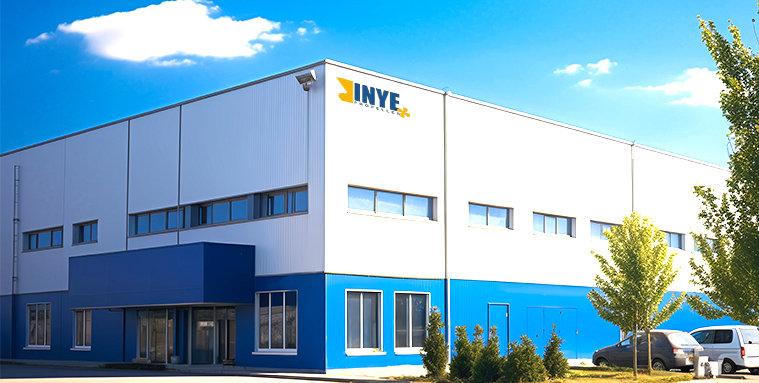
Zhenjiang Jinye Propeller Co.,Ltd.
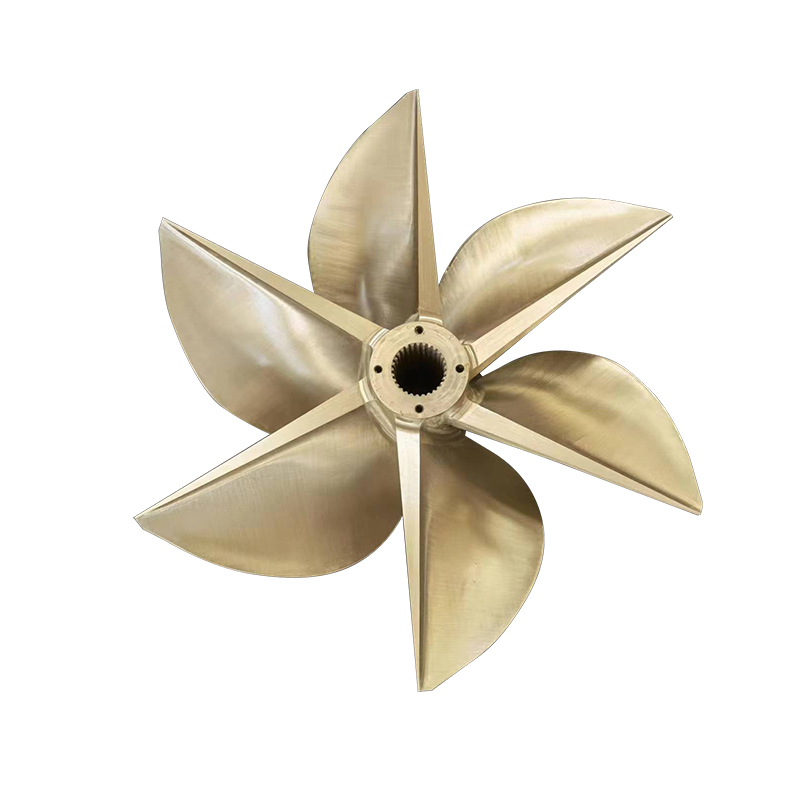
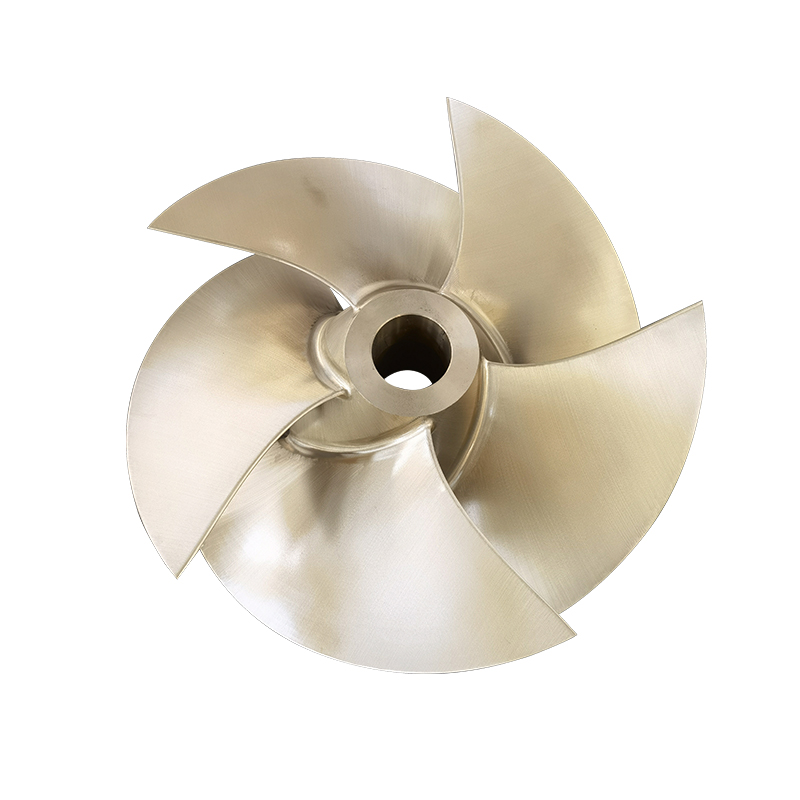
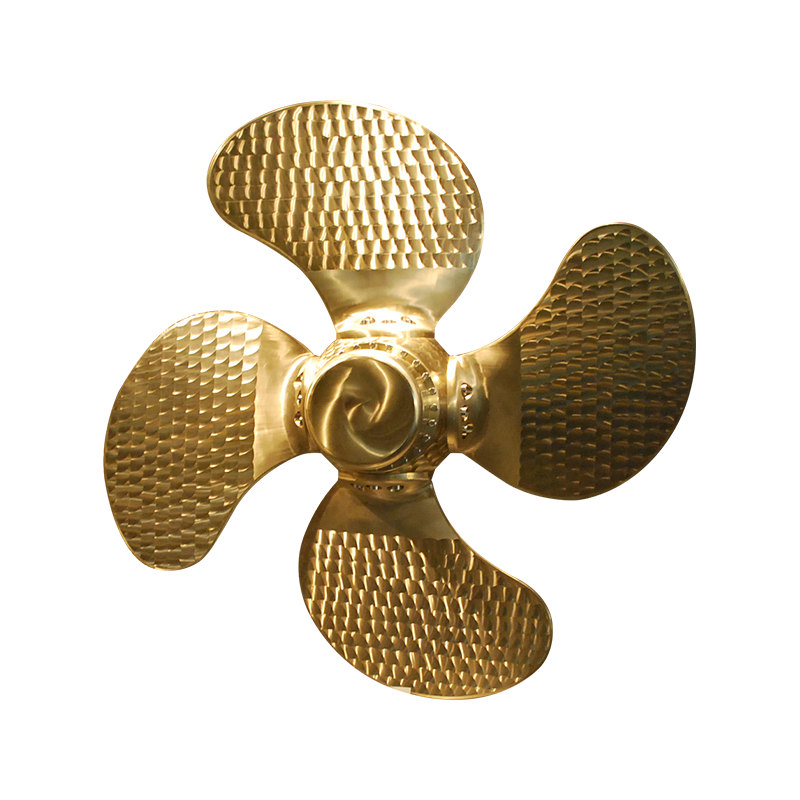
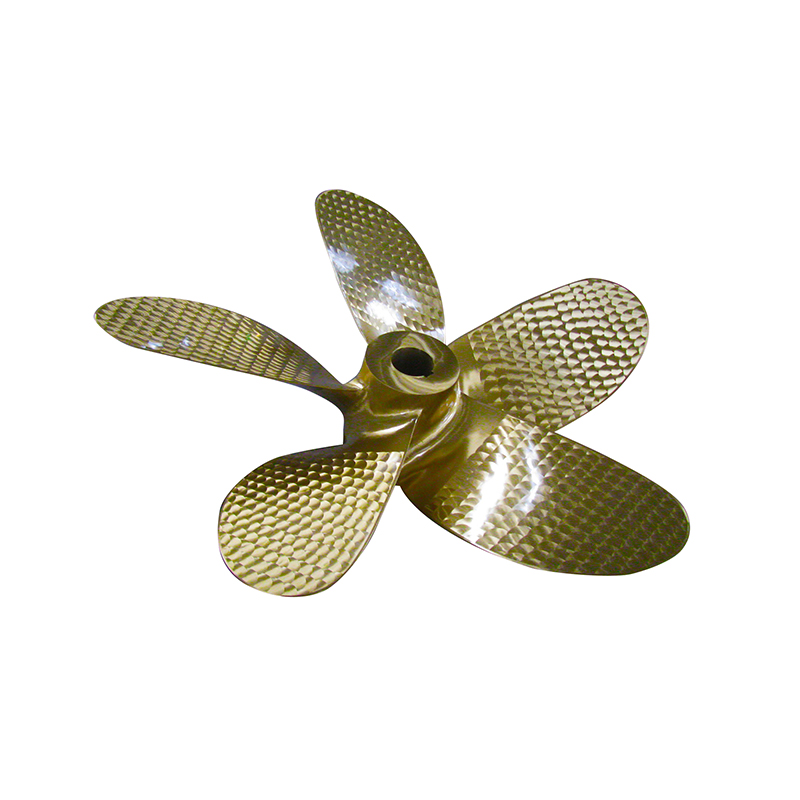
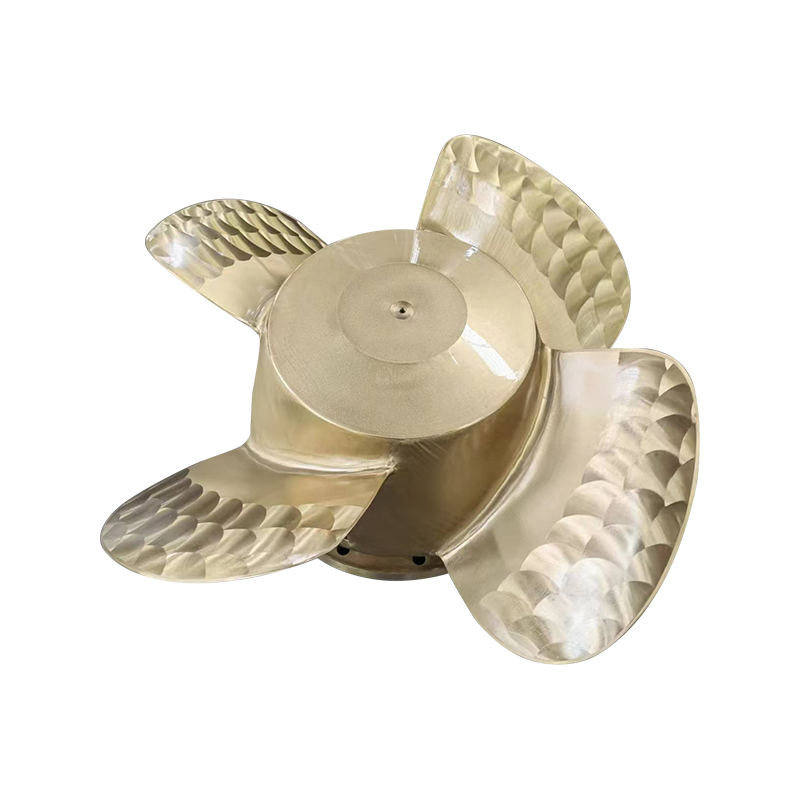
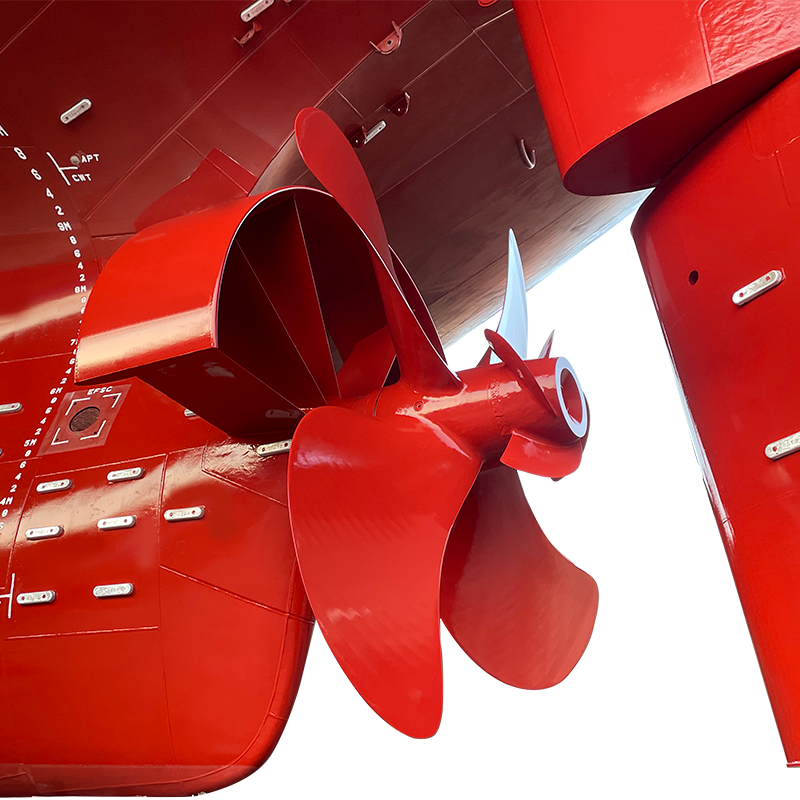
Established in 2005, Zhenjiang Jinye Propeller Co.,Ltd. is a professional China Marine Controllable Pitch Propeller Oil Cylinder suppliers and Marine Controllable Pitch Propeller Oil Cylinder company. Situated in Zhenjiang Jin Kou Science and Technology Industrial Park, the company spans over an area of more than 20,000 square meters. Our expertise lies in the production, manufacturing, and sales of marine copper alloy propellers and related accessories. Our product portfolio includes fixed-pitch propellers, controllable pitch propellers, propeller hubs, oil cylinders, cap fins, and other propeller attachments.
Message Feedback
Certificate Of Honor

Environmental Management System Certification Certificate

Occupational Health and Safety Management System Certification

Quality Management System Certification
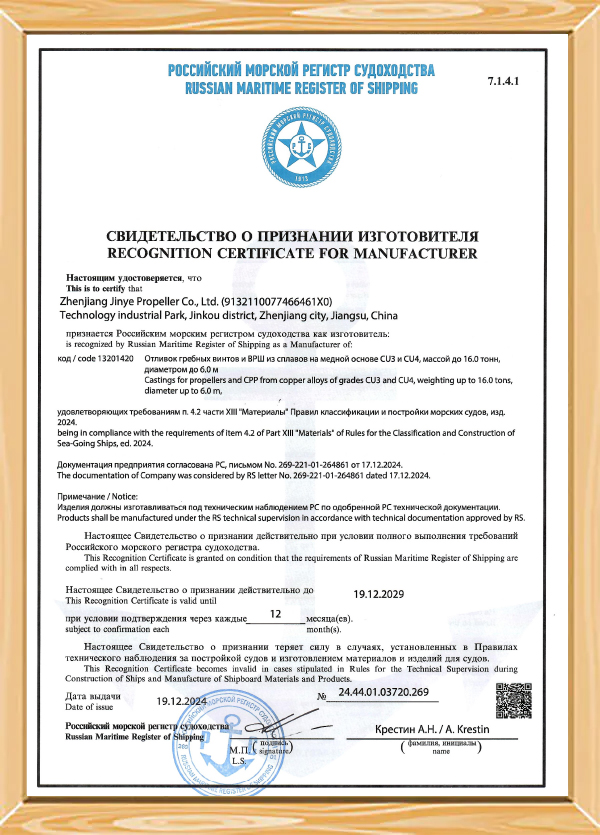
Russian Classification Society (RS)
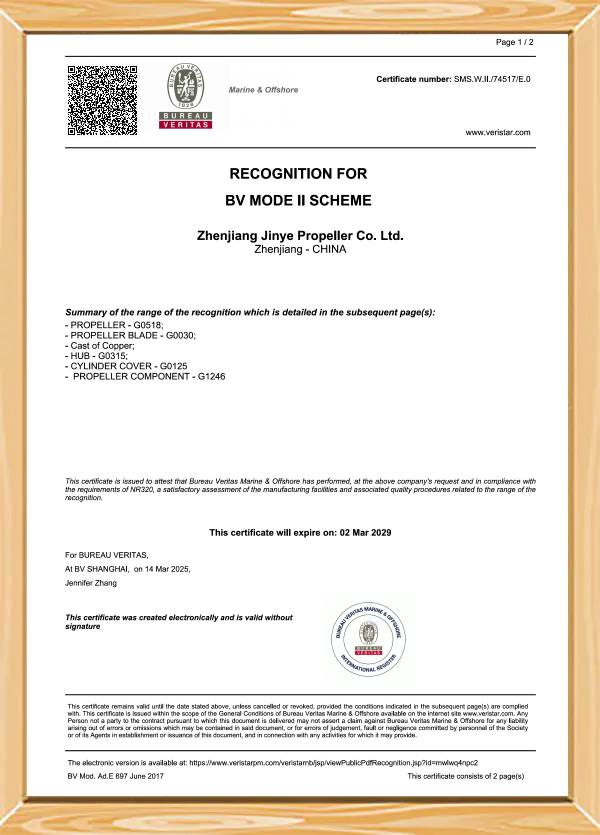
French Classification Society (BV)
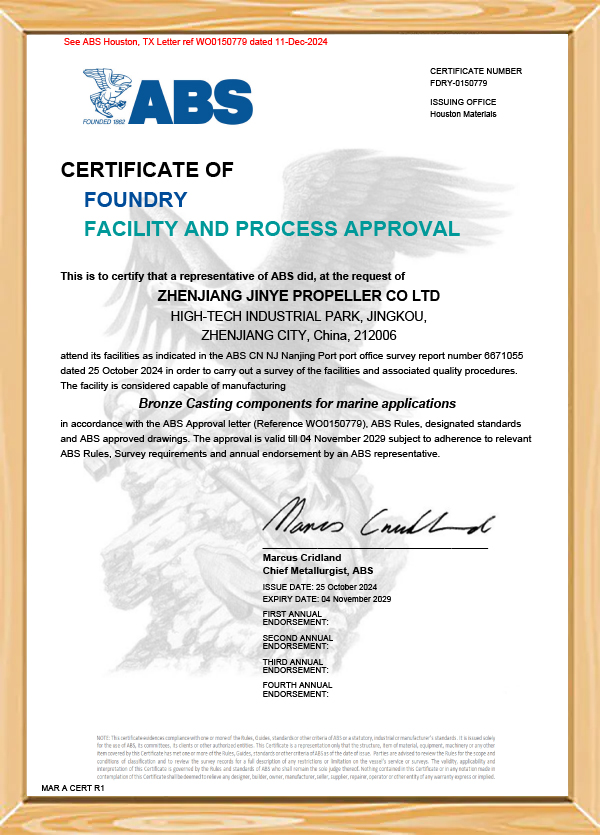
American Bureau of Shipping (ABS)

Italian Classification Society (RINA)
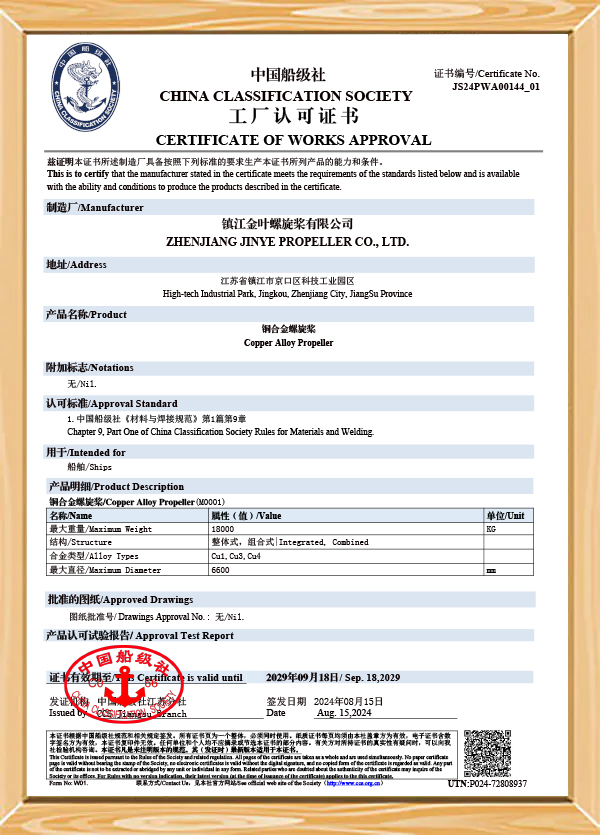
China Classification Society (CCS)
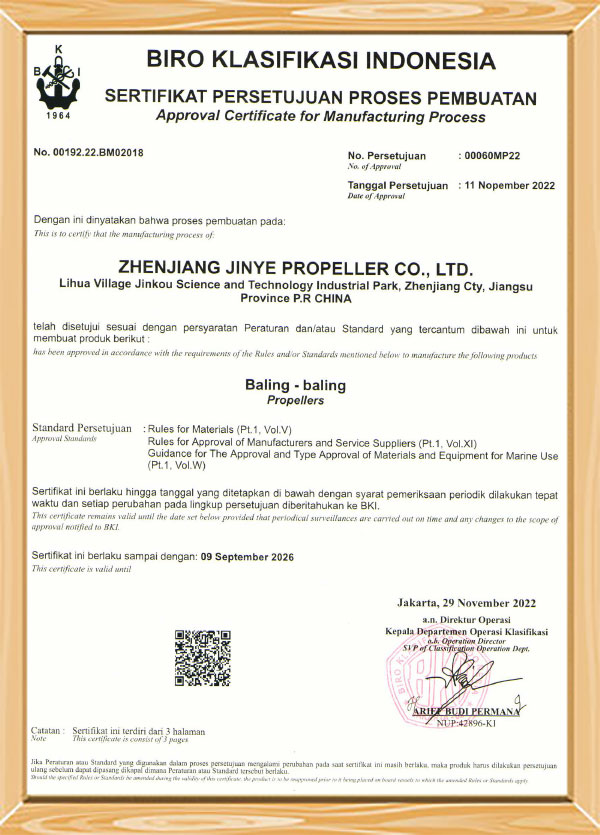
Indonesia (BKI)
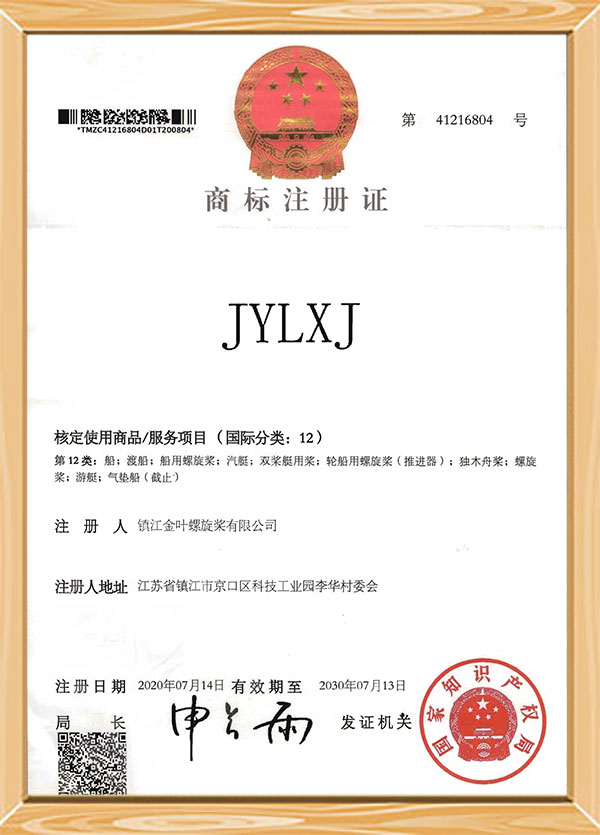
Trademark Registration Certificate
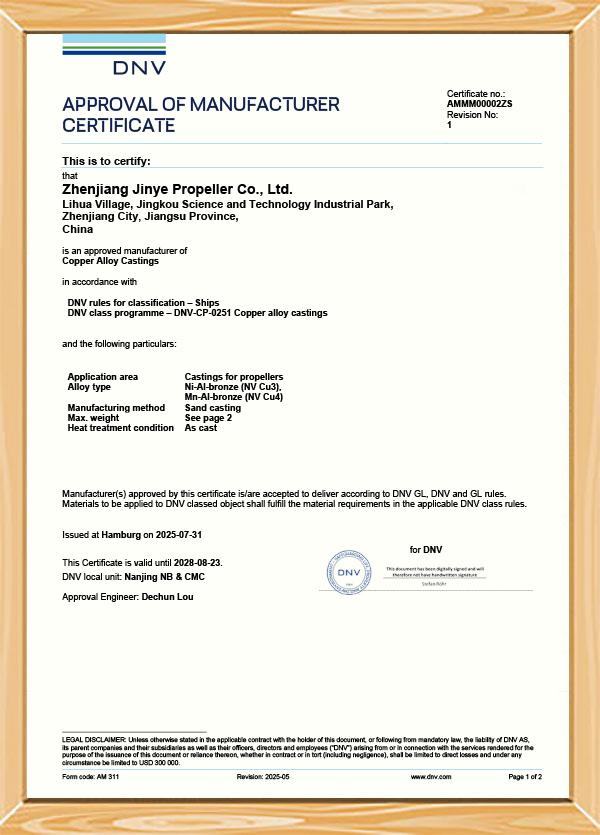
DNV-Certificate
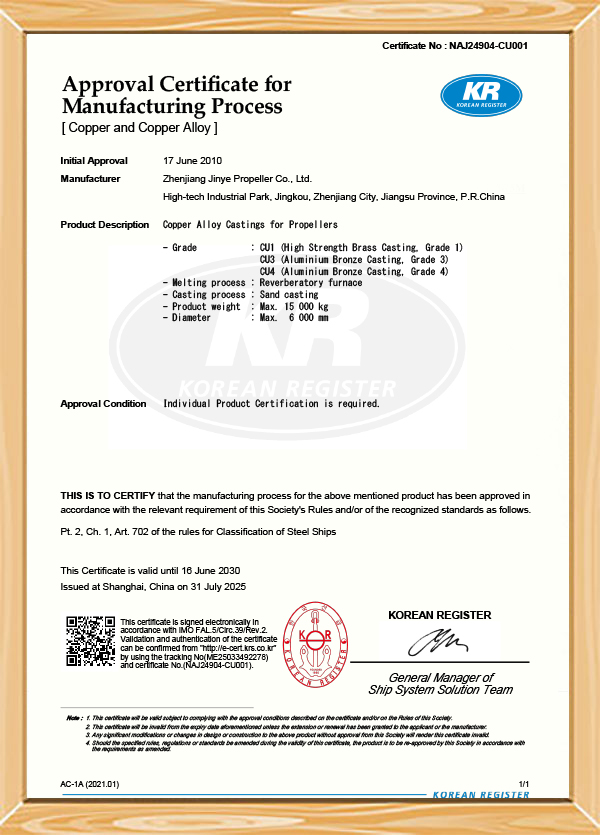
KR-Certificate
News
-
Ships use a Controllable Pitch Propeller primarily because it allows the blade pitch angle to be adjusted while the propeller shaft continues rotating at a constant speed -- enabling the vessel to change thrust magnitude and direction without changing engine RPM or requiring a reversing gearbox. T...
Read More -
An FPP Fixed Pitch Propeller is one of the most widely deployed propulsion devices in the global maritime industry. Its blades are permanently cast or forged at a fixed angle to the hub -- the pitch cannot be adjusted in service. This simplicity makes it the dominant choice for vessels operating at...
Read More -
A Fixed Pitch Propeller generates thrust by rotating blades set at a permanently fixed angle relative to the plane of rotation. As the blades spin, their cambered aerofoil cross-section accelerates water rearward, and by Newton's Third Law, the reaction force drives the vessel forward. The blade a...
Read More
Industry Knowledge Extension
1. What is Propeller Oil Cylinder?
The Propeller Oil Cylinder is a highly sophisticated and complex integrated hydraulic assembly. It is not a simple oil cylinder, but a core device responsible for pressure oil transmission, sealing and direction control. It is installed inside the propeller hub and is connected to the hydraulic control system inside the hull through a hollow shaft (oil-fitting rod) running through the stern shaft.
Its main core functions are:
Power transmission: The high-pressure oil from the hydraulic pump station on the ship is transported to the servo mechanism (acting oil cylinder) inside the hub without leakage through the rotating stern shaft.
Movement control: By precisely controlling the flow direction of high-pressure oil (oil inlet and return oil), the servo piston moves, thereby changing the pitch angle of the propeller blade.
Signal feedback (some advanced systems): Integrate sensors to monitor the actual pitch angle of the blade in real time and feed the signal back to the console to form closed-loop control.
2. Why is it one of the components with the highest technical barriers?
Making a high-performance, high-reliability Propeller Oil Cylinder faces extremely serious challenges:
Extreme working environment: Long-term immersion in lubricating oil, accompanied by the propeller with great thrust, torque and vibration, as well as potential corrosion risks of seawater.
Strict sealing requirements: Dynamic sealing must be achieved at high speed rotation and high pressure to ensure that pressure oil never leaks into the lubricant oil in the hub, and vice versa. Any minor leak can cause system failure and even cause serious equipment damage (such as water in the gearbox).
Extremely high manufacturing accuracy: The machining accuracy of all mating components must be at the micron level to ensure smooth and precise movements under long-term alternating loads without jamming or leaking.
Test of materials and processes: Special alloy steel must be used and undergo special heat treatment processes to ensure its strength, toughness, wear resistance and fatigue resistance.
Because of this, there are very few companies in the world that can independently design and manufacture this key component, and their design and manufacturing capabilities represent the technical depth and comprehensive strength of a company in the field of ship propulsion.
3. Relationship with Zhenjiang Jinye Propeller Co., Ltd.
Zhenjiang Jinye Propeller Co., Ltd. is one of the few companies that fully master the complete set of core technologies of CPP systems. Since the establishment of the company, Jinye has a deep professional and technical accumulation.
For core components like Propeller Oil Cylinder, Jinye's advantages are reflected in:
Integration capability of the entire industrial chain: Jinye can not only manufacture world-class propellers, but also independently develop, design and produce Propeller Oil Cylinder that perfectly matches it. This integrated capability ensures the perfect synergy of all components inside the hub, avoiding the potential risks caused by product compatibility issues for different suppliers.
Exquisite craftsmanship and quality control: Relying on strong casting, precision machining and heat treatment capabilities, Jinye can ensure that every cylinder body, piston and sealing mating surface meet the highest standards required by the design. Its strict testing procedures (such as stress testing, fatigue testing, sealing testing) ensure that the product is foolproof before delivery.
Rich practical experience: Jinye's products have been widely used in various military and civilian ships, and have accumulated valuable operating data and application cases. This makes them well versed in the technical points of different ship types and operating conditions, and can provide reliable and optimized solutions to customer needs.
In short, although the Propeller Oil Cylinder is an unknown component, it is an indispensable lifeline for the adjustable propulsion system of a ship. Its technical content is directly related to whether a ship's "heart" is strong and powerful. Choosing a partner like Zhenjiang Jinye Propeller Co., Ltd. with vertical integration manufacturing capabilities and market-tested markets means that for ship owners and shipyards, it is a key decision to ensure efficient and stable operation of the ship throughout its life cycle.
Get in Touch Now!
We're Here to Assist with
All Your Requirements
© Copyright Zhenjiang Jinye Propeller Co.,Ltd. All Rights Reserved. Wholesale Marine Controllable Pitch Propeller Oil Cylinder Suppliers
