


 English
  中文简体
中文简体  русский
  Español
  عربى
عربى  Français
  Português
  Deutsch
  Türk
Türk
JINYE
JINYE
JINYE
JINYE
JINYE
JINYE
JINYE
JINYE
JINYE
JINYE
JINYE
JINYE
JINYE
JINYE
JINYE
JINYE

What are the applications of a Fixed Pitch Propeller (FPP)?
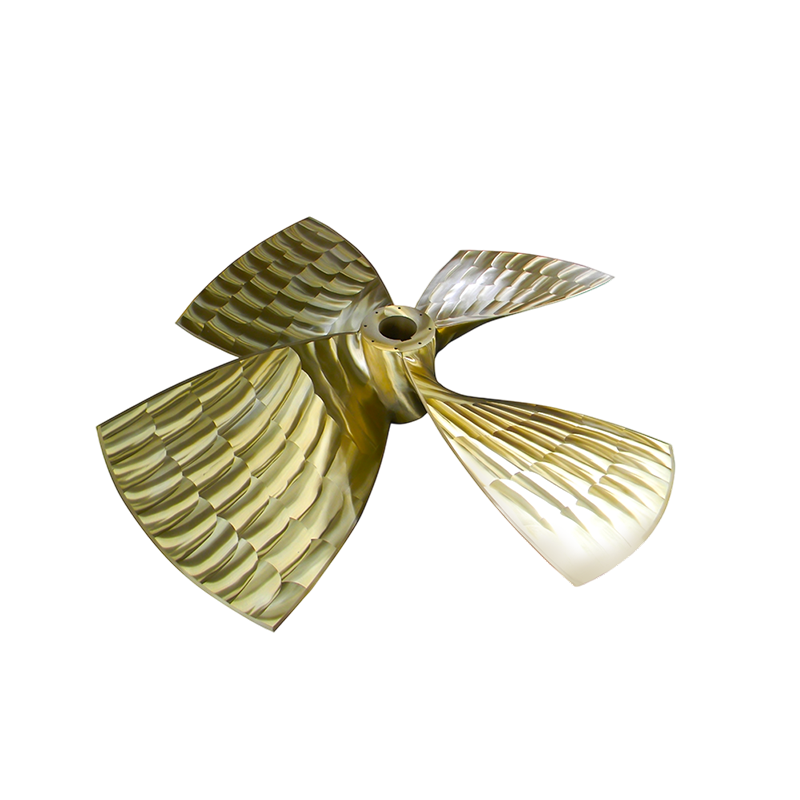
An FPP Fixed Pitch Propeller is one of the most widely deployed propulsion devices in the global maritime industry. Its blades are permanently cast or forged at a fixed angle to the hub -- the pitch cannot be adjusted in service. This simplicity makes it the dominant choice for vessels operating at a consistent speed and load profile, including bulk carriers, tankers, container feeders, fishing trawlers, river ferries, and many classes of workboats.
Because a fixed pitch propeller has no variable-pitch mechanism, it offers lower manufacturing cost, higher mechanical reliability, and easier underwater maintenance than a controllable pitch propeller (CPP). These advantages make it the standard solution across a wide range of commercial, industrial, and government marine applications. The sections below examine each major application domain in detail, with relevant performance data and operational context.
Bulk Carriers and Dry Cargo Vessels
Bulk carriers represent the single largest vessel category by deadweight tonnage in the world fleet. According to UNCTAD's Review of Maritime Transport 2023, bulk carriers account for over 43% of global deadweight tonnage, and the vast majority are fitted with fixed pitch propellers. The operating profile of a bulk carrier -- long ocean passages at a single design speed, typically 12 to 15 knots, with few speed changes during a voyage -- is ideally matched to the fixed pitch design.
A Handysize bulk carrier of 30,000 DWT typically uses a single FPP of 4.5 to 5.5 meters in diameter, delivering 5,000 to 8,000 kW from a slow-speed two-stroke diesel engine running at 90 to 120 RPM. At this operating point, a well-designed fixed pitch propeller achieves propulsive efficiency of 65 to 72% (source: MAN Energy Solutions Marine Propulsion Guidelines, 2022), which is competitive with CPP systems in steady-state operation while eliminating the hydraulic complexity of the variable pitch hub.
Why Bulk Carriers Favor FPP
- Consistent cargo loads and fixed-route schedules allow pitch optimization at the design stage
- No hydraulic oil system in the hub eliminates a critical failure mode in long ocean passages
- Lower hub drag due to simpler geometry improves open-water efficiency at design speed
- Easier class survey and underwater inspection without complex pitch feedback systems
Oil Tankers and Chemical Carriers
Crude oil tankers, product tankers, and chemical carriers share the same operating logic as bulk carriers: they transit ocean routes at a fixed service speed, load, discharge, and return. The propulsion demand is predictable, and the fixed pitch propeller is optimized at design stage for the vessel's loaded and ballast draft conditions.
For Aframax tankers (80,000 to 120,000 DWT), propeller diameters typically range from 6.5 to 7.5 meters, with four or five blades designed to minimize cavitation in the wake field behind the hull. Cavitation on tankers is particularly consequential because erosion of blade surfaces can introduce metallic contamination risk in certain chemical carrier applications. A correctly pitched and well-finished FPP maintains the blade surface integrity needed to avoid this risk (source: MARIN Propeller Cavitation Research Report, 2020).
The FPP Fixed Pitch Propeller is also standard on shuttle tankers operating in offshore oil loading -- a demanding application where the propeller must handle both the transit speed and the dynamic positioning assist thrust, typically managed by combining the main FPP with bow thrusters rather than replacing it with a CPP.
Container Feeder Vessels
Large deep-sea container ships increasingly use CPP systems for port maneuvering flexibility, but container feeder vessels of 500 to 3,000 TEU capacity overwhelmingly use fixed pitch propellers. Feeders operate on short, scheduled routes between hub ports and regional ports, at speeds of 14 to 18 knots, with regular port calls that are managed using bow thrusters and tug assistance rather than pitch adjustment.
At these speeds, the hydrodynamic efficiency advantage of a correctly matched FPP is significant. A feeder vessel operating at 16 knots with a well-matched fixed pitch four-blade propeller of 4.0 meters diameter can achieve an overall propulsive coefficient of 0.68 to 0.75, depending on hull form and appendage drag (source: Rolls-Royce Marine Propulsion Design Handbook, 2019). This efficiency, combined with the low capital cost of the FPP relative to a CPP, makes the fixed pitch option the standard commercial choice for feeder operators managing tight vessel operating economics.
Fishing Vessels and Trawlers
Fishing vessels -- particularly stern trawlers, purse seiners, and longliner vessels -- represent one of the most mechanically demanding applications for any propeller. The propeller must deliver high thrust at low speed during trawl towing (the bollard pull condition) and efficient propulsion at transit speed between fishing grounds. A fixed pitch propeller designed as a compromise between these two operating points is the industry standard for vessels up to approximately 50 meters in length.
A typical 30-meter stern trawler uses an FPP of 1.8 to 2.5 meters in diameter, driven by a medium-speed diesel of 600 to 1,500 kW. The propeller pitch is selected to maximize towing pull at the trawl speed of 3 to 5 knots while allowing acceptable transit efficiency at 10 to 12 knots. Nozzle-type installations -- where the FPP operates inside a fixed Kort nozzle -- are common on trawlers, boosting trawling thrust by 25 to 40% compared to an open propeller of equivalent diameter (source: Wageningen Propeller Series Research, MARIN, 2018).
Fishing Vessel FPP Configurations
- Open FPP: Standard configuration for purse seiners and longliners prioritizing transit speed
- FPP in Kort nozzle: Preferred for stern trawlers where bollard thrust is the primary requirement
- Twin FPP: Used on larger trawlers for redundancy and maneuvering without a rudder
- FPP with flanking rudders: Combines fixed pitch simplicity with enhanced low-speed steering for trawl operations
Passenger Ferries and Ro-Ro Vessels
Short-route passenger ferries and roll-on/roll-off (Ro-Ro) car ferries operating on fixed schedules at a single service speed are natural candidates for fixed pitch propellers. Route consistency allows the propeller to be optimized precisely for the service condition, and the regular port calls are managed with bow and stern thrusters rather than pitch adjustment.
River ferries and harbor ferries operating at speeds below 12 knots frequently use twin or quad FPP installations with flanking rudders or Voith-Schneider lateral thrusters for maneuvering -- keeping the main propulsion system mechanically simple while adding maneuvering capability through separate systems. For a typical 80-meter Ro-Pax ferry carrying 400 passengers and 80 vehicles, a twin FPP installation of 2.8 to 3.5 meters diameter per propeller is representative, with total installed power of 3,000 to 6,000 kW (source: DNV GL Ship Technology Trends Report, 2021).
Tugboats and Escort Tugs
While many modern harbor tugs use azimuth thruster systems (Z-drives) for omnidirectional maneuvering, a significant portion of the global tug fleet -- particularly older conventional tugs and river push-boats -- uses fixed pitch propellers in nozzles as the primary propulsion system. The FPP-in-nozzle combination on a conventional tug delivers bollard pull of 20 to 45 tonnes from diesel engines of 1,200 to 3,000 kW, making it a cost-effective solution for harbor assist and river operations where azimuth maneuvering is not a primary requirement.
Push-boats operating on inland waterways -- particularly on large river systems such as the Mississippi, Rhine, and Yangtze -- almost universally use fixed pitch propellers in nozzles. These vessels push barge trains of several thousand tonnes at speeds of 8 to 12 km/h, an operating regime for which the FPP in a fixed nozzle is exceptionally well suited, delivering 15 to 25% higher thrust efficiency than an open propeller at the same shaft power in this speed range (source: PIANC Inland Navigation Technical Report, 2019).
Many naval patrol vessels, offshore patrol vessels (OPVs), and coast guard cutters use fixed pitch propellers as part of a combined propulsion arrangement. A typical CODAG (Combined Diesel and Gas turbine) or CODAD (Combined Diesel and Diesel) arrangement drives fixed pitch propellers through a gearbox, with the engine combination selected to match the required speed range. The FPP is optimized for the most frequently used patrol speed -- typically 15 to 18 knots -- while sprint speed is achieved by bringing additional engines online.
For smaller patrol craft under 50 meters, fixed pitch propellers in shafted arrangements remain the standard due to their low maintenance burden in remote deployment environments where CPP hydraulic system maintenance expertise may not be available. Navies operating in such conditions specifically select FPP systems to reduce the logistics footprint of their propulsion maintenance program.
Dredgers and Work Barges
Self-propelled trailing suction hopper dredgers (TSHDs) and cutter suction dredgers with self-propulsion capability typically use fixed pitch propellers for transit propulsion, separate from the dredge pump drive system. The transit profile -- moving between dredge sites or to discharge locations at a fixed speed -- is precisely the operating condition for which FPP systems are most efficient.
Work barges, crane vessels, and pipe-lay vessels that self-propel at low speed between work sites similarly use FPP systems due to their low maintenance requirements. These vessels may spend weeks or months on a single station, and the simplicity of the fixed pitch system reduces the risk of propulsion-related downtime during critical project windows.
Application Suitability Summary
| Vessel Type | Typical FPP Diameter | Key Selection Reason |
|---|---|---|
| Handysize Bulk Carrier | 4.5 – 5.5 m | Constant speed, low maintenance, high efficiency |
| Aframax Tanker | 6.5 – 7.5 m | Predictable load profile, cavitation control |
| Container Feeder (1,000 TEU) | 3.5 – 4.5 m | High efficiency at service speed, low CAPEX |
| Stern Trawler (30 m) | 1.8 – 2.5 m | Trawl thrust and transit compromise, nozzle option |
| River/Harbor Ferry | 1.5 – 3.5 m | Schedule consistency, bow thruster maneuvering |
| Conventional Tug | 1.8 – 2.8 m | High bollard pull in nozzle, simple maintenance |
| Patrol Vessel / OPV | 2.0 – 3.5 m | Low logistics footprint, CODAG compatibility |
| Hopper Dredger | 2.5 – 4.0 m | Transit efficiency, redundancy with pump drive |
Material and Manufacturing Considerations for FPP Applications
The material of the fixed pitch propeller is selected based on the operating environment and the mechanical demands of the application. The three most common alloy families used in commercial FPP manufacturing are:
- Nickel Aluminum Bronze (NAB / Cu3 class): The dominant material for sea-going commercial propellers. Tensile strength of 640 to 700 MPa, excellent corrosion resistance in seawater, good castability for complex blade geometries. Used on the majority of bulk carriers, tankers, and container feeders.
- Manganese Aluminum Bronze (MAB): Higher strength (up to 750 MPa) than NAB, used for heavily loaded applications such as naval vessels and high-speed ferries. More sensitive to dezincification in certain seawater conditions; requires careful alloy control.
- Stainless Steel (duplex or super duplex): Used for chemical tanker propellers where bronze alloy contamination risk exists, and for high-cavitation environments where erosion resistance exceeds that achievable with bronze. Higher cost but superior surface hardness and corrosion resistance.
Propeller manufacturing standards are governed by ISO 484 (propeller manufacturing tolerances) and classification society rules (DNV, Lloyd's Register, Bureau Veritas, ClassNK). Class S and Class I tolerances under ISO 484 define the permissible deviation in pitch, diameter, blade thickness, and surface finish for commercial and naval applications respectively. A correctly manufactured and certified FPP Fixed Pitch Propeller meeting these standards is a prerequisite for new-build vessel classification and for insurance coverage of propulsion machinery.
When FPP Is the Right Choice Over CPP
The decision between a fixed pitch propeller and a controllable pitch propeller is fundamentally an economic and operational one. The table below summarizes the comparative characteristics that inform this decision:
| Factor | FPP Fixed Pitch Propeller | CPP Controllable Pitch Propeller |
|---|---|---|
| Initial cost | Lower (no hub mechanism) | 20 to 40% higher |
| Propulsive efficiency at design speed | Equal or better | Lower hub efficiency due to mechanism |
| Off-design efficiency (variable speed/load) | Reduced | Better |
| Maintenance complexity | Simple | High (hydraulics, seals, servo) |
| Reversing | Requires reversing gearbox or reversible engine | Pitch reversal (no gearbox needed) |
| Reliability in remote deployment | Higher | Lower (hydraulic failure risk) |
| Best application match | Single-speed, long-haul, consistent load | Variable-duty, frequent speed change |
For the majority of commercial vessels operating on fixed routes at a design speed, the FPP delivers equivalent or superior total lifecycle value due to lower capital cost, higher design-point efficiency, and substantially reduced maintenance expenditure over the vessel's 25-year service life.
PREV:Why Use a Controllable Pitch Propeller in Ships?
NEXT:What is the working principle of a Fixed Pitch Propeller (FPP)?
NEXT:What is the working principle of a Fixed Pitch Propeller (FPP)?
Interested in working together or need more info?
Related products

Get in Touch Now!
We're Here to Assist with
All Your Requirements
© Copyright Zhenjiang Jinye Propeller Co.,Ltd. All Rights Reserved. China Marine Copper Propeller Manufacturers Custom Marine Propeller Factory
