


 English
  中文简体
中文简体  русский
  Español
  عربى
عربى  Français
  Português
  Deutsch
  Türk
Türk
JINYE
JINYE
JINYE
JINYE
JINYE
JINYE
JINYE
JINYE
JINYE
JINYE
JINYE
JINYE
JINYE
JINYE
JINYE
JINYE

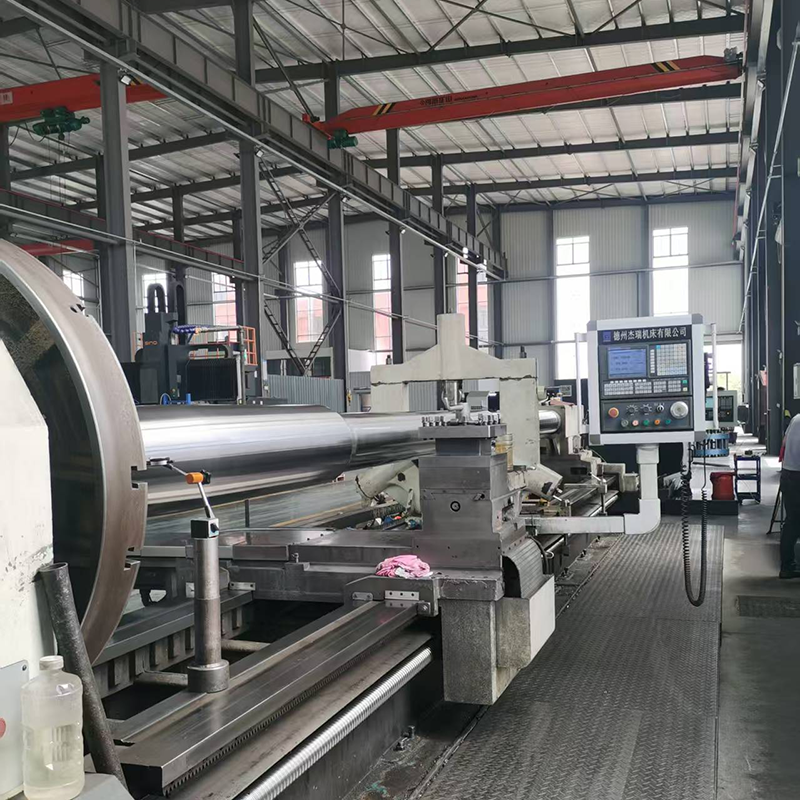
Stern Shaft
Stern Shaft

Phone Number
+86-511-83386688-
To provide customers with quality products and services Obtain customer satisfaction.
-
Centering on customer needs, being honest and trustworthy, quick response, create value for customers and achieve win-win cooperation.
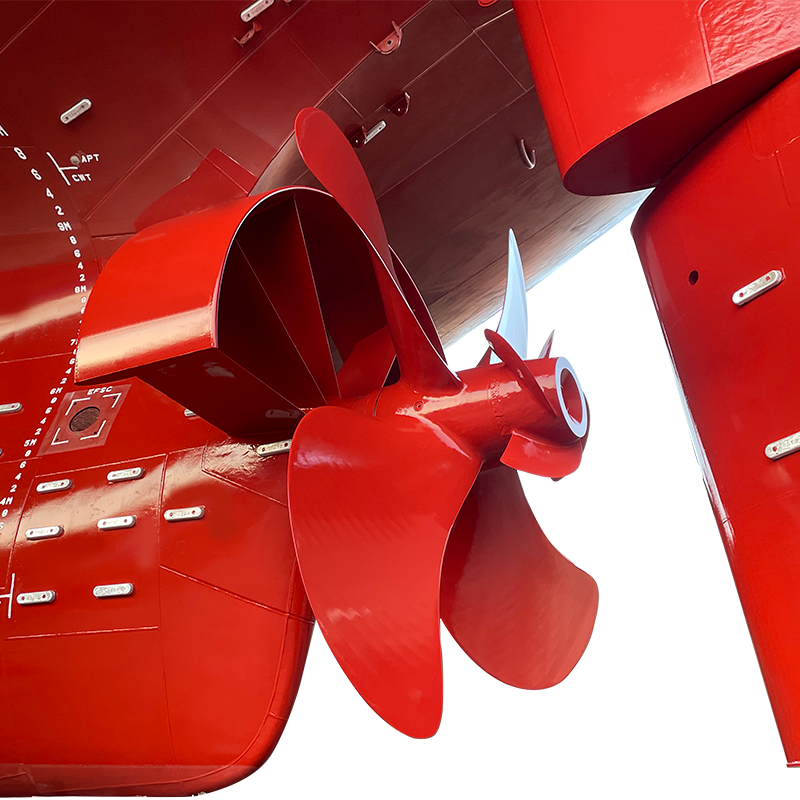
Stern Shaft is the core transmission component that connects the main engine, gearbox (engine) and propeller in the ship propulsion system. It is responsible for transmitting the rotational power of the main engine to the propeller to drive the ship forward or backward. It is an important part of the ship's shaft system and is usually located at the rear of the hull.
Core Function
Power transmission: Efficiently transmit the rotational torque of the main engine and gearbox, drive the propeller to operate, and ensure the stable operation of the ship's propulsion system.
Support and positioning: Cooperate with the bearing to keep the propeller accurately aligned, reduce vibration and eccentric wear, and extend the life of the equipment.
Corrosion and wear resistance: Use high-quality materials to adapt to harsh environments such as seawater and mud.
Long-life design: Optimize the structure, reduce pressure concentration, match wear-resistant bearings, and reduce maintenance costs.
As a core component of the ship's propulsion system, the reliability of Stern Shaft directly affects navigation safety and operational efficiency. With advanced technology, high-quality materials and strict quality inspection, we provide you with high-performance and long-life tail shaft solutions to help ships operate efficiently and stably.
Company
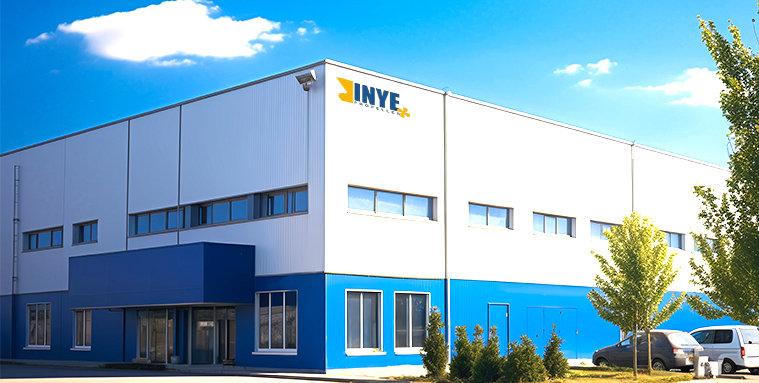
Zhenjiang Jinye Propeller Co.,Ltd.
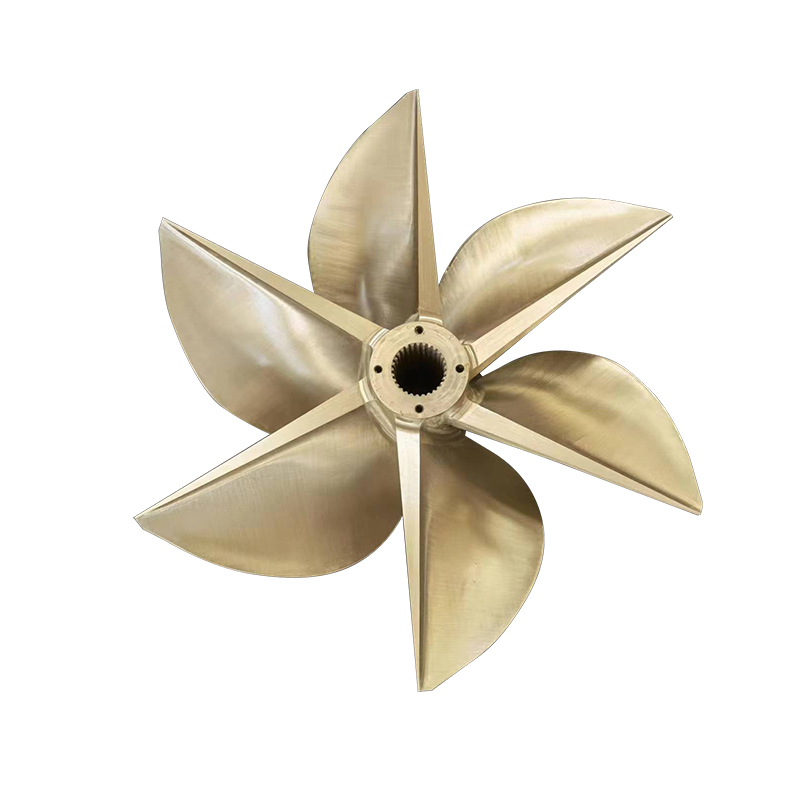
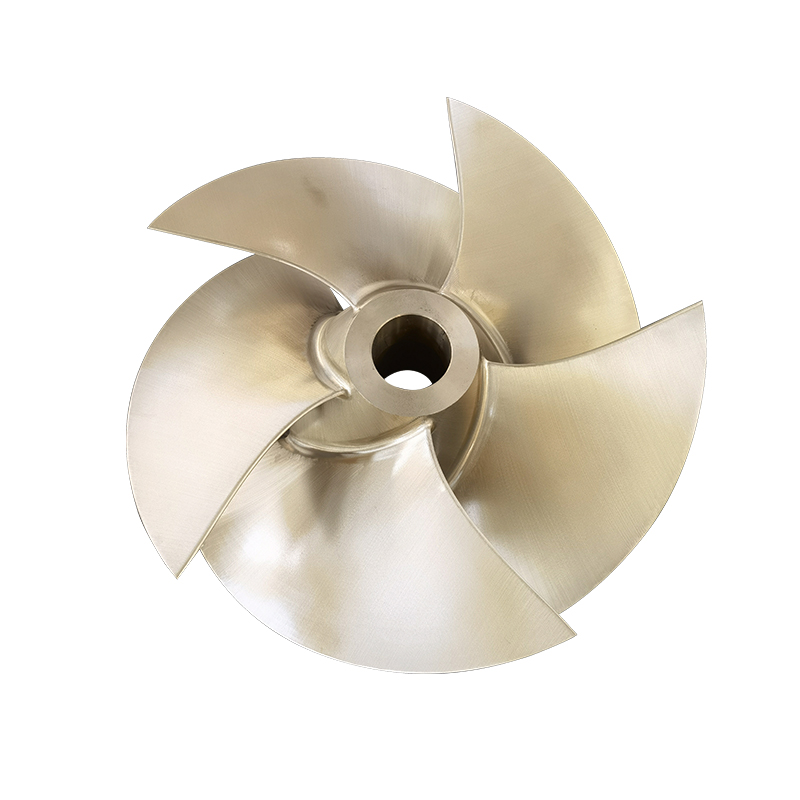
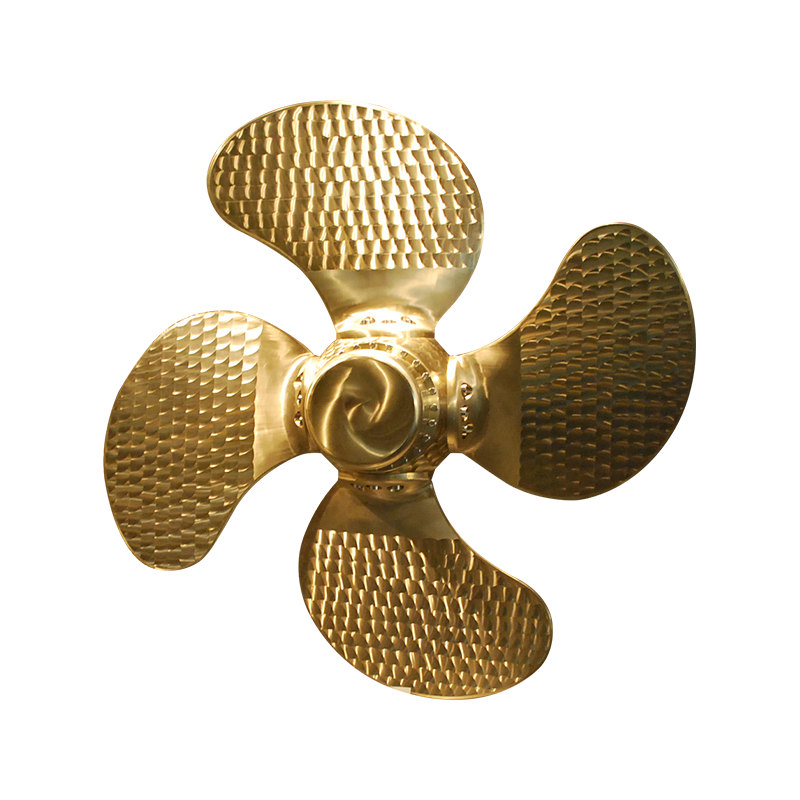
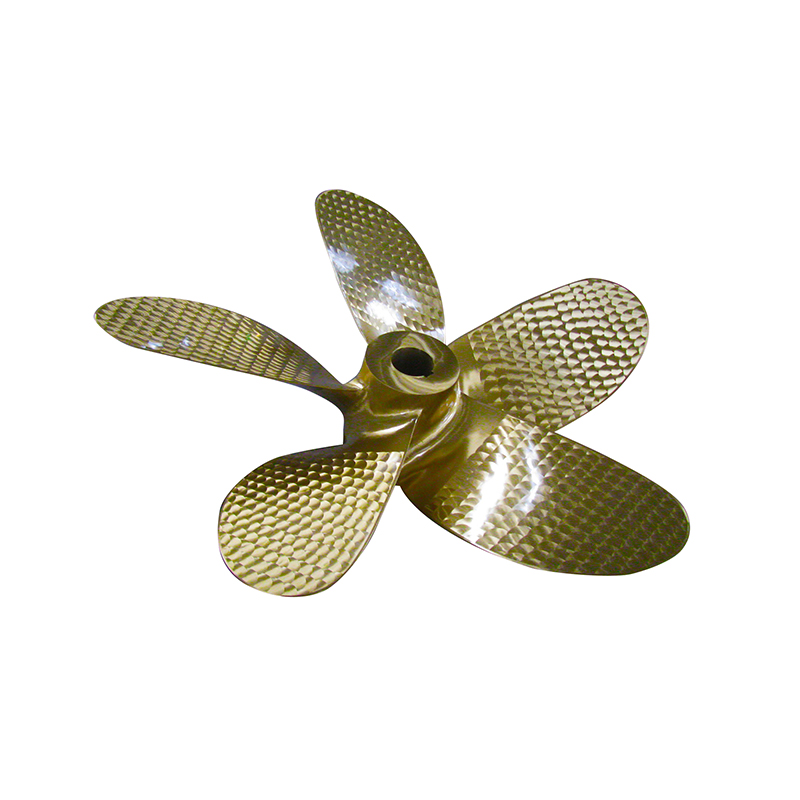
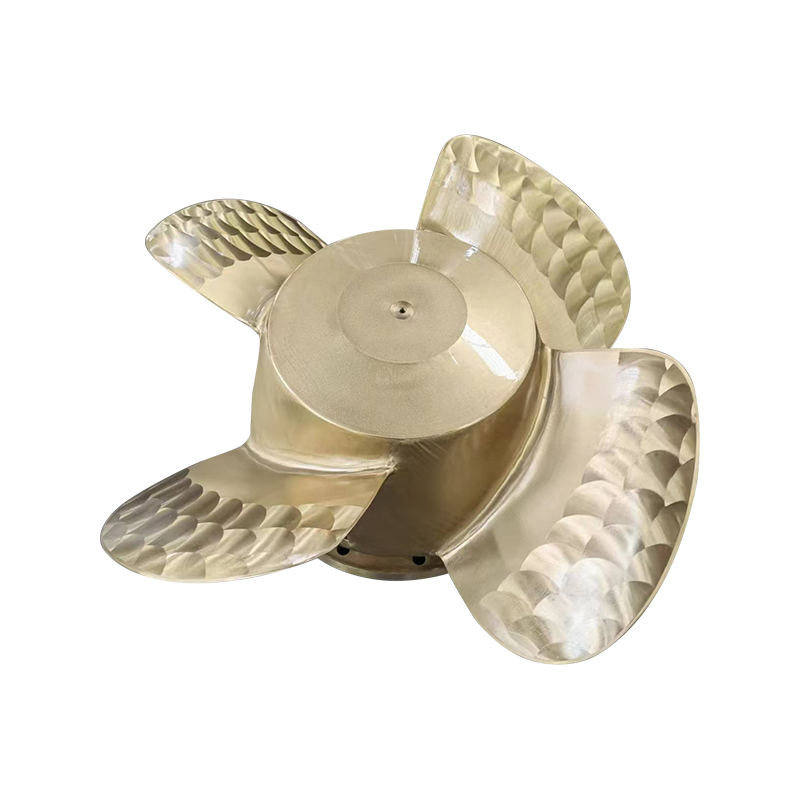
Established in 2005, Zhenjiang Jinye Propeller Co.,Ltd. is a professional China Stern Shaft suppliers and Stern Shaft company. Situated in Zhenjiang Jin Kou Science and Technology Industrial Park, the company spans over an area of more than 20,000 square meters. Our expertise lies in the production, manufacturing, and sales of marine copper alloy propellers and related accessories. Our product portfolio includes fixed-pitch propellers, controllable pitch propellers, propeller hubs, oil cylinders, cap fins, and other propeller attachments.
Message Feedback
Certificate Of Honor

Environmental Management System Certification Certificate

Occupational Health and Safety Management System Certification

Quality Management System Certification
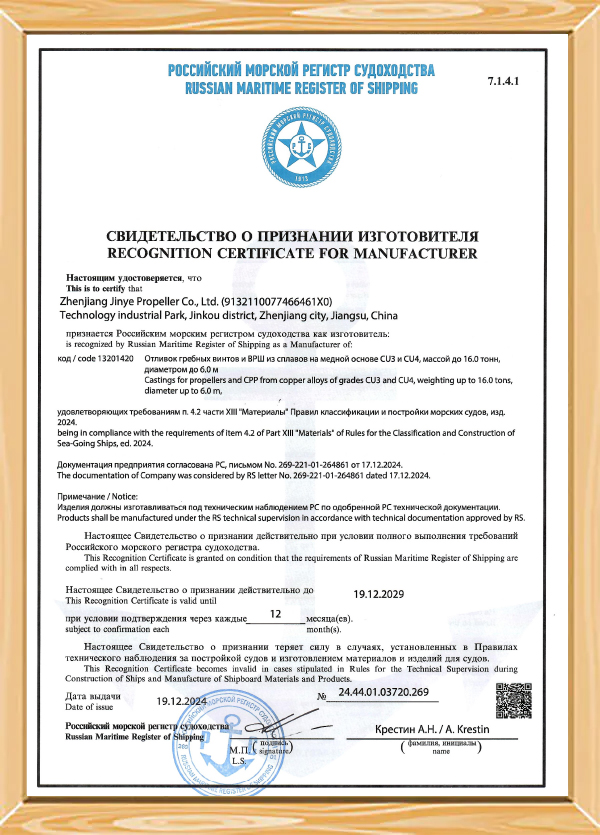
Russian Classification Society (RS)
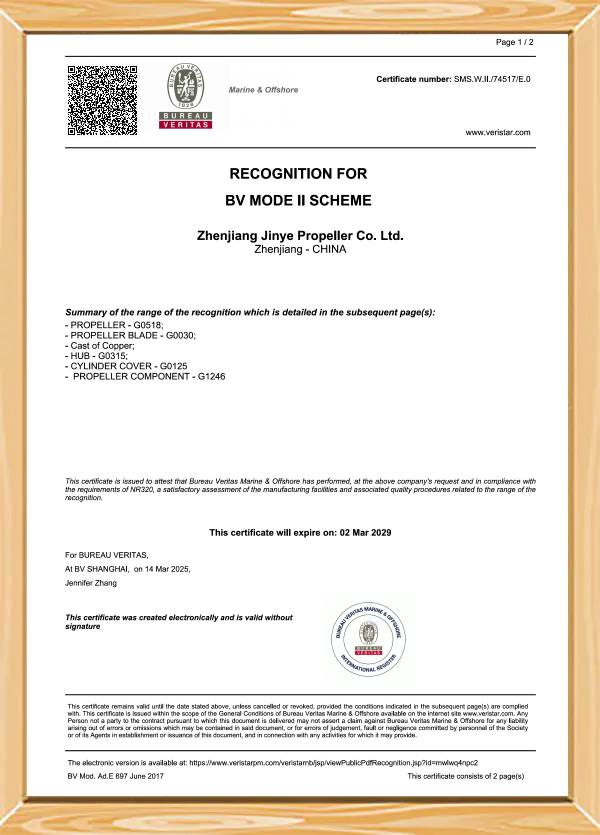
French Classification Society (BV)
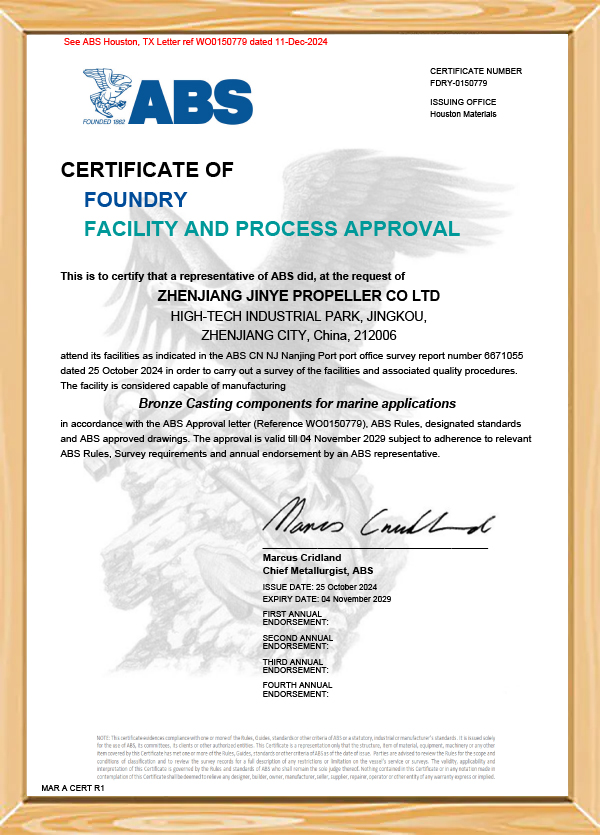
American Bureau of Shipping (ABS)

Italian Classification Society (RINA)
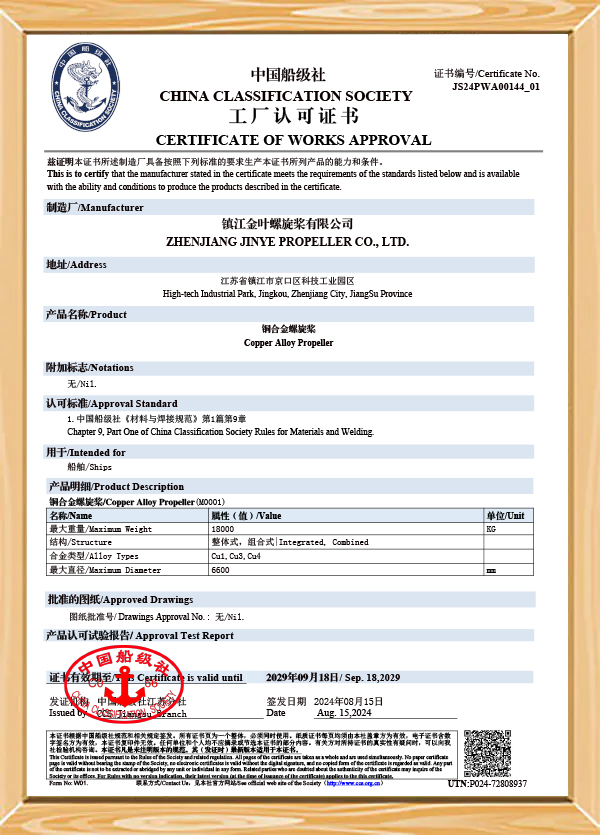
China Classification Society (CCS)
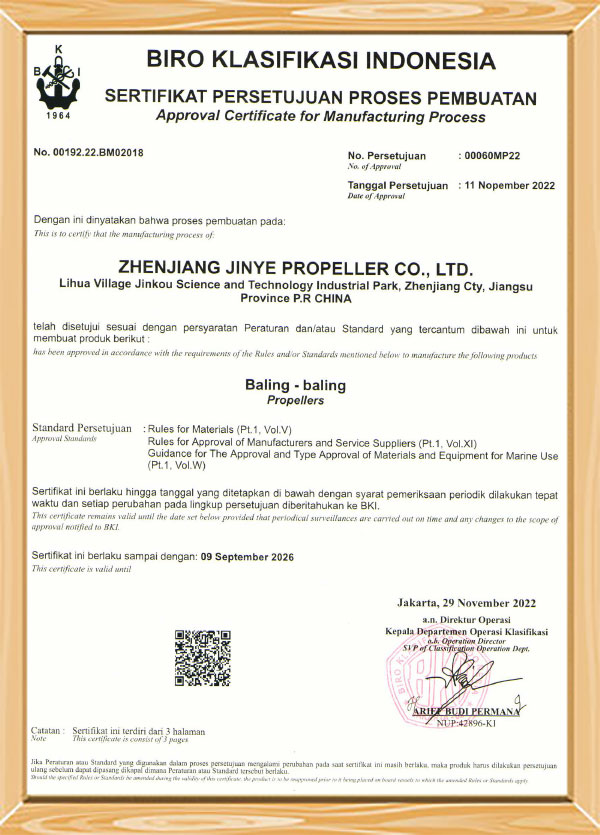
Indonesia (BKI)
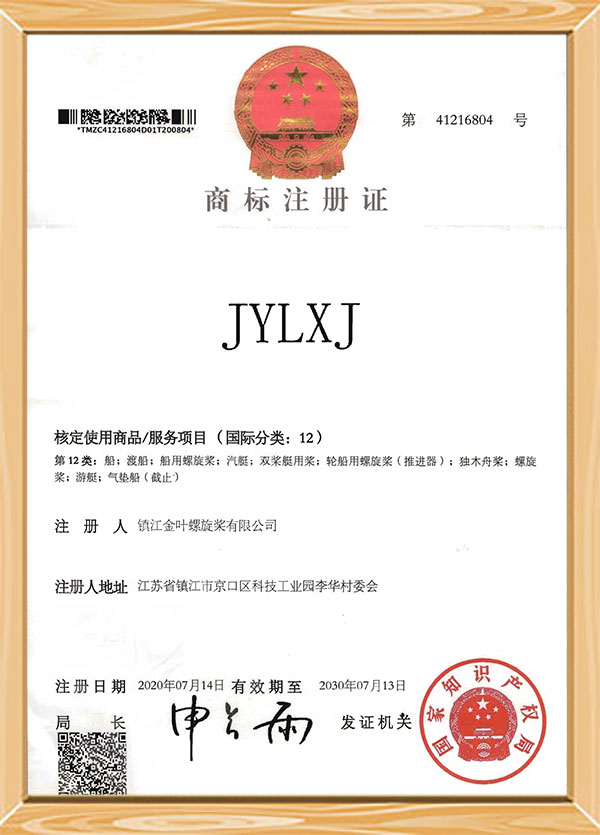
Trademark Registration Certificate
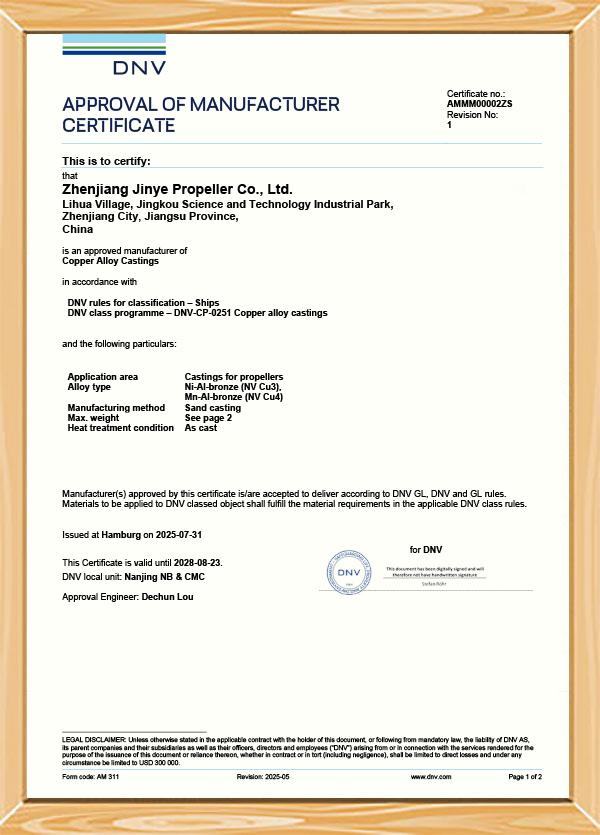
DNV-Certificate
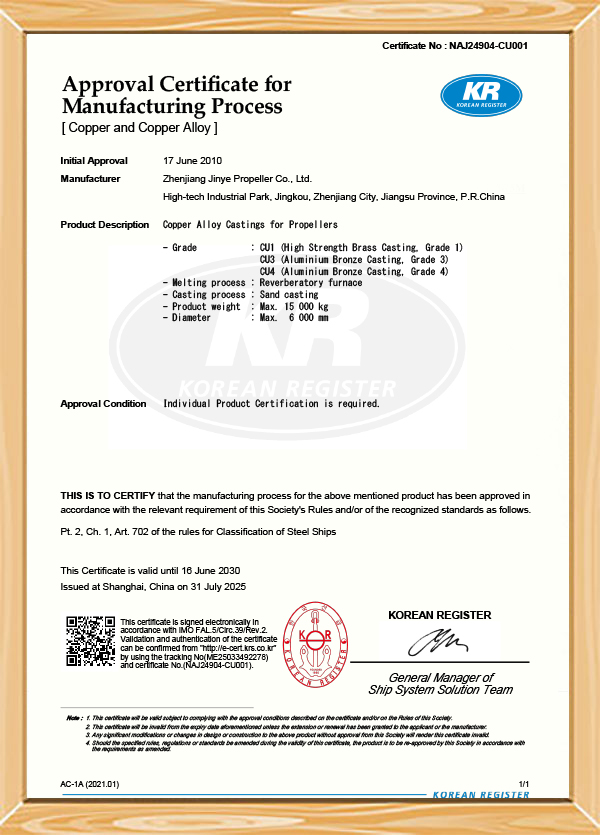
KR-Certificate
News
-
Ships use a Controllable Pitch Propeller primarily because it allows the blade pitch angle to be adjusted while the propeller shaft continues rotating at a constant speed -- enabling the vessel to change thrust magnitude and direction without changing engine RPM or requiring a reversing gearbox. T...
Read More -
An FPP Fixed Pitch Propeller is one of the most widely deployed propulsion devices in the global maritime industry. Its blades are permanently cast or forged at a fixed angle to the hub -- the pitch cannot be adjusted in service. This simplicity makes it the dominant choice for vessels operating at...
Read More -
A Fixed Pitch Propeller generates thrust by rotating blades set at a permanently fixed angle relative to the plane of rotation. As the blades spin, their cambered aerofoil cross-section accelerates water rearward, and by Newton's Third Law, the reaction force drives the vessel forward. The blade a...
Read More
Industry Knowledge Extension
The stern shaft is a key transmission component in a ship's propulsion system, connecting the main engine (or reduction gearbox) to the propeller. Its primary function is to transmit the main engine's power to the propeller, driving it to rotate and generate thrust, thereby propelling the ship forward. Simultaneously, the stern shaft must withstand the axial thrust and radial loads generated by the propeller during operation, and, supported by bearings and seals at the stern of the hull, ensure rotational stability.
Material Selection
The material used for the stern shaft must meet the requirements of high strength, high toughness, corrosion resistance, and good processability. Common materials include:
Carbon steel, such as 45# steel, is suitable for small vessels or applications with low strength requirements. It is relatively low-cost, but its corrosion resistance is poor and requires anti-corrosion treatment.
Alloy structural steel, such as 40Cr and 35CrMo, improves strength, toughness, and wear resistance by adding alloying elements such as chromium and molybdenum. It is suitable for medium- to large-sized vessels and can withstand greater loads. Stainless steel, such as 1Cr18Ni9Ti, offers excellent corrosion resistance and is suitable for vessels operating in highly corrosive environments such as seawater. It is particularly well-suited for small, high-speed vessels or specialized vessels.
Structural Composition
The structure of a stern shaft varies depending on the vessel type and propulsion system design. Its basic components include:
Shaft: The main body is cylindrical, connected to the propeller via a flange at one end and to the main engine or the output of a reduction gearbox at the other. The shaft surface must be precision machined to ensure a precise fit with the bearings.
Flange: Located at the end of the stern shaft closest to the propeller, it is bolted to the propeller hub. High precision is required for the flange's flatness and bolt hole positioning to ensure a secure and concentric connection.
Journal: The part that mates with the bearing requires a low surface roughness (typically Ra ≤ 0.8μm) to minimize friction and wear.
Key Manufacturing Processes
The manufacturing of stern shafts requires a series of precision machining processes to ensure their performance and accuracy:
Forging: The raw material undergoes a forging process to eliminate internal defects, refine the grain size, and improve the material's mechanical properties.
Heat Treatment: A tempering treatment (quenching followed by high-temperature tempering) is performed based on the material's characteristics to ensure the tail shaft achieves an optimal balance of strength and toughness. For example, the hardness of 40Cr steel after tempering can reach 220-250 HB.
Machining: The shaft, flange, and journal are precision machined using lathes, grinders, and other equipment to ensure dimensional accuracy (e.g., shaft diameter tolerances within IT6-IT7) and geometric tolerances (e.g., roundness and cylindricity within 0.01 mm/m).
Surface Treatment: The shaft surface undergoes anti-corrosion treatment, such as coating with anti-corrosion paint or hard chrome plating, to enhance corrosion and wear resistance.
Supporting Systems
The proper operation of a stern shaft depends on its supporting bearings and seals:
Stern shaft bearings: These support the rotation of the tail shaft and are divided into plain bearings and rolling bearings. Plain bearings, often made of babbitt metal or rubber, are suitable for medium- and low-speed vessels; rolling bearings, with their high load capacity and low friction coefficient, are suitable for high-speed vessels.
Seals: Installed where the stern shaft passes through the hull, these seals are divided into bow and stern seals. Their function is to prevent seawater from entering the hull and lubricating oil from leaking. Common seal types include packing seals, mechanical seals, and skeleton oil seals.
Company Practices
In the field of stern shaft production, companies such as Zhenjiang Jinye Propeller Co., Ltd., while primarily focused on propeller production, have extensive experience in supporting marine propulsion system components and can collaborate with related companies to provide customers with tail shaft and propeller matching solutions. Their comprehensive understanding of marine propulsion systems ensures precise connection and efficient power transmission between the stern shaft and propeller. They also provide professional advice on material selection and process control to meet the needs of different vessels.
Get in Touch Now!
We're Here to Assist with
All Your Requirements
© Copyright Zhenjiang Jinye Propeller Co.,Ltd. All Rights Reserved. Wholesale Stern Shaft Suppliers
