


 English
  中文简体
中文简体  русский
  Español
  عربى
عربى  Français
  Português
  Deutsch
  Türk
Türk
JINYE
JINYE
JINYE
JINYE
JINYE
JINYE
JINYE
JINYE
JINYE
JINYE
JINYE
JINYE
JINYE
JINYE
JINYE
JINYE

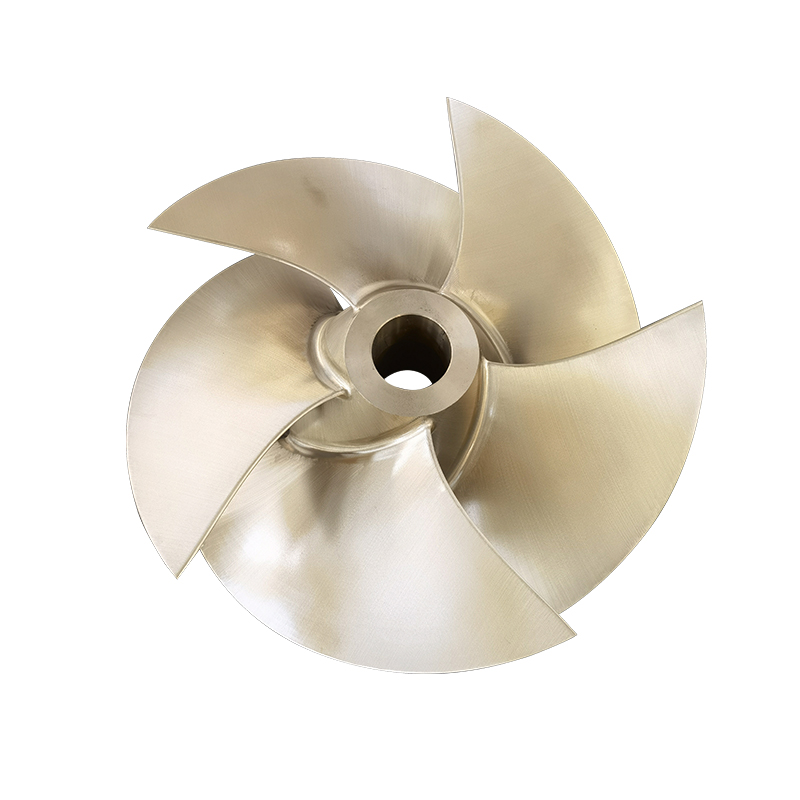
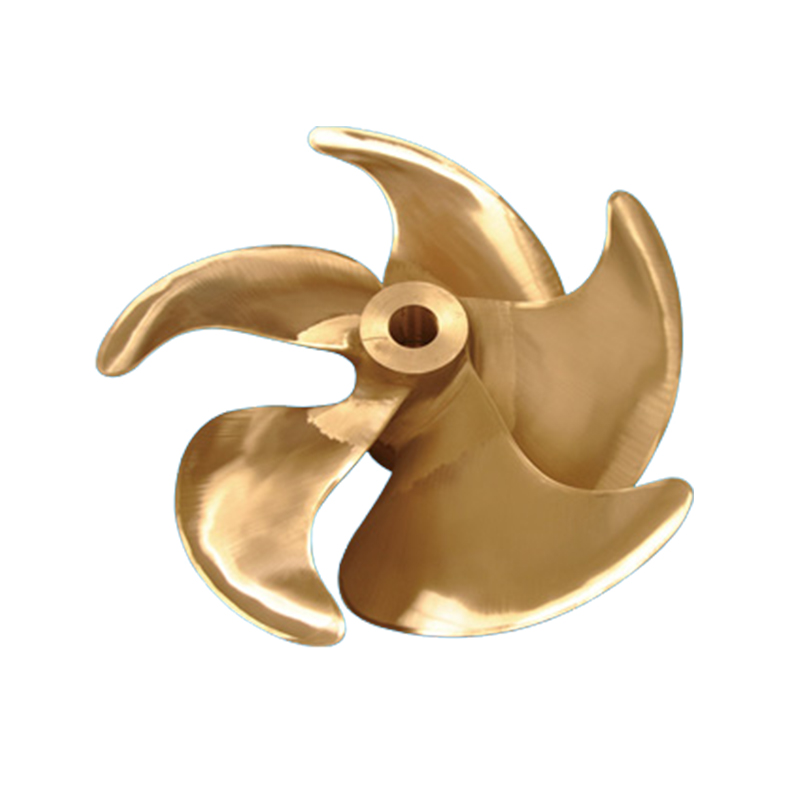
Fixed Pitch Propeller
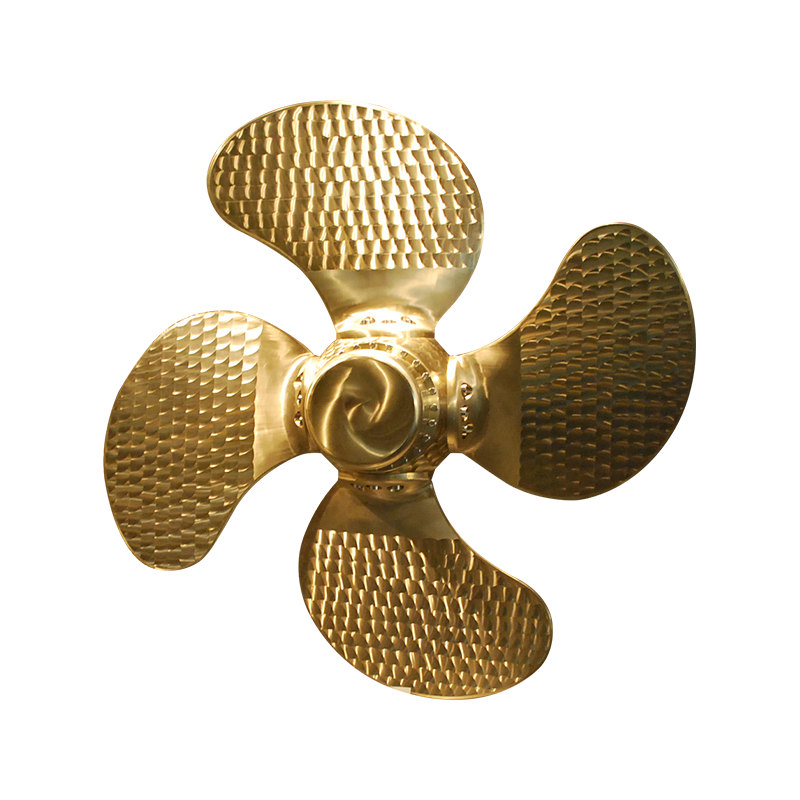
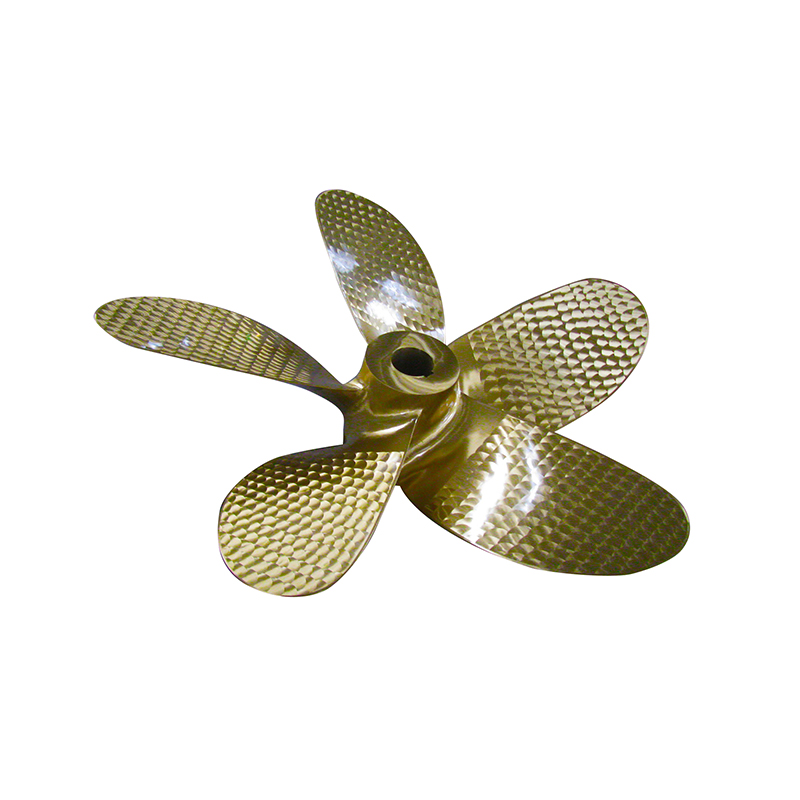
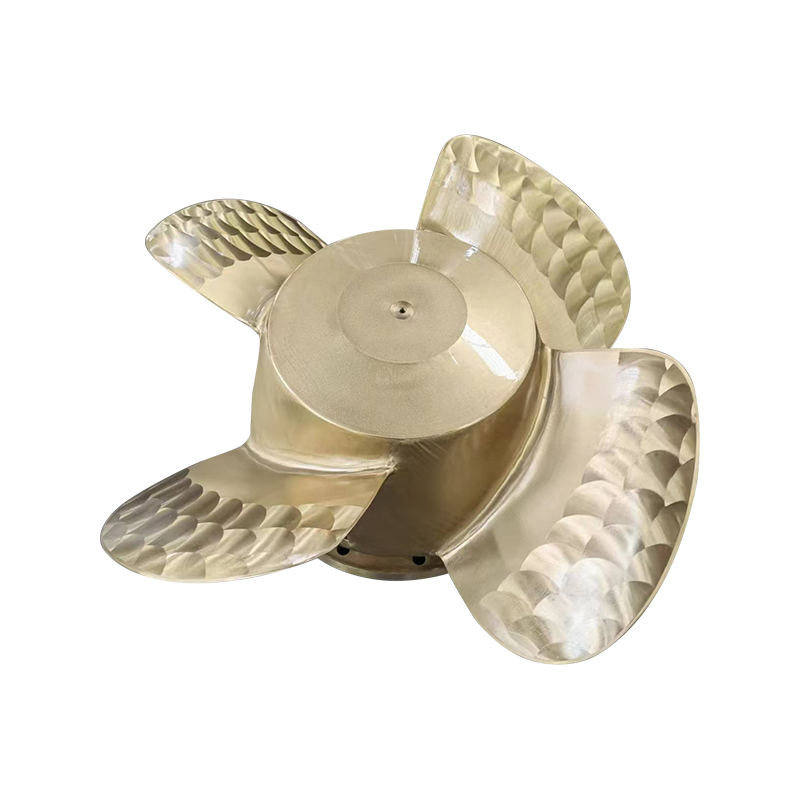
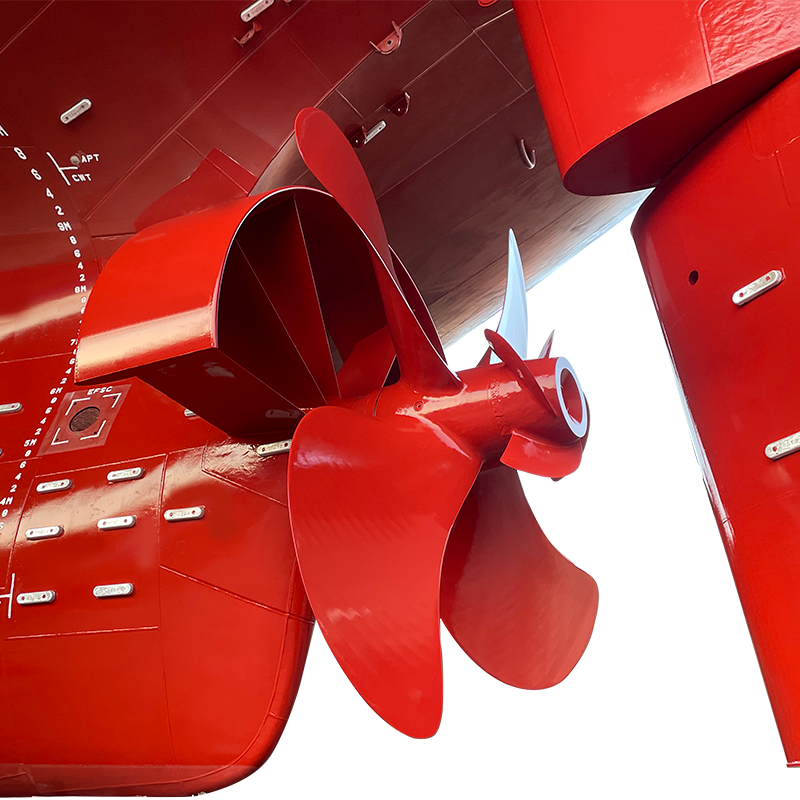
High-Speed Passenger Ship Fixed Pitch Propeller
text1

Phone Number
+86-511-83386688-
To provide customers with quality products and services Obtain customer satisfaction.
-
Centering on customer needs, being honest and trustworthy, quick response, create value for customers and achieve win-win cooperation.
High-speed Passenger Propeller is a ship propulsion device designed for fast sailing. It is made of high-strength alloy (Cu3, Cu4, stainless steel, etc.) and has 3-5 blades to optimize fluid efficiency and reduce cavitation and vibration. Its precision casting and dynamic balancing process ensures smooth high-speed operation. It is suitable for high-speed ships such as catamarans and hydrofoils, taking into account speed, energy efficiency and comfort.
Core advantages
Excellent high-speed performance: specially designed for high-speed sailing, special blade shape reduces high-speed cavitation effect, low resistance and high propulsion efficiency design, with excellent acceleration performance.
Advanced material technology: made of high-strength alloy (Cu3, Cu4, stainless steel, etc.), with excellent corrosion resistance and mechanical strength, can withstand huge hydrodynamic loads under high-speed operation.
Blade optimization design: 3-5 carefully designed blade layout, optimized blade profile shape and pitch distribution through computational fluid dynamics to achieve the highest propulsion efficiency.
Anti-cavitation design: specially designed blade tip and guide edge shape can effectively delay cavitation generation, and can still maintain stable performance when the speed exceeds 40 knots.
As a core component of modern ship propulsion systems, the High-speed Passenger Propeller demonstrates outstanding performance in increasing speed, reducing energy consumption and enhancing sailing comfort, thanks to its high-strength alloy material, fluid dynamics optimization design and precision manufacturing technology.
Company
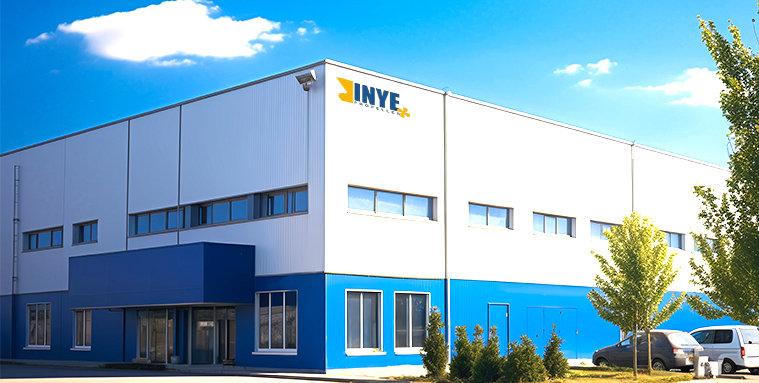
Zhenjiang Jinye Propeller Co.,Ltd.
Established in 2005, Zhenjiang Jinye Propeller Co.,Ltd. is a professional China High-Speed Passenger Ship Fixed Pitch Propeller suppliers and high-speed passenger ship propeller company. Situated in Zhenjiang Jin Kou Science and Technology Industrial Park, the company spans over an area of more than 20,000 square meters. Our expertise lies in the production, manufacturing, and sales of marine copper alloy propellers and related accessories. Our product portfolio includes fixed-pitch propellers, controllable pitch propellers, propeller hubs, oil cylinders, cap fins, and other propeller attachments.
Message Feedback
Certificate Of Honor

Environmental Management System Certification Certificate

Occupational Health and Safety Management System Certification

Quality Management System Certification
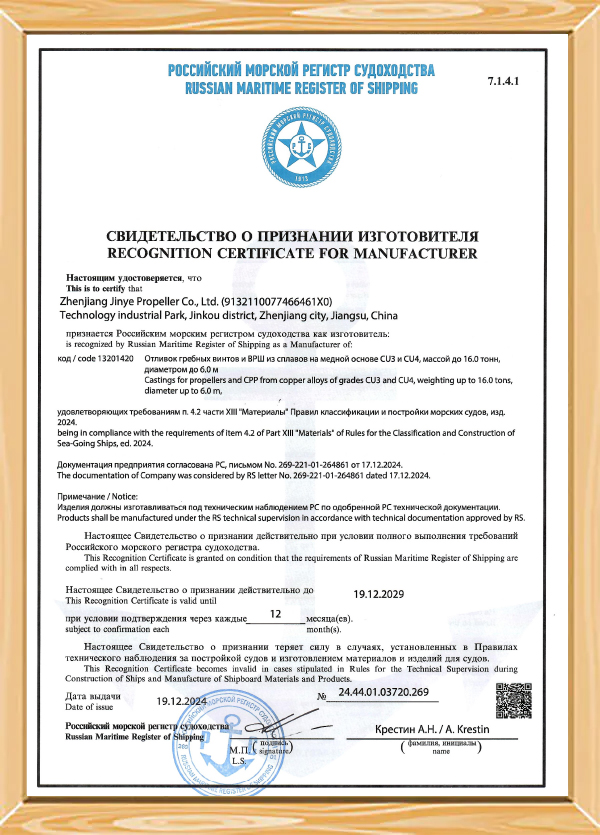
Russian Classification Society (RS)
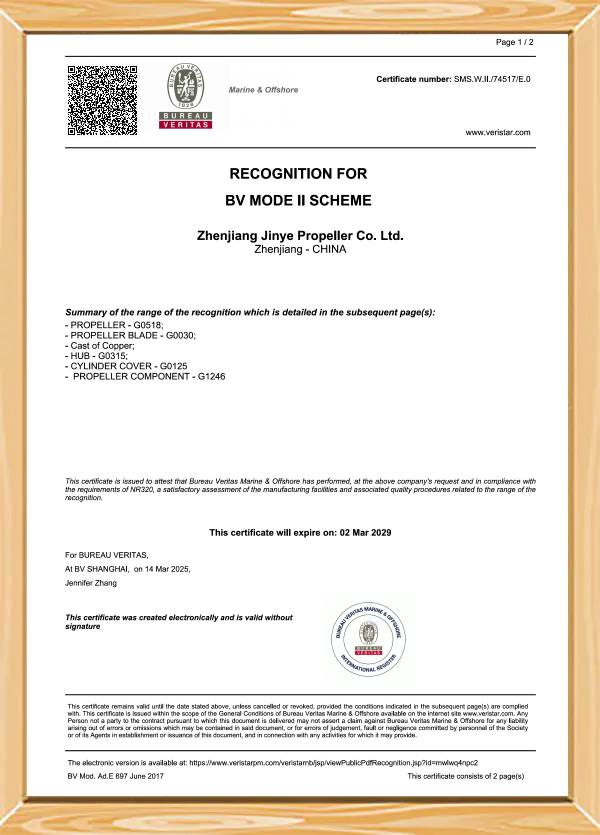
French Classification Society (BV)
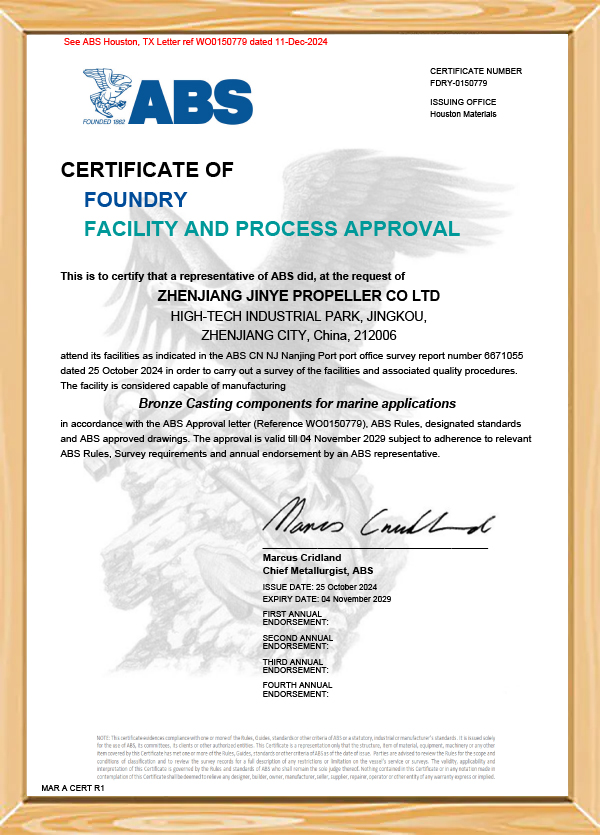
American Bureau of Shipping (ABS)

Italian Classification Society (RINA)
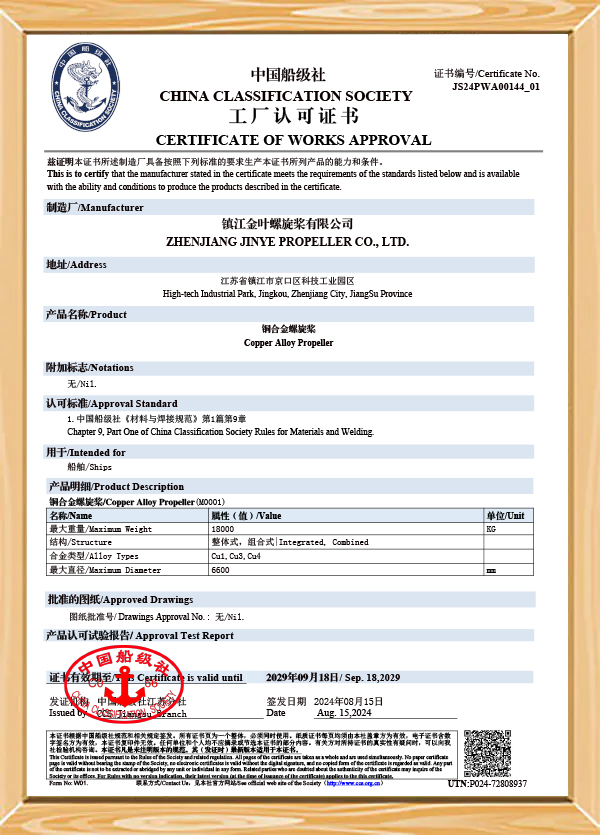
China Classification Society (CCS)
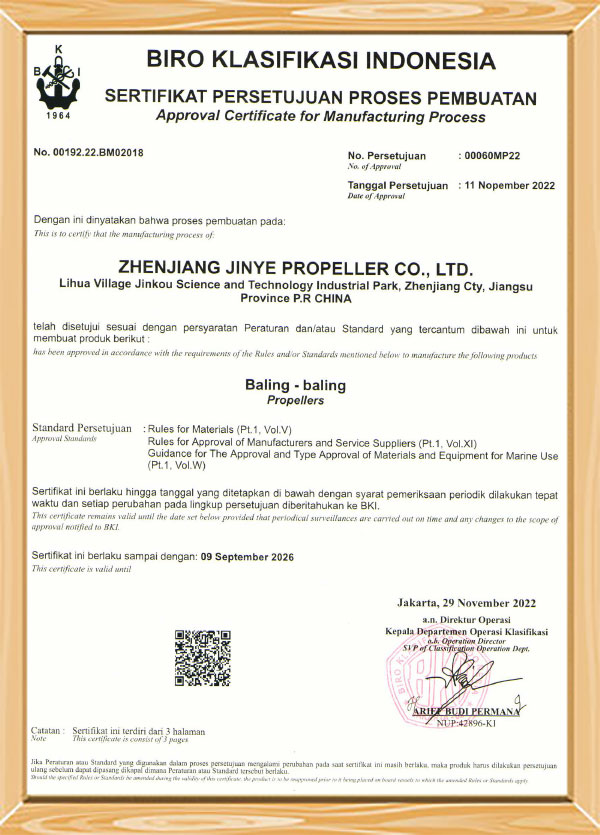
Indonesia (BKI)
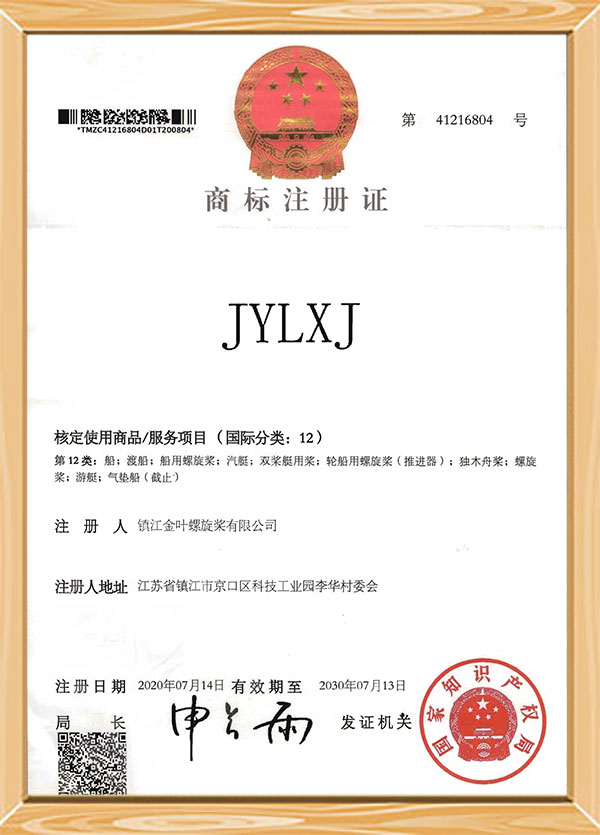
Trademark Registration Certificate
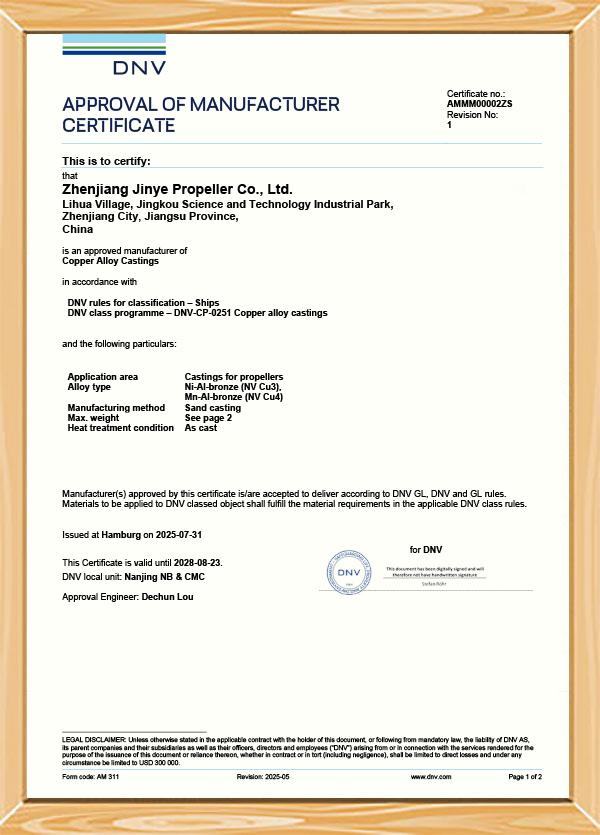
DNV-Certificate
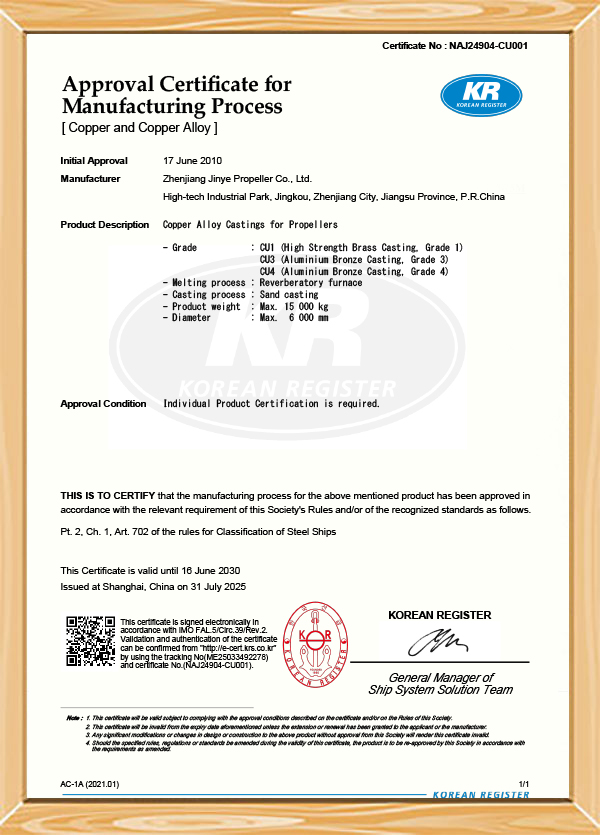
KR-Certificate
News
-
Ships use a Controllable Pitch Propeller primarily because it allows the blade pitch angle to be adjusted while the propeller shaft continues rotating at a constant speed -- enabling the vessel to change thrust magnitude and direction without changing engine RPM or requiring a reversing gearbox. T...
Read More -
An FPP Fixed Pitch Propeller is one of the most widely deployed propulsion devices in the global maritime industry. Its blades are permanently cast or forged at a fixed angle to the hub -- the pitch cannot be adjusted in service. This simplicity makes it the dominant choice for vessels operating at...
Read More -
A Fixed Pitch Propeller generates thrust by rotating blades set at a permanently fixed angle relative to the plane of rotation. As the blades spin, their cambered aerofoil cross-section accelerates water rearward, and by Newton's Third Law, the reaction force drives the vessel forward. The blade a...
Read More
Industry Knowledge Extension
High-speed passenger ship propeller is core components of a ship's propulsion system, and their performance directly impacts navigation efficiency and safety. Technically, modern propellers often utilize controllable pitch (CPP) designs, which dynamically adjust blade angle to optimize energy efficiency at varying speeds. This can improve fuel efficiency by 10%-15%, making them particularly suitable for passenger ships with frequent speed changes. Nickel-aluminum bronze (Ni-Al Bronze) is the material of choice for ocean-going passenger ships due to its strong corrosion resistance and excellent fatigue resistance, with a lifespan exceeding 15 years. Stainless steel propellers, on the other hand, are more commonly used for short-term operations on inland or coastal passenger vessels due to their low cost and ease of fabrication.
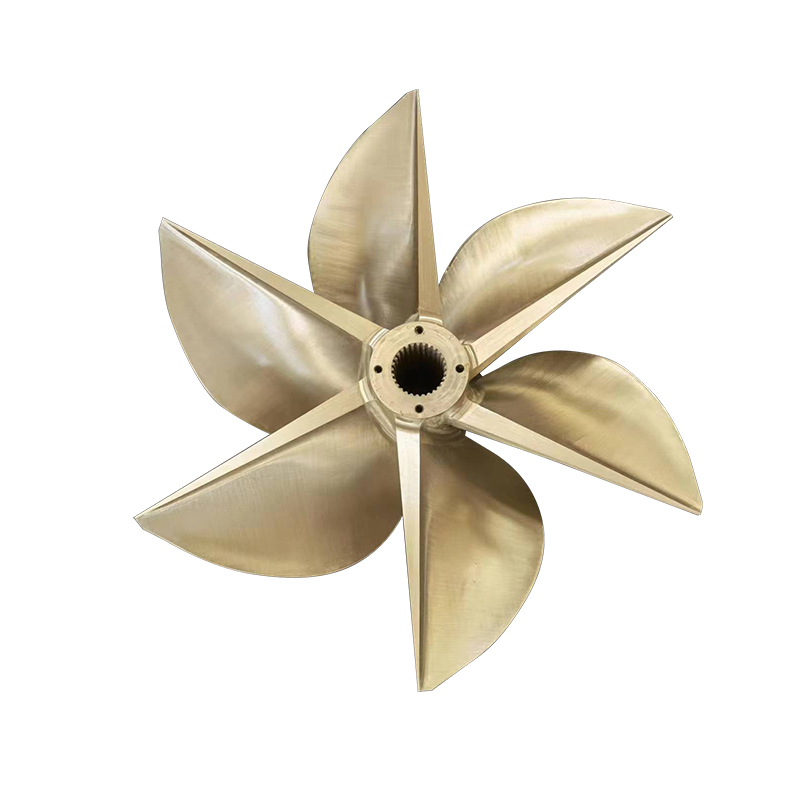
In terms of design details, the six-blade water jet propeller utilizes a streamlined blade surface to minimize cavitation, reduce vibration and noise, and meet the comfort requirements of high-speed operations exceeding 35 knots. Furthermore, the composite propeller (carbon fiber reinforced) is 40% lighter, making it suitable for new energy hybrid passenger ships and aligning with the trend toward green shipping.
Zhenjiang Jinye Propeller Co., Ltd. has been deeply engaged in the field of high-speed passenger ship propellers for over 30 years. It is a technology-based enterprise integrating R&D, design, manufacturing, and sales. The company possesses core technologies such as the CPP system and six-blade water jet propulsion. Its products are certified by 10 classification societies, including CCS, ABS, and BV. With an annual production capacity of 2,000 tons, it can produce large propellers with a diameter of 8 meters and a weight of 30 tons. These propellers are exported to over 30 countries in Europe, America, and Asia.
The company's nickel-aluminum-bronze propellers offer 30% greater corrosion resistance than traditional materials, and composite propellers have been used on numerous new energy passenger ships. Key examples include a custom 35-knot propeller for an international passenger ship company, which reduced carbon emissions by 12%, and a European shipowner who reduced fuel consumption by 8%, saving over one million euros in annual operating costs. Focusing on "technological advancement and global qualifications," the company continuously promotes the upgrading of high-speed passenger ship propulsion systems towards high efficiency and environmental friendliness.
Get in Touch Now!
We're Here to Assist with
All Your Requirements
© Copyright Zhenjiang Jinye Propeller Co.,Ltd. All Rights Reserved. Wholesale High-speed Passenger Ship Propeller Suppliers
