


 English
  中文简体
中文简体  русский
  Español
  عربى
عربى  Français
  Português
  Deutsch
  Türk
Türk
JINYE
JINYE
JINYE
JINYE
JINYE
JINYE
JINYE
JINYE
JINYE
JINYE
JINYE
JINYE
JINYE
JINYE
JINYE
JINYE

What is the difference between a fixed-pitch propeller and an Controllable Pitch Propeller?
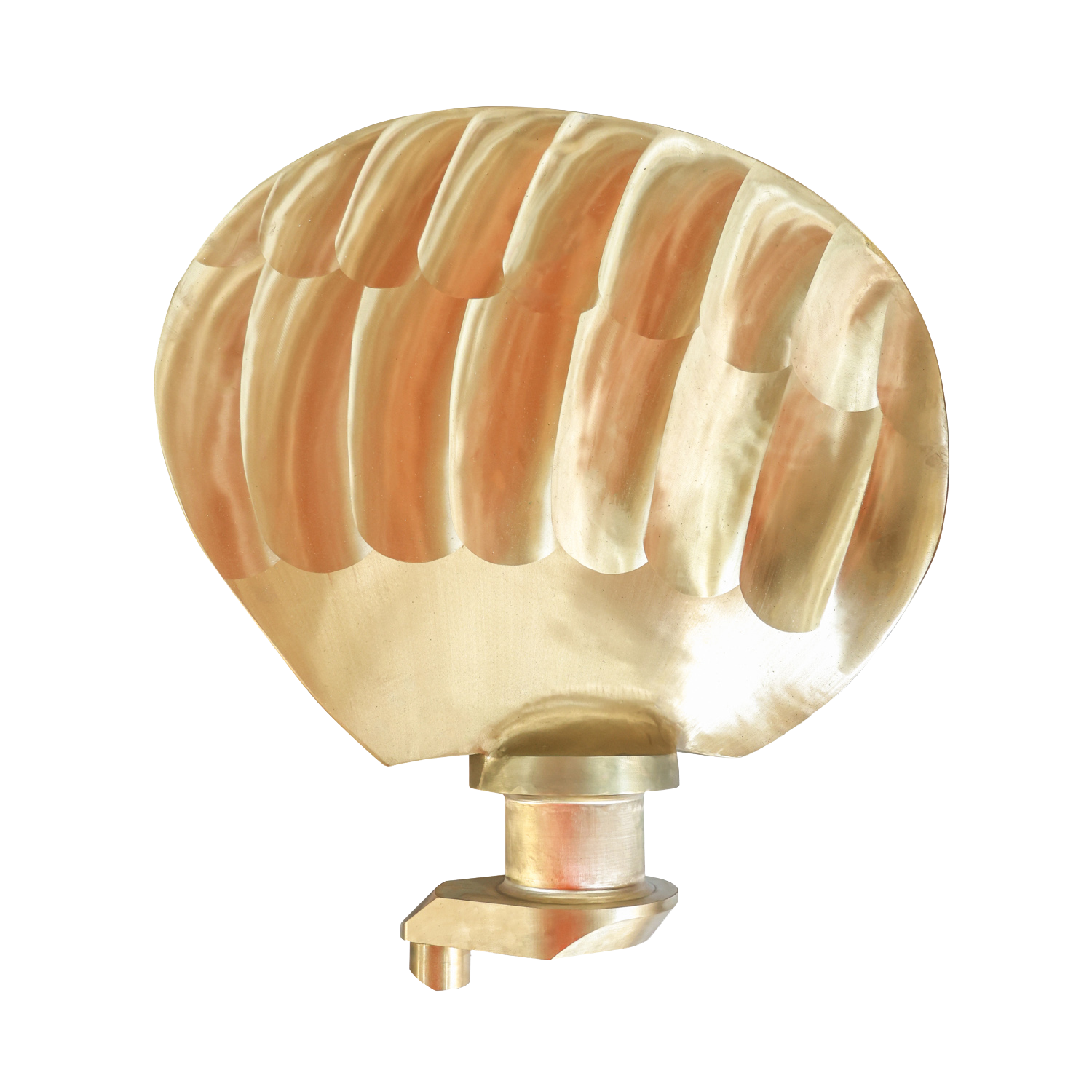
A fixed-pitch propeller (FPP) has blades permanently set at a single angle relative to the hub — once manufactured, the pitch cannot change during operation. A controllable pitch propeller (CPP), by contrast, uses a hydraulic or electro-hydraulic mechanism inside the hub to rotate each blade around its own axis, continuously adjusting the pitch angle while the shaft keeps turning at a constant speed.
In practical terms: with an FPP, you control thrust by changing engine speed. With a CPP, you control thrust by changing blade angle — the engine can stay at its most efficient RPM regardless of the thrust demand. This fundamental distinction drives every performance, efficiency, and cost difference between the two technologies.
How Each Propeller Type Works
Fixed-Pitch Propeller: Simplicity by Design
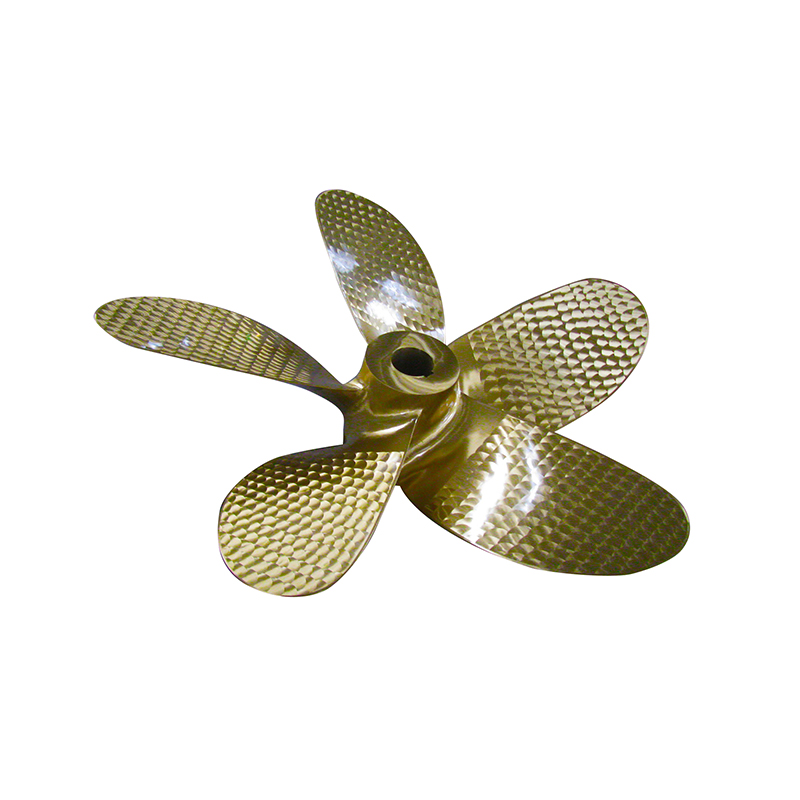
An FPP is a one-piece casting — typically bronze, stainless steel, or nickel-aluminum bronze — with blades forged or cast at a fixed geometric pitch. The pitch-to-diameter ratio is selected at the design stage to optimize performance at one specific operating condition, usually the vessel's cruising speed. When more thrust is needed, the engine speeds up; when less is needed, it slows down. To reverse thrust, the engine itself must be stopped and restarted in the opposite direction, or a separate gearbox with reversing capability is used.
The geometry is defined by a single critical parameter: pitch, expressed in meters or as a pitch-to-diameter (P/D) ratio, typically ranging from 0.6 to 1.4 for merchant vessels. Once that ratio is fixed, the propeller is optimized for one speed — and less efficient at all others.
Controllable Pitch Propeller: Precision Through Mechanism
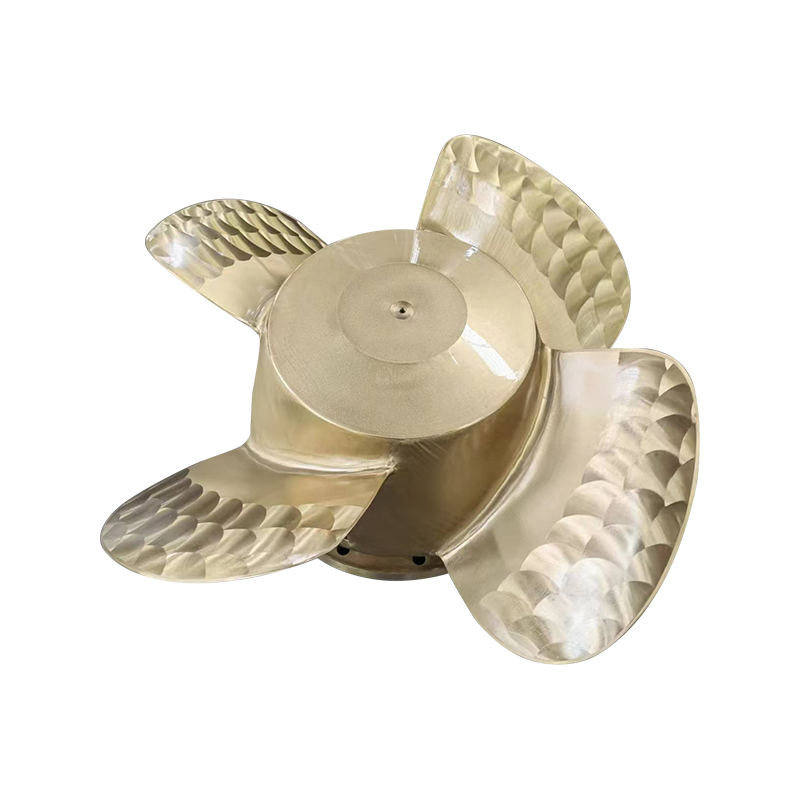
A CPP replaces the solid hub with a complex mechanical assembly. Each blade is mounted on a trunnion bearing and connected via a crank pin and sliding block arrangement to a central crosshead inside the hub. A hydraulic servo piston, running through the hollow propeller shaft from the ship's oil distribution box, pushes or pulls the crosshead, simultaneously rotating all blades to the commanded pitch angle.
The pitch angle is continuously variable — from full ahead pitch (typically +30° to +35°) through zero pitch to full astern pitch (typically -25° to -30°) — all while the shaft rotates at constant speed. This means full ahead thrust, zero thrust (feathered), and full astern thrust are all available without touching the throttle. Pitch command response time is typically under 15–20 seconds for full ahead-to-astern transition on modern systems, compared to several minutes for a conventional engine reversal sequence.
Side-by-Side Comparison of Key Parameters
| Parameter | Fixed-Pitch Propeller (FPP) | Controllable Pitch Propeller (CPP) |
|---|---|---|
| Pitch adjustment | None (fixed at manufacture) | Continuous, hydraulically |
| Thrust control method | Engine speed variation | Blade angle variation at constant RPM |
| Reversing method | Engine reversal or reversing gearbox | Pitch reversal (no engine stop needed) |
| Peak propulsive efficiency | Higher at design point (~70–75%) | Slightly lower at design point |
| Off-design efficiency | Degrades significantly | Maintained across operating range |
| Engine operating point | Varies with speed and load | Constant (optimal RPM maintained) |
| Maneuverability | Limited | Excellent |
| Mechanical complexity | Low | High |
| Initial cost | Low | Significantly higher (2–4× FPP) |
| Maintenance complexity | Low | High (hydraulics, seals, bearings) |
| Cavitation risk | Higher at off-design conditions | Lower (pitch always near optimal) |
| Typical vessel types | Bulk carriers, tankers, small craft | Tugboats, ferries, icebreakers, naval |
Fuel Efficiency: Where CPP Delivers Its Biggest Advantage
Fuel economy is the most commercially significant difference between the two propeller types, particularly for vessels that operate across a wide range of speeds and load conditions.
A diesel engine has a narrow RPM range where its specific fuel oil consumption (SFOC) is lowest — typically within 5–10% of its rated speed. An FPP-driven engine must deviate from this optimal point whenever operating speed changes. At 75% of design speed, an FPP-driven engine may be consuming fuel 15–20% less efficiently than at its rated point, simply because the propeller is no longer matched to the engine's torque curve.
A CPP system allows the engine to remain at its lowest SFOC RPM while the blades absorb precisely the load needed for any given speed. For vessels that spend significant time at partial load — ferries between fixed ports, trawlers alternating between steaming and trawling, anchor handling vessels — the aggregate fuel savings can reach 8–15% over an annual operating cycle compared to an equivalent FPP installation.
However, it is important to note that at the single design point of a well-matched FPP, the fixed-pitch variant typically achieves slightly higher peak propulsive efficiency because the hub is solid and hydrodynamically cleaner. The CPP hub, which must house the pitch-change mechanism, is larger in diameter and introduces slightly more drag.
Maneuverability and Response: The CPP's Defining Strength
For any operation requiring rapid or precise changes in thrust — port maneuvering, towing, dynamic positioning, icebreaking, or naval operations — the CPP's ability to change pitch without altering engine speed is transformative.
Ahead-to-Astern Transition
With an FPP, transitioning from full ahead to full astern requires the engine to decelerate to idle, engage a reversing mechanism or restart in reverse rotation, and then accelerate again. This process typically takes 2 to 5 minutes on a large vessel, during which no meaningful braking thrust is available. A CPP can sweep from full-ahead to full-astern pitch in 15 to 30 seconds, delivering maximum braking thrust almost immediately — a critical safety advantage in collision-avoidance scenarios.
Zero-Thrust (Feathered) Position
A CPP can be set to zero pitch — where the blades are aligned with the water flow and produce no thrust — while the shaft continues to spin. This is particularly valuable in twin-screw vessels where one propeller can be feathered and its shaft locked to reduce drag while the other propeller drives the ship. Feathering also allows the engine to run at rated speed while producing no thrust, which is useful for power generation in diesel-electric hybrid arrangements.
Dynamic Positioning and Fine Maneuvering
Offshore supply vessels, cable-laying ships, and drill ships rely on dynamic positioning (DP) systems to maintain a fixed location at sea. These systems require very fine, rapid, and repeatable thrust modulation. A CPP can adjust thrust output continuously in response to DP commands, holding position with far greater precision than an FPP arrangement, where any speed change introduces engine lag and thermal cycling that degrades responsiveness and reliability.
Cavitation, Vibration, and Noise: Hydrodynamic Differences
Cavitation — the formation and collapse of vapor bubbles on propeller blade surfaces — is a major source of noise, vibration, blade erosion, and propulsive efficiency loss. It occurs when local water pressure at the blade surface drops below vapor pressure, which happens most readily when a propeller operates away from its design condition.
An FPP is optimized at one speed. At lower speeds, the angle of attack on the blade becomes suboptimal, and local low-pressure zones develop that promote cavitation. In commercial shipping, vessels frequently operate at 70–85% of their design speed for fuel economy reasons, which can place an FPP well outside its cavitation-free design envelope.
A CPP maintains near-optimal blade loading at any speed by adjusting pitch, keeping the blade angle of attack within the low-cavitation operating window across all operating conditions. Studies on ferry and naval vessel propulsion systems have documented reductions in broadband noise levels of 3–6 dB when switching from FPP to CPP, along with significantly reduced blade erosion rates and lower hull vibration amplitudes — translating directly into longer blade service life and improved passenger comfort.
Cost Comparison: Initial Investment vs. Lifetime Economics
The financial case for choosing between FPP and CPP is not simply a matter of purchase price — it requires evaluating total cost of ownership over the vessel's service life.
Initial and Installation Costs
A CPP hub-and-blade assembly typically costs 2 to 4 times more than an equivalent FPP for the same shaft power. The hydraulic control system — including the oil distribution box, servo valve assembly, hydraulic pump, and bridge control unit — adds further capital cost. On a medium-sized vessel of 5,000–10,000 kW shaft power, the total CPP installation premium over an FPP can range from USD 300,000 to over USD 1,000,000 depending on specification.
Maintenance and Operational Costs
The CPP hub contains multiple precision mechanical components — blade trunnion bearings, crank pins, sliding blocks, and hydraulic seals — all operating in a rotating, high-pressure oil environment. These components require regular inspection and replacement:
- Hub oil seals typically require replacement every 5–8 years, depending on operating conditions.
- Blade bearing clearances must be inspected at every drydocking (typically every 2.5–5 years).
- The hydraulic oil system requires filtration, contamination monitoring, and periodic flushing.
- Servo valve assemblies are sensitive components that may require replacement or reconditioning over a 10–15 year service life.
An FPP, being a single solid casting with no moving parts, requires only inspection for blade damage, erosion, and occasional rebalancing — at a fraction of the CPP's maintenance cost.
Fuel Savings Payback Period
For vessels where operational profiles favor CPP — ferries, tugs, icebreakers, offshore support vessels — the fuel savings can offset the additional capital cost within 3 to 7 years at typical fuel prices. For vessels that operate predominantly at a single speed (bulk carriers, VLCCs), the payback period extends considerably and may not justify the investment.
Vessel Types and Which Propeller Suits Each Best
The right propeller type is dictated by the vessel's mission profile. Here is how the two technologies map to common vessel categories:
| Vessel Type | Preferred Propeller | Primary Reason |
|---|---|---|
| Bulk carrier / VLCC tanker | FPP | Single design speed, low maneuverability |
| Ro-Ro / car carrier | FPP or CPP | Moderate maneuverability; CPP |
| Ferry / passenger vessel | CPP | Frequent speed changes |
| Tugboat / anchor handling vessel | CPP | Bollard pull precision, rapid |
| Fishing trawler | CPP | Different speeds for steaming vs. |
| Icebreaker | CPP | Unpredictable resistance |
| Offshore supply / DP vessel | CPP | Dynamic positioning accuracy; continuous |
| Sailing yacht / small recreational | FPP (or folding FPP) | Simplicity, low cost, minimal drag |
| Naval patrol vessel / corvette | CPP | Tactical flexibility, rapid |
Engine Integration: How the Propeller Choice Shapes the Propulsion System
The propeller type has far-reaching implications for how the entire propulsion system is designed and operated.
FPP and Direct-Drive Diesel
Large FPP installations are commonly paired with slow-speed two-stroke diesel engines running at 80–120 RPM, directly coupled to the propeller shaft with no gearbox. This is the simplest and mechanically most reliable propulsion arrangement available, and accounts for the majority of large ocean-going merchant ships worldwide. The main disadvantage is that the engine must provide reversing capability itself — requiring a reversible-rotation engine with a more complex fuel injection and timing system, or a separate reversing gearbox.
CPP and Medium-Speed Diesel
CPP systems are most often paired with medium-speed four-stroke diesel engines running at 400–1000 RPM through a reduction gearbox. Because the CPP handles reversing through pitch change, the engine never needs to reverse rotation, which allows a simpler engine design and faster transient response. The gearbox can also incorporate a power take-off (PTO) for electrical generation, enabling shaft generators that supply the ship's electrical load while cruising — a significant efficiency advantage on vessels with high hotel loads.
Diesel-Electric and Hybrid Systems
In diesel-electric propulsion, electric motors drive the propeller shaft and diesel generators supply electrical power. This arrangement can use either FPP or CPP, but CPP is often preferred because it allows the electric motor to operate at constant speed (maximizing motor efficiency) while the pitch controls thrust. In hybrid systems with battery energy storage, the CPP's ability to deliver precise thrust at any power level complements the flexibility of battery discharge management.
Structural and Material Differences
Beyond the functional differences, FPP and CPP differ substantially in their physical construction and material requirements.
An FPP is typically a single-piece casting. The most common material is nickel-aluminum bronze (NAB), chosen for its excellent corrosion resistance in seawater, high tensile strength (approximately 640 MPa), and good casting characteristics for complex blade geometries. Stainless steel and manganese bronze are also used in specific applications. Because the FPP is a monoblock component, it is structurally very robust — the hub-to-blade connection has no weak points or moving interfaces.
A CPP hub must house an internal mechanism while remaining watertight under pressure. The hub body is typically cast from the same NAB alloys, but blades are attached individually via flanged trunnion connections — a potential weak point that requires precise machining and careful torque management during assembly. The internal sliding components are manufactured from high-strength stainless steel or bronze alloys, and all internal surfaces are continuously bathed in hydraulic oil to prevent corrosion and wear.
The CPP hub diameter is inevitably larger than that of an equivalent-power FPP — typically 15–25% greater in diameter — which creates a larger hub vortex and slightly reduces hydrodynamic efficiency. Modern CPP hubs incorporate boss cap fins (BCF) to recover some of this efficiency loss by suppressing the hub vortex, partially offsetting the hydrodynamic penalty.
Safety, Reliability, and Failure Mode Considerations
Both propeller types have well-established safety records in commercial service, but their failure modes differ significantly.
FPP Failure Modes
FPP failures are almost always visible and mechanical: blade damage from debris impact, fatigue crack propagation from the blade root, or erosion from severe cavitation. These failures develop relatively slowly, are detectable during routine inspections, and rarely cause catastrophic sudden failure. An FPP has no hydraulic system and no internal moving parts, so there is no risk of hydraulic fluid loss, servo valve failure, or pitch-control system malfunction at sea.
CPP Failure Modes
A CPP can experience failures in the hydraulic system (pump failure, oil contamination, seal failure, servo valve blockage) or in the mechanical pitch-change mechanism (pin wear, bearing seizure, crosshead jamming). In the event of a hydraulic system failure, most CPP designs incorporate a mechanical locking system that holds the blades at their last commanded pitch — effectively converting the CPP into an FPP for the remainder of the voyage, allowing the vessel to proceed to port safely. However, if the blades lock at an unfavorable pitch, maneuvering capability may be severely compromised.
Modern CPP systems include redundant hydraulic circuits, continuous condition monitoring of oil pressure and pitch feedback, and alarm systems designed to detect developing faults before they become failures. Class society rules require that CPP systems demonstrate a defined minimum pitch range even with one hydraulic circuit failed.
Environmental Regulations and the Role of CPP in Emission Reduction
International maritime regulations are increasingly shaping propulsion decisions. The IMO's Carbon Intensity Indicator (CII) framework and Energy Efficiency Existing Ship Index (EEXI) requirements, which came into force in 2023, place pressure on operators to reduce fuel consumption and CO2 emissions across the fleet.
For vessels required to reduce speed to meet CII targets, an FPP becomes a significant liability — operating at reduced speed pushes the propeller further from its design point, increasing specific fuel consumption precisely when efficiency gains are needed most. A CPP, maintaining engine operation near its optimal SFOC point regardless of speed, is intrinsically better suited to the operating flexibility demanded by emissions compliance strategies such as slow steaming, speed optimization, and variable-load shaft generator operation.
In the context of LNG-fueled and methanol-fueled vessels — where the fuel itself is more expensive per unit of energy — the operational fuel efficiency advantage of CPP carries even greater financial weight, further strengthening the economic case for CPP in newbuild specifications for environmentally regulated routes.
Summary: Choosing Between FPP and CPP
The decision is ultimately a mission-profile question. Use this framework to guide your selection:
- Choose FPP if the vessel operates at a single, consistent speed; has a simple, stable route; prioritizes low capital and maintenance cost; and requires no rapid thrust reversal or fine maneuvering.
- Choose CPP if the vessel operates across a wide speed range; requires rapid, precise thrust changes; operates in confined waters or dynamic positioning; or must meet stringent fuel efficiency and emission reduction targets.
In numbers: FPP wins on simplicity and peak efficiency at design point; CPP wins on operational flexibility, off-design efficiency, maneuverability, and noise reduction. For modern high-performance propulsion systems where the operating environment is variable and emission regulations are tightening, the controllable pitch propeller represents a compelling and increasingly necessary investment.
PREV:What is the working principle of an Controllable Pitch Propeller?
NEXT:How Do Propeller Energy Saving Devices Work?
NEXT:How Do Propeller Energy Saving Devices Work?
Interested in working together or need more info?
Related products
Get in Touch Now!
We're Here to Assist with
All Your Requirements
© Copyright Zhenjiang Jinye Propeller Co.,Ltd. All Rights Reserved. China Marine Copper Propeller Manufacturers Custom Marine Propeller Factory
