


 English
  中文简体
中文简体  русский
  Español
  عربى
عربى  Français
  Português
  Deutsch
  Türk
Türk
JINYE
JINYE
JINYE
JINYE
JINYE
JINYE
JINYE
JINYE
JINYE
JINYE
JINYE
JINYE
JINYE
JINYE
JINYE
JINYE

What is the difference between a fixed pitch propeller and a controllable pitch propeller?
The fundamental difference between a fixed pitch propeller (FPP) and a controllable pitch propeller (CPP) is whether the blade angle can be changed during operation. In an FPP, the blade pitch is set permanently at manufacture and cannot be altered while the vessel is underway. In a CPP, the blade pitch can be adjusted continuously from the bridge while the shaft rotates, allowing the ship to vary thrust and direction without changing engine speed or reversing shaft rotation.
This single design difference drives major distinctions in propulsion efficiency across operating conditions, maneuvering capability, mechanical complexity, and suitability across vessel types.
How Each Propeller Type Works
Fixed Pitch Propeller (FPP)
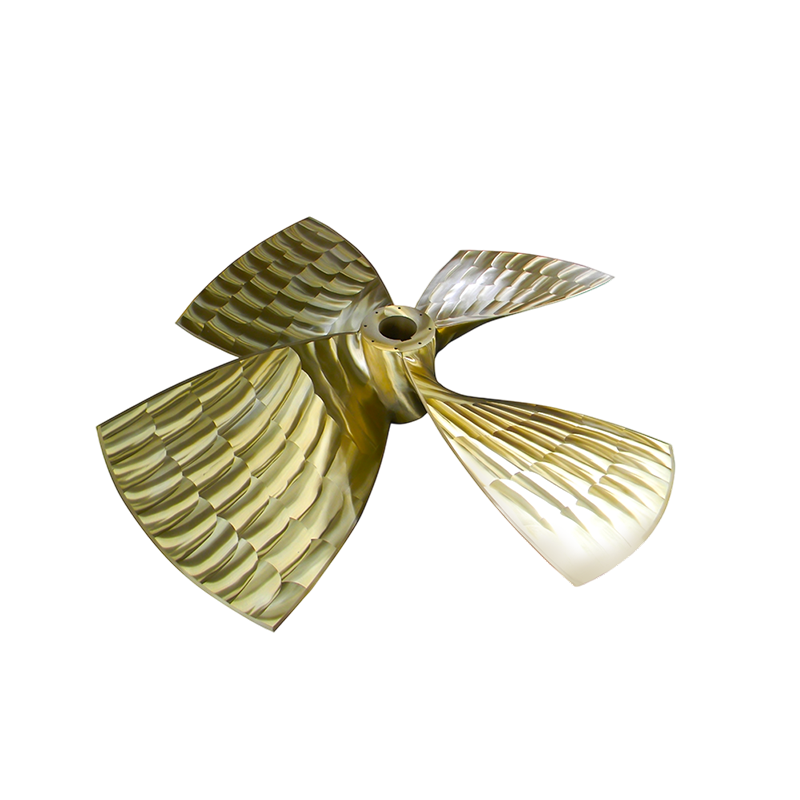
In an FPP, the blades are either cast integrally with the hub or bolted to it in a fixed position. The pitch angle — the angle at which each blade meets the water, determining how much water is displaced per revolution — is determined during the design phase and optimized for the vessel's primary operating speed and load condition. To reverse thrust, the engine must be stopped and restarted in the opposite direction of rotation, or a reversing gearbox must be used.
FPPs achieve their highest efficiency at or near their design point — typically the vessel's service speed at full load. At off-design conditions (partial load, different speeds, heavy weather), efficiency decreases because the fixed blade geometry cannot adapt to changed hydrodynamic conditions.
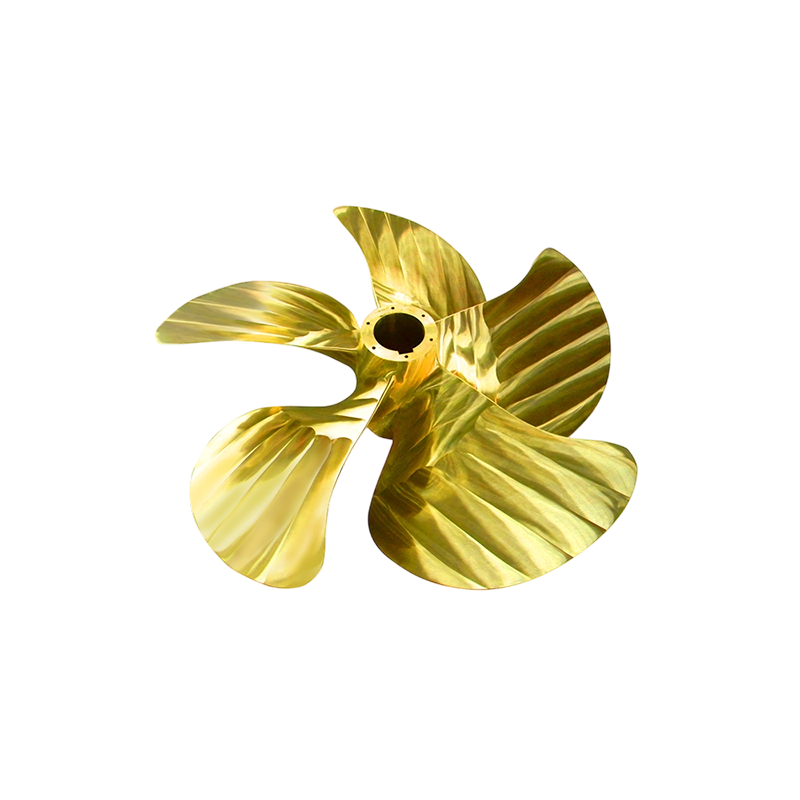
Controllable Pitch Propeller (CPP)
A CPP contains a hydraulic mechanism inside the hub that rotates each blade around its own longitudinal axis, changing the pitch angle in response to commands from the bridge control system. The shaft can rotate at a constant speed (typically at or near the engine's most efficient RPM) while thrust is controlled by varying blade pitch — from full ahead to zero to full astern — without stopping the engine or changing shaft direction. The hydraulic oil supply to the hub mechanism passes through a special shaft bore or oil distribution box at the aft end of the shaft.
Comprehensive Comparison
| Criteria | Fixed Pitch Propeller (FPP) | Controllable Pitch Propeller (CPP) |
|---|---|---|
| Pitch adjustment | Fixed at manufacture | Continuously variable from bridge |
| Reversing thrust | Requires engine reversal or gearbox | Achieved by pitch reversal (no shaft reversal) |
| Efficiency at design point | Very high (optimized geometry) | High (but hub hub losses exist) |
| Efficiency at off-design conditions | Decreases significantly | Maintained through pitch adjustment |
| Mechanical complexity | Simple, robust | Complex (hydraulics, seals, servos) |
| Maintenance requirements | Low | Higher (hydraulic system, seals) |
| Capital cost | Lower | Higher (50–100% premium typical) |
| Maneuvering response | Slower (engine reversal needed) | Fast (pitch changes within seconds) |
Vessel Types Best Suited to Each Propeller
Fixed Pitch Propeller: Ideal for Steady-Speed, Long-Route Vessels
FPPs are the standard choice for large commercial vessels that operate at relatively constant speed and draft on established trade routes:
- Large crude oil tankers and VLCCs — typically operating at 14–16 knots service speed with minimal speed variation voyage to voyage.
- Large bulk carriers — Capesize and Panamax vessels on long haul ore, coal, and grain trades.
- Large container ships — where propulsion power exceeds 50,000 kW and the FPP's simplicity and high efficiency at design speed provide the lowest total cost of ownership.
Controllable Pitch Propeller: Ideal for Variable-Load and High-Maneuverability Vessels
- Ferries and RoRo vessels — frequent docking and departure cycles demand rapid thrust reversal and fine speed control that CPPs provide.
- Offshore support vessels (OSVs) — dynamic positioning operations require instant, precise thrust modulation in all directions.
- Fishing vessels and trawlers — wide variation between steaming speed and trawling speed is efficiently managed through pitch adjustment while maintaining constant engine RPM.
- Naval vessels and icebreakers — demanding and rapidly changing operational profiles benefit from the flexibility CPPs provide.
The Reliability Advantage of Fixed Pitch Propellers
One area where FPPs maintain a clear advantage is long-term operational reliability. An FPP has no moving parts within the hub — nothing to leak, seize, or malfunction at sea. A CPP contains hydraulic lines, servo pistons, blade bearing seals, and feedback position sensors inside the rotating hub — all of which require maintenance and can fail in service.
For vessels on long ocean passages where port calls are infrequent and emergency docking capability is not critical, the simplicity and reliability of an FPP represents a compelling advantage that often justifies the minor efficiency trade-off at off-design conditions.
PREV:What is a Propeller Energy Saving Device?
NEXT:What is the difference between an Controllable Pitch Propeller and a variable pitch propeller?
NEXT:What is the difference between an Controllable Pitch Propeller and a variable pitch propeller?
Interested in working together or need more info?
Related products

Get in Touch Now!
We're Here to Assist with
All Your Requirements
© Copyright Zhenjiang Jinye Propeller Co.,Ltd. All Rights Reserved. China Marine Copper Propeller Manufacturers Custom Marine Propeller Factory
