


 English
  中文简体
中文简体  русский
  Español
  عربى
عربى  Français
  Português
  Deutsch
  Türk
Türk
JINYE
JINYE
JINYE
JINYE
JINYE
JINYE
JINYE
JINYE
JINYE
JINYE
JINYE
JINYE
JINYE
JINYE
JINYE
JINYE

What is a Propeller Energy Saving Device?
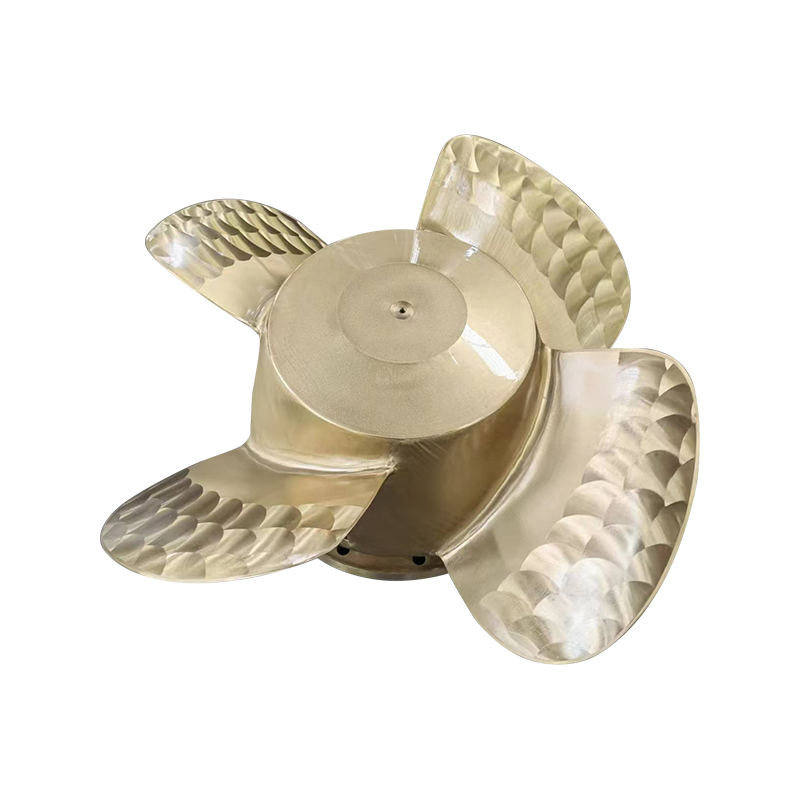
A propeller energy saving device (ESD) is an auxiliary hydrodynamic appendage installed near a ship's propeller — in front of, behind, or directly on it — that improves propulsion efficiency by optimizing water flow distribution, reducing rotational energy losses in the propeller wake, or recovering energy that would otherwise be dissipated as turbulence. These devices do not replace the propeller; they work in combination with it to extract more thrust from the same shaft power, thereby reducing fuel consumption and exhaust emissions at no change to the main engine or propeller itself.
On large commercial vessels such as tankers, bulk carriers, and container ships, well-matched energy saving devices can achieve fuel savings of 3 to 10%, which translates to millions of dollars over a vessel's operating life. Given the regulatory pressure of the International Maritime Organization's (IMO) Energy Efficiency Existing Ship Index (EEXI) and Carbon Intensity Indicator (CII) requirements, ESDs have become one of the most cost-effective compliance tools available to shipowners.
Why Propeller Wake Losses Exist — and How ESDs Address Them
A conventional propeller imparts both axial (forward-pushing) and rotational (swirling) velocity to the water it displaces. The rotational component — the "slipstream rotation" behind the propeller — represents energy that has been consumed by the engine but has not contributed to forward thrust. It is simply lost as swirling turbulence in the propeller's wake. Additionally, the non-uniform velocity distribution of the ship's wake entering the propeller disk creates pressure fluctuations that reduce efficiency and contribute to cavitation.
Energy saving devices address these losses through three mechanisms:
- Flow pre-conditioning: Pre-swirl devices installed ahead of the propeller rotate the incoming water in the opposite direction to the propeller's rotation — effectively increasing the relative angle of attack of each blade and improving thrust generation per revolution.
- Wake energy recovery: Post-swirl devices (rudder bulbs, propeller cap fins) recover the rotational energy in the propeller slipstream by converting the swirling wake into additional forward thrust through fixed fins or guide surfaces.
- Wake equalization: Stator fins or wake equalizing ducts redistribute the non-uniform velocity field entering the propeller disk, reducing fluctuating blade loads and cavitation that degrade both efficiency and blade life.
Main Types of Propeller Energy Saving Devices
Pre-Swirl Stator (PSS)
A pre-swirl stator is a set of fixed fins mounted on the stern boss or propeller shaft boss ahead of the propeller. The fins are angled to impart a counter-rotating swirl to the water entering the propeller disk, increasing the effective angle of water incidence on the propeller blades and improving thrust output. Typical fuel savings are 3 to 6% on single-screw vessels. The PSS is one of the most widely installed ESD types due to its structural simplicity and reliable performance across a range of operating drafts and speeds.
Wake Equalizing Duct (WED)
A wake equalizing duct is a partial or full annular duct mounted ahead of the propeller in the non-uniform region of the ship's wake. The duct accelerates slow-moving water from the upper wake region and decelerates faster-moving lower water — equalizing the velocity distribution across the propeller disk. This reduces cavitation, vibration, and noise while improving propulsive efficiency by 3 to 5%. WEDs are particularly effective on full-form vessels (tankers, bulk carriers) with slow design speeds and strongly non-uniform wakes.
Propeller Cap Fins (Thrust Fin Hub Cap)
Propeller cap fins replace the conventional propeller boss cap with a unit carrying fixed fins that redirect the hub vortex — a concentrated rotating flow that forms behind the propeller boss and represents pure energy loss. By breaking up this vortex and recovering its rotational energy as additional thrust, cap fin devices achieve fuel savings of 1 to 4% with minimal structural modification. They are one of the most easily retrofittable ESD types, as they require only replacement of the existing propeller cap.
Rudder Bulb and Fins
A rudder bulb — a streamlined ellipsoid fitted at the leading edge of the rudder at the propeller centerline height — smooths the flow from the propeller hub vortex over the rudder surface, reducing drag. Combined with twisted rudder fins, the device also recovers rotational wake energy. This combined system achieves fuel savings of 4 to 6% and has the additional benefit of improving rudder lift force, which can reduce rudder area requirements or improve maneuverability.
Propeller Boss Cap Fins with Pre-Swirl Combination
Many modern ESD installations combine multiple devices — for example, a pre-swirl stator ahead of the propeller paired with a cap fin behind it — to simultaneously address both incoming flow quality and wake energy recovery. Combined installations can achieve total fuel savings of 5 to 10%, with the specific combination chosen through computational fluid dynamics (CFD) analysis for each individual hull and propeller configuration.
ESD Types, Positions, and Typical Fuel Savings
| Device Type | Position | Mechanism | Typical Fuel Saving |
|---|---|---|---|
| Pre-Swirl Stator (PSS) | Ahead of propeller | Counter-rotating inflow generation | 3–6% |
| Wake Equalizing Duct (WED) | Ahead of propeller | Wake velocity equalization | 3–5% |
| Propeller Cap Fins | Behind propeller (hub) | Hub vortex recovery | 1–4% |
| Rudder Bulb + Fins | Behind propeller (rudder) | Wake energy recovery + drag reduction | 4–6% |
| Combined PSS + Cap Fins | Both ahead and behind | Pre-conditioning + wake recovery | 5–10% |
Which Vessels Benefit Most from Energy Saving Devices
The energy-saving benefit of an ESD is not uniform across all vessel types — it depends on hull form, design speed, propeller loading, and wake characteristics. The highest gains are typically achieved on:
- Large tankers and bulk carriers (VLCC, Capesize): Their full-form hulls produce strongly non-uniform, slow-moving wakes with high rotational energy loss — the conditions ESDs are most effective at addressing.
- Container ships and large cargo vessels: High shaft power levels mean that even a 3–5% efficiency improvement represents very large absolute fuel savings — the commercial incentive is strong.
- Vessels operating at a stable design speed for long voyages: ESDs are optimized for a specific speed and draft — vessels that operate consistently near their design point realize the full rated benefit, unlike vessels with highly variable speed profiles.
PREV:What are the differences between FPP fixed pitch propellers and CPP propellers?
NEXT:What is the difference between a fixed pitch propeller and a controllable pitch propeller?
NEXT:What is the difference between a fixed pitch propeller and a controllable pitch propeller?
Interested in working together or need more info?
Related products

Get in Touch Now!
We're Here to Assist with
All Your Requirements
© Copyright Zhenjiang Jinye Propeller Co.,Ltd. All Rights Reserved. China Marine Copper Propeller Manufacturers Custom Marine Propeller Factory
