


 English
  中文简体
中文简体  русский
  Español
  عربى
عربى  Français
  Português
  Deutsch
  Türk
Türk
JINYE
JINYE
JINYE
JINYE
JINYE
JINYE
JINYE
JINYE
JINYE
JINYE
JINYE
JINYE
JINYE
JINYE
JINYE
JINYE

What are the differences between FPP fixed pitch propellers and CPP propellers?
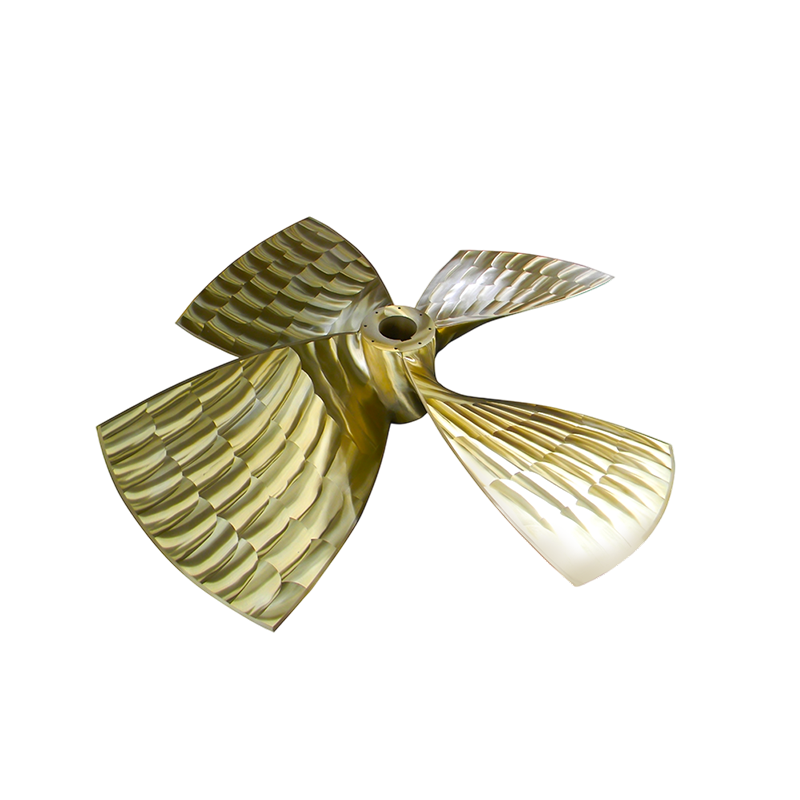
The core difference between a Fixed Pitch Propeller (FPP) and a Controllable Pitch Propeller (CPP) is whether the blade angle can be changed during operation. An FPP has its blade pitch permanently set at manufacture and cannot be altered while the vessel is underway — thrust direction and magnitude are controlled by changing engine speed and reversing shaft rotation. A CPP allows the blade pitch to be adjusted continuously from the bridge while the shaft rotates at constant speed, varying thrust from full ahead to zero to full astern without stopping or reversing the engine.
This single design difference drives significant distinctions in propulsion efficiency across operating profiles, maneuvering capability, mechanical complexity, maintenance requirements, and vessel suitability — making the FPP vs. CPP choice one of the most consequential decisions in ship propulsion system design.
How Each Propeller Type Works
Fixed Pitch Propeller (FPP)
In an FPP, the blades are either cast as a single integral piece with the hub (monobloc construction) or bolted to the hub at a fixed angle. The pitch — the theoretical distance the propeller advances per revolution — is determined during hydrodynamic design and optimized for the vessel's primary service condition: its design speed at full load displacement. The FPP achieves its highest efficiency at this design point. At off-design conditions (different speeds, partial load, heavy weather), efficiency decreases because the fixed geometry cannot adapt.
To generate reverse thrust, the main engine must be stopped and restarted in reverse rotation, or a reversing reduction gearbox must be used — a process that takes time and limits maneuvering responsiveness compared to a CPP.
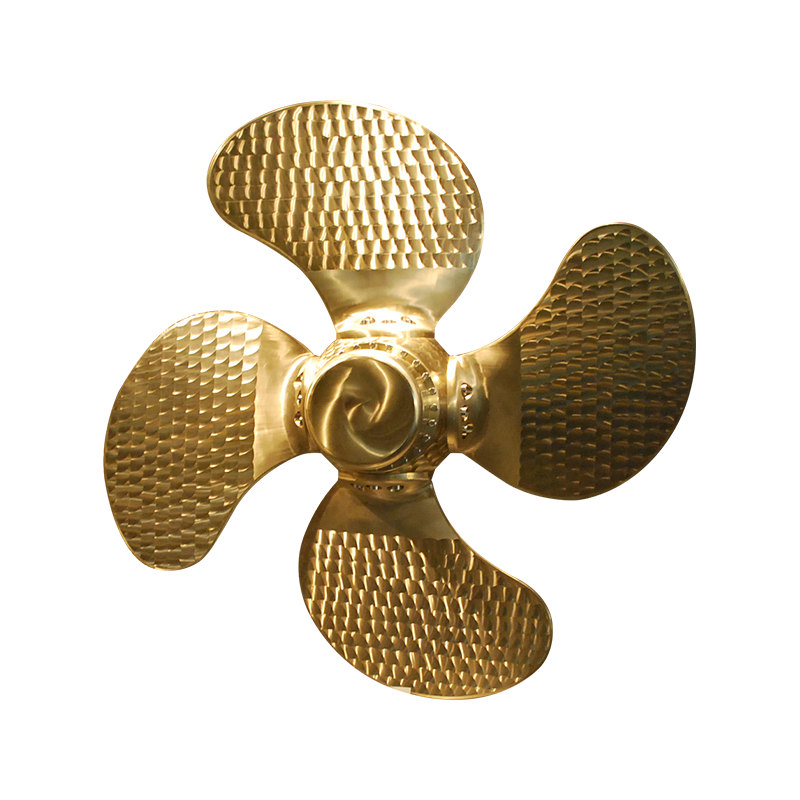
Controllable Pitch Propeller (CPP)
A CPP contains a hydraulic servomechanism inside the hub that rotates each blade around its own radial axis in response to commands from the bridge control system. The oil supply to the hub mechanism passes through a special shaft bore or external oil distribution box on the shaft. By varying blade pitch — typically across a range from full positive pitch (full ahead) through zero pitch (no thrust) to full negative pitch (full astern) — the propeller controls vessel speed and direction without changing shaft rotation direction or engine speed.
This allows the main engine to operate continuously at its most efficient RPM regardless of the thrust demand, which improves part-load fuel efficiency on vessels with variable operating profiles.
Comprehensive Technical Comparison
| Criteria | FPP | CPP |
|---|---|---|
| Blade pitch adjustment | Fixed at manufacture | Variable during operation |
| Reversing thrust method | Engine reversal or gearbox | Pitch reversal (shaft unchanged) |
| Peak propulsive efficiency | Very high at design point | Slightly lower (hub mechanism losses) |
| Off-design efficiency | Decreases significantly | Maintained through pitch adjustment |
| Mechanical complexity | Simple — no moving hub parts | Complex — hydraulics, seals, servos |
| Capital cost | Lower | Higher (50–100% premium typical) |
| Maintenance requirements | Low — no internal moving parts | Higher — hydraulic system, seals, bearings |
| Maneuvering response time | Slower (engine reversal lag) | Fast (pitch change within seconds) |
| Reliability at sea | Very high — no hub failure modes | Lower — hydraulic failure risk |
When FPP Is the Right Choice
FPPs are the standard propulsion solution for vessels that operate predominantly at a fixed speed and load condition on long voyages, where the simplicity and reliability advantages outweigh the maneuvering flexibility of a CPP:
- Large crude oil tankers (VLCC, ULCC): Operate at stable speeds of 13–16 knots for weeks at a time; maneuvering is infrequent and can be supported by tugs.
- Large bulk carriers (Capesize, Panamax): Long transoceanic voyages with relatively predictable load conditions — FPP efficiency at design speed is fully utilized.
- Large container ships: Shaft power levels above 40,000 kW; FPP's simple structure and high peak efficiency reduce total propulsion system cost at these power levels.
- Vessels where reliability is paramount: The absence of internal hub mechanism components eliminates an entire category of at-sea failure modes that are costly and difficult to repair without dry-docking.
When CPP Is the Right Choice
- Ferries and RoRo vessels: Frequent docking and departure cycles demand rapid, smooth thrust reversal without the mechanical delay of engine reversal — a CPP can go from full ahead to full astern in under 15 seconds.
- Offshore support vessels and platform supply vessels: Variable speed and thrust requirements during dynamic positioning operations make CPP's engine-speed decoupling essential for fuel efficiency.
- Fishing vessels and trawlers: Dramatically different propulsion demands between steaming speed and trawling speed — CPP maintains engine at optimal RPM across both modes.
- Icebreakers and polar vessels: Frequent speed changes and astern propulsion are operationally critical — CPP provides the flexibility needed safely.
- Naval vessels: Rapid response to changing tactical situations favors CPP's near-instantaneous thrust modulation over the slower engine reversal of FPP systems.
PREV:What is the major advantage of a fixed pitch propeller?
NEXT:What is a Propeller Energy Saving Device?
NEXT:What is a Propeller Energy Saving Device?
Interested in working together or need more info?
Related products

Get in Touch Now!
We're Here to Assist with
All Your Requirements
© Copyright Zhenjiang Jinye Propeller Co.,Ltd. All Rights Reserved. China Marine Copper Propeller Manufacturers Custom Marine Propeller Factory
