


 English
  中文简体
中文简体  русский
  Español
  عربى
عربى  Français
  Português
  Deutsch
  Türk
Türk
JINYE
JINYE
JINYE
JINYE
JINYE
JINYE
JINYE
JINYE
JINYE
JINYE
JINYE
JINYE
JINYE
JINYE
JINYE
JINYE

What is the difference between an Controllable Pitch Propeller and a variable pitch propeller?
A Controllable Pitch Propeller (CPP) and a variable pitch propeller are often used interchangeably, but in precise technical usage they describe the same category of propeller — one whose blade angles can be changed while the shaft is rotating — with "controllable pitch" emphasizing the remote, precise, and continuous nature of the adjustment. The term "variable pitch propeller" is broader and can include simpler designs where pitch is set manually on the ground (as in aviation) or adjusted in a limited, non-continuous way. In marine engineering, CPP is the preferred term for fully hydraulic or electric systems that allow real-time blade pitch adjustment from the bridge, while "variable pitch" may refer to legacy or simpler systems with limited remote control capability.
Understanding this distinction matters for specification, procurement, and maintenance decisions in ship propulsion.
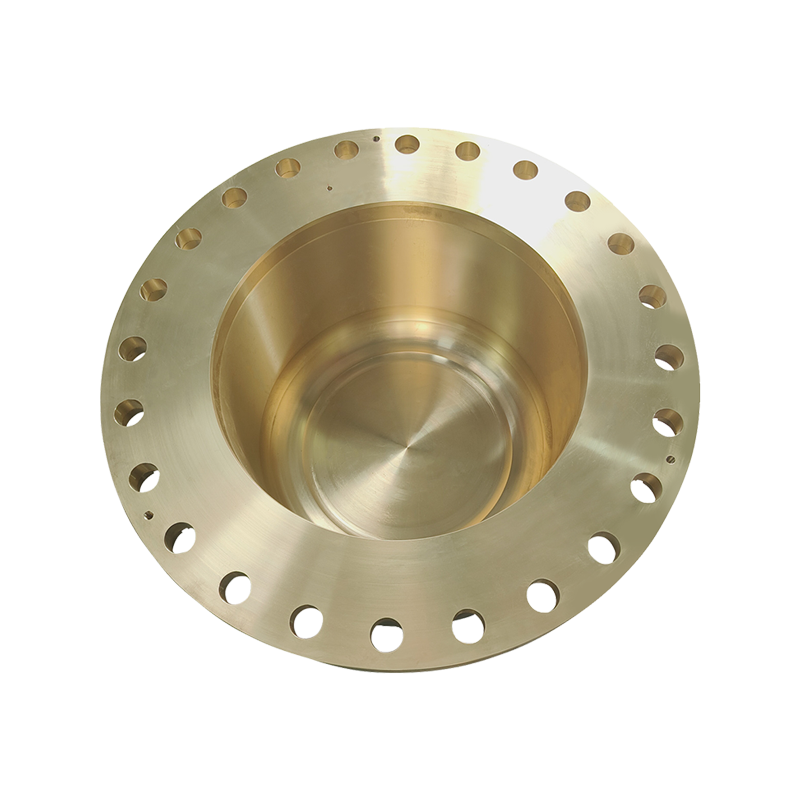
How a Controllable Pitch Propeller (CPP) Works
A CPP system adjusts the blade pitch angle through a hydraulic or electro-hydraulic servo mechanism located inside the propeller hub. The main engine speed remains constant while the hydraulic system repositions the blade root via a push rod running through the hollow propeller shaft. Key operating characteristics:
- Constant engine speed operation: The main engine runs at its optimal speed (typically the most fuel-efficient RPM band) while pitch adjustment handles all changes in thrust magnitude and direction
- Remote bridge control: The officer of the watch controls pitch continuously from the bridge via an electronic control system; response time from pitch command to full pitch change is typically 15–30 seconds on large vessels
- Astern thrust without engine reversal: By setting blade pitch to a negative angle, the CPP generates reverse thrust without stopping or reversing the main engine — critical for fast stopping and maneuvering
- Dynamic positioning compatibility: CPP systems can receive automatic input from dynamic positioning (DP) systems, adjusting pitch continuously to maintain vessel position against wind, current, and wave forces
How Variable Pitch Propellers Differ in Design and Capability
The term "variable pitch propeller" in its broader sense covers several distinct design philosophies:
Ground-Adjustable Variable Pitch (Aviation Context)
In aviation, the simplest variable pitch propellers are adjusted manually on the ground before flight — the pilot selects a pitch optimized for takeoff (fine pitch) or cruise (coarse pitch) but cannot change it in flight. These are not controllable pitch propellers and offer no dynamic adjustment capability.
Two-Position Variable Pitch
Some marine propulsion systems use a simplified variable pitch design with only two fixed blade positions — ahead and astern — selected by a mechanical or hydraulic actuator. While this allows direction reversal without engine reversal, it lacks the continuous pitch control and fuel optimization capability of a true CPP system.
Fully Controllable Pitch (CPP)
The most advanced form — continuous, stepless, remotely controlled pitch adjustment throughout the full pitch range, typically from +30° to −20° relative to the neutral (feathered) position. This is what the marine industry means by CPP and what distinguishes it from simpler variable pitch designs.
Direct Comparison: CPP vs Fixed Pitch vs Simple Variable Pitch
| Feature | Fixed Pitch Propeller | Simple Variable Pitch | CPP (Controllable Pitch) |
|---|---|---|---|
| Pitch adjustment | None | Fixed positions only | Continuous, stepless |
| Engine speed variation | Required for thrust change | Reduced | Constant optimal speed |
| Reverse thrust | Engine reversal required | Possible (limited) | Immediate, no engine reversal |
| Fuel efficiency | Fixed at design point | Improved at selected points | Optimized continuously |
| System complexity | Low | Medium | High |
| DP system compatibility | No | Limited | Yes — full integration |
Fuel Efficiency Advantage of CPP Systems
One of the most compelling advantages of CPP over simpler variable pitch designs is fuel optimization. Because the main engine always operates at its most efficient speed, fuel consumption can be reduced by 8–15% compared to fixed pitch arrangements requiring large engine speed variations for different vessel speeds or load conditions.
This is especially significant in vessels that spend much of their operating time at partial load — such as offshore support vessels, ro-ro ferries operating on variable tidal conditions, or fishing vessels that alternate between trawling and steaming speeds. In these applications, the fuel savings from CPP over a service life of 20–25 years can represent several million dollars.
Applications Where CPP Is the Preferred or Required Choice
- Tugboats: Require instantaneous thrust reversal and precise thrust modulation for towing operations; CPP provides the responsiveness and control that fixed pitch cannot
- Icebreakers: Must manage extreme and variable resistance loads as ice thickness changes; CPP prevents engine stall by adjusting pitch rather than speed
- Fishing vessels: The transition between trawling (high thrust, low speed) and steaming (moderate thrust, high speed) is handled efficiently by pitch adjustment at constant engine speed
- Ferries and ro-ro vessels: Frequent docking and departure cycles benefit from the fast, engine-stress-free thrust reversal of CPP
- Offshore vessels with dynamic positioning: CPP is a fundamental requirement for DP-classified vessels where continuous, precise thrust adjustment is mandatory for station-keeping
Maintenance Considerations: CPP vs Simpler Variable Pitch Designs
The increased capability of CPP systems comes with greater maintenance requirements compared to fixed or simple variable pitch propellers:
- Hydraulic system maintenance: The hub hydraulic circuit requires regular oil sampling, filter replacement, and seal inspection; hydraulic oil contamination is the most common cause of CPP control system failure
- Hub overhaul intervals: CPP hub internals (blade pins, slippers, actuating ring) require inspection every 5–7 years in drydock; this is more complex than a fixed pitch hub but yields better control over blade wear patterns
- Cavitation management: Proper pitch programming for different speed and load conditions reduces cavitation — a significant advantage over fixed pitch designs where cavitation at off-design conditions is unavoidable
PREV:What is the difference between a fixed pitch propeller and a controllable pitch propeller?
NEXT:Maximizing Heavy-Load Efficiency: The Essential Guide to Large Bulk Fixed Pitch Propellers
NEXT:Maximizing Heavy-Load Efficiency: The Essential Guide to Large Bulk Fixed Pitch Propellers
Interested in working together or need more info?
Related products
Get in Touch Now!
We're Here to Assist with
All Your Requirements
© Copyright Zhenjiang Jinye Propeller Co.,Ltd. All Rights Reserved. China Marine Copper Propeller Manufacturers Custom Marine Propeller Factory
