


 English
  中文简体
中文简体  русский
  Español
  عربى
عربى  Français
  Português
  Deutsch
  Türk
Türk
JINYE
JINYE
JINYE
JINYE
JINYE
JINYE
JINYE
JINYE
JINYE
JINYE
JINYE
JINYE
JINYE
JINYE
JINYE
JINYE

What are the main advantages of FPP Fixed Pitch Propellers?
The main advantages of FPP (Fixed Pitch Propellers) are structural simplicity, exceptional mechanical reliability, high propulsion efficiency at design conditions, significantly lower manufacturing and maintenance costs, greater durability, and reduced risk of operational failure compared to controllable pitch alternatives. These characteristics make FPP the dominant propulsion choice for large commercial vessels — including oil tankers, bulk carriers, container ships, and engineering vessels — that operate at consistent speeds on predictable routes where the blade pitch can be precisely optimized at the design stage and does not need adjustment during service.
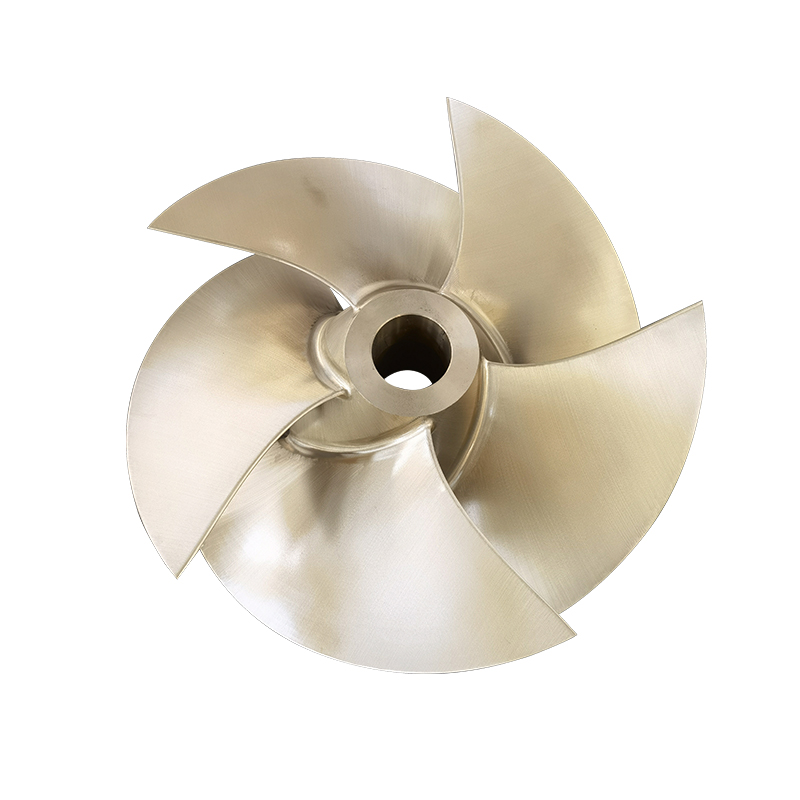
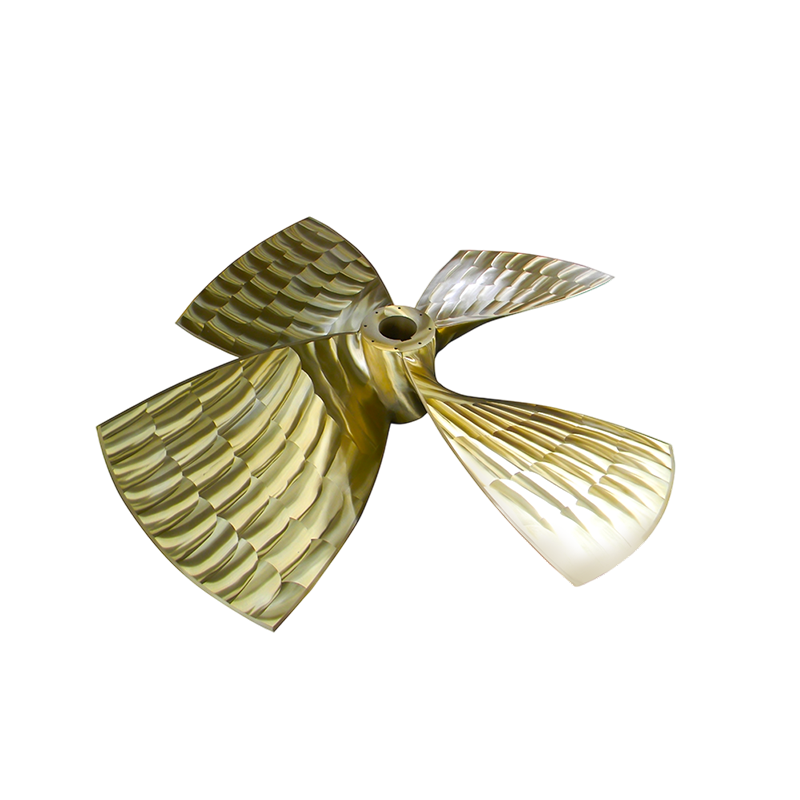
A Fixed Pitch Propeller is a propulsion device in which the blade angle — the pitch — is determined during design and manufacturing, and the blades are either integrally cast with the hub or permanently fixed to it. Because pitch cannot change during operation, the entire mechanical system is fundamentally simpler than controllable pitch alternatives, and this simplicity cascades into advantages across reliability, cost, lifespan, and operational predictability. The sections below examine each advantage in depth with supporting data and real-world context.
Advantage 1 — Structural Simplicity That Eliminates Mechanical Complexity
The most fundamental advantage of the Fixed Pitch Propeller is its inherent mechanical simplicity. Because the blade pitch is fixed at manufacture, the propeller requires no hub-internal pitch-change mechanism, no hydraulic oil supply system running through the shaft, no servo motor or actuator, no pitch feedback sensors, and no control electronics. The entire assembly consists of the hub, the blades (either integral or bolted), and the shaft connection — and nothing else.
In contrast, a Controllable Pitch Propeller (CPP) requires:
- An internal hub mechanism with sliding blocks, crossheads, and blade foot pivots to transmit pitch-change forces to each blade
- A hollow propeller shaft with an oil distribution box to supply hydraulic oil to the pitch-change mechanism
- A hydraulic power unit generating the pressure needed to move the pitch-change mechanism against hydrodynamic loads
- Position feedback systems to monitor and confirm blade angle
- Bridge control systems and associated cabling
Each additional component in a propulsion system represents a potential failure point. The FPP eliminates all of these additional systems entirely. This simplicity is not merely an engineering preference — it has direct, quantifiable implications for system reliability, maintenance burden, and total lifetime cost.
Advantage 2 — Superior Mechanical Reliability and Reduced Failure Risk
Mechanical reliability is arguably the most operationally critical advantage of Fixed Pitch Propellers in commercial shipping. A propulsion failure at sea can result in loss of maneuverability, emergency towage, unscheduled port calls, cargo delays, and — in severe cases — loss of the vessel. The simpler a propulsion system, the fewer mechanisms that can fail.
FPP systems demonstrate substantially higher mechanical availability than CPP systems in long-term operation. Analysis of propulsion system maintenance records in commercial fleets indicates that CPP hydraulic and mechanical failures account for 15–25% of all propulsion-related unplanned maintenance events, while FPP-specific failures (excluding shaft, bearing, and engine issues common to both) represent a much smaller proportion of the total. The hydraulic system of a CPP is particularly vulnerable — seal degradation, valve failure, oil contamination, and pump failure are all failure modes entirely absent from FPP operation.
Absence of Hydraulic System Failure Modes
The hydraulic oil system of a CPP operates under pressures of 100–200 bar continuously during vessel operation, circulating oil through a shaft that may be rotating at 80–120 rpm over a length of 20–60 meters. Maintaining seal integrity at all shaft penetration points under these conditions is a persistent maintenance challenge, and hydraulic oil contamination of the surrounding sea water is both an environmental liability and a sign of seal degradation. The FPP has no such system — and therefore no such failure modes or environmental risks from hydraulic leakage.
Structural Integrity Through Integral Casting
Many FPP designs use an integrally cast hub-and-blade assembly, meaning the blades and hub are cast as a single continuous piece of marine copper alloy (typically nickel-aluminum bronze or manganese-aluminum bronze). This eliminates all mechanical joints between blades and hub — joints that represent potential points of loosening, fretting corrosion, or fatigue cracking under the cyclic hydrodynamic loads experienced in service. An integral casting has no bolts to loosen, no joint faces to corrode, and no crevice corrosion sites at the blade root.
Advantage 3 — High Propulsion Efficiency at Design Operating Conditions
A common misconception about Fixed Pitch Propellers is that their inability to adjust pitch necessarily means lower efficiency. In reality, an FPP optimally designed for a specific vessel's design operating point can achieve open-water efficiency values of 65–75% — fully competitive with CPP efficiency at the same operating point. The key insight is that the FPP's efficiency advantage applies specifically at its design conditions, which is exactly the operating regime in which large commercial vessels spend the majority of their service lives.
Optimization for the Primary Operating Point
Large ocean-going cargo vessels — oil tankers, bulk carriers, container ships — operate at essentially constant speed for the vast majority of their at-sea time. A VLCC (Very Large Crude Carrier) on a typical voyage from the Middle East to Asia or Europe steams at design speed for approximately 85–90% of its total sea time. An FPP with its pitch precisely optimized for this design speed will deliver its peak efficiency during the operating condition that dominates the voyage. The efficiency reduction at off-design conditions — maneuvering in port, slow steaming, or ballast condition — is the trade-off accepted to achieve maximum efficiency where it matters most.
No Efficiency Loss From Pitch-Change Mechanism
The pitch-change mechanism within a CPP hub occupies volume that could otherwise be used for hub profile optimization. The hub boss ratio — the ratio of hub diameter to propeller diameter — is necessarily larger for CPP than for FPP because of the internal mechanism. A larger hub boss ratio increases propeller hub drag and reduces the available blade area at the root section, both of which reduce efficiency. FPP hub boss ratios are typically 0.16–0.20, while CPP hub boss ratios are typically 0.22–0.28 — a difference that contributes measurable efficiency advantage to the FPP at equivalent design conditions.
Advantage 4 — Significantly Lower Manufacturing Cost
The manufacturing cost difference between FPP and CPP is substantial and directly reflects the difference in mechanical complexity between the two systems. Fixed Pitch Propellers require casting or fabrication and precision machining of the propeller itself — no internal mechanisms, no hydraulic components, no control systems. Controllable Pitch Propellers require all of this plus the complex internal hub mechanism, the oil distribution box, the hydraulic power unit, the control system, and all associated installation components.
For large commercial vessels, the total installed cost of a CPP system is typically 2.5 to 4 times higher than an equivalent FPP installation. For a large bulk carrier or tanker, this difference can represent several million US dollars — a capital cost saving that directly improves vessel economics and investment return, particularly for operators with large fleets where the saving is multiplied across many vessels.
Manufacturing an FPP requires:
- Pattern making and casting of the propeller in marine copper alloy
- Non-destructive testing of the casting for internal defects
- CNC machining of blade faces and hub bore to design tolerances
- Balancing to eliminate vibration-inducing mass asymmetry
- Final inspection and certification
A CPP requires all of the above plus the manufacture, assembly, and testing of the pitch-change mechanism, the hydraulic system, and the control interface — processes that involve many more components, more manufacturing steps, more specialized expertise, and more quality control checkpoints.
Advantage 5 — Lower Maintenance Costs and Reduced Dry-Docking Requirements
Maintenance costs over the service life of a propeller system typically exceed the initial purchase cost by a substantial margin, making the FPP's lower maintenance requirements a major long-term financial advantage. Commercial vessels are typically dry-docked every 2.5 to 5 years for mandatory survey and maintenance. The cost of a dry-docking event for a large vessel — including port fees, crane time, labor, and lost trading days — can range from several hundred thousand to several million US dollars. Any reduction in maintenance scope during a dry-dock visit translates directly to reduced cost and faster return to service.
FPP Dry-Dock Maintenance Scope
During a scheduled dry-docking, FPP maintenance typically involves:
- Visual inspection of blade surfaces for cavitation erosion, corrosion, and impact damage
- Measurement of blade profile geometry against original design tolerances
- Polishing of blade surfaces to reduce frictional resistance and restore design efficiency
- Replacement of the shaft seal (tail shaft seal or rope guard)
- Inspection and if required re-tightening of the propeller nut
- Repair of minor blade damage by welding and re-profiling if needed
This is a well-understood, relatively straightforward maintenance scope that can be completed by competent shipyard technicians without specialized equipment.
Additional CPP Dry-Dock Maintenance Scope
In addition to all of the above, CPP maintenance during dry-docking typically requires:
- Disassembly of the hub to inspect the internal pitch-change mechanism
- Inspection and replacement of all hydraulic seals within the hub and oil distribution box
- Cleaning and flushing of the hydraulic oil system
- Inspection of the oil distribution box shaft seals
- Functional testing of the pitch-change mechanism under hydraulic power
- Calibration of the pitch feedback system
The additional maintenance scope of CPP dry-docking can add 2 to 5 additional dry-dock days and 30–60% additional maintenance cost compared to equivalent FPP maintenance — a difference that compounds significantly over the vessel's 25–30 year service life.
Advantage 6 — Greater Structural Strength and Resistance to Damage
Fixed Pitch Propellers are structurally stronger than Controllable Pitch Propellers of comparable dimensions and power rating, for two fundamental reasons: the absence of the hub mechanism that weakens the hub's cross-section, and the ability to use an integral casting that eliminates all mechanical joints between blades and hub.
Higher Torque Transmission Capability
In a CPP hub, the internal space occupied by the pitch-change mechanism reduces the material cross-section available for torque transmission between the shaft and the blades. The FPP hub, being solid except for the shaft bore, transmits torque through its full material section. For very high-powered vessels — large tankers with shaft powers of 15,000 to 30,000 kW or more — this structural difference is significant, and FPP designs can be proportioned to transmit these loads with greater material efficiency than CPP designs.
Impact Damage Containment
In the event of blade impact with a submerged object — a relatively common occurrence in ports, shallow channels, and ice-affected waters — the behavior of FPP and CPP differs importantly. An FPP blade that sustains impact damage bends or fractures at the point of impact, and the damage is contained within the blade. The hub and shaft remain undamaged, and the damaged blade can be repaired or replaced (in the case of bolted-blade designs) at the next dry-docking or, in some cases, by divers underwater. In a CPP, the same impact transmits force through the blade into the pitch-change mechanism, potentially damaging the mechanism and requiring a far more complex and expensive repair.
Advantage 7 — Longer Service Life and Lower Total Cost of Ownership
The combination of simple construction, robust materials, and absence of wear-prone internal mechanisms gives Fixed Pitch Propellers an outstanding service life. Well-maintained FPP installations on large commercial vessels regularly achieve service lives of 25–35 years — matching the economic life of the vessel itself — without requiring major overhaul. The propeller may need blade repairs, re-profiling, and polishing over this period, but the fundamental structural integrity of the hub-blade assembly remains sound.
Marine copper alloys — particularly the nickel-aluminum bronze grades most commonly used for large FPP castings — combine high tensile strength (typically 600–700 MPa) with excellent corrosion resistance in seawater, resistance to marine biofouling, and the ability to be repaired by welding. These material properties support the long service life of FPP systems and make material degradation in service a manageable, predictable factor rather than an unpredictable failure risk.
When total cost of ownership is calculated over a vessel's full service life — including initial purchase, installation, scheduled maintenance, unplanned repairs, and dry-docking costs — FPP systems consistently demonstrate lower lifetime costs than CPP systems for vessels operating at relatively constant speeds and loads. The capital saving at purchase, multiplied by the annual maintenance saving across 25–30 years of service, produces a total lifetime cost advantage that typically amounts to several million US dollars per vessel in large ship applications.
FPP vs. CPP: A Comprehensive Comparison
The following table provides a structured comparison of Fixed Pitch Propellers against Controllable Pitch Propellers across all key performance, cost, reliability, and operational dimensions:
| Attribute | Fixed Pitch Propeller (FPP) | Controllable Pitch Propeller (CPP) |
|---|---|---|
| Mechanical complexity | Low (no internal mechanism) | High (hub mechanism + hydraulic system) |
| Reliability / availability | Very high | Moderate (hydraulic failure risk) |
| Efficiency at design point | 65 – 75% (optimized for design speed) | 65 – 72% (hub boss penalty) |
| Efficiency at off-design speeds | Reduced (pitch fixed) | Higher (pitch adjustable) |
| Initial / manufacturing cost | Lower (2.5 – 4× less than CPP) | High |
| Maintenance cost (annual) | Low | High (hydraulic seals, mechanism) |
| Dry-dock maintenance scope | Simple and brief | Complex; 30 – 60% more costly |
| Hub boss ratio | 0.16 – 0.20 (smaller, less drag) | 0.22 – 0.28 (larger) |
| Service life | 25 – 35 years | 15 – 25 years (mechanism wear) |
| Reversing capability | Requires engine reversal | Pitch reversal (faster stopping) |
| Environmental risk | None (no hydraulic oil) | Hydraulic oil seal leakage risk |
| Best suited for | Large tankers, bulk carriers, container ships | Ferries, tugs, offshore vessels, varying speed |
Advantage 8 — No Environmental Risk From Hydraulic Oil Leakage
An increasingly important advantage of Fixed Pitch Propellers in the contemporary regulatory environment is the complete absence of hydraulic oil within the propeller system. Controllable Pitch Propellers contain significant volumes of hydraulic oil — typically 200 to 800 liters in the hub and shaft system of a large vessel — operating at high pressure. Any degradation of the shaft seals or hub seals allows this oil to enter the marine environment, creating pollution incidents that attract regulatory penalties, reputational damage, and potential port state control detention.
As international maritime environmental regulations become progressively more stringent under MARPOL and regional environmental frameworks, the FPP's freedom from hydraulic oil is an increasing commercial and compliance advantage. Operators of FPP-equipped vessels face no risk of propeller-related oil discharge incidents, no regulatory requirement for hydraulic oil management plans at the propeller, and no inspection exposure to this particular failure mode during port state control examinations.
Advantage 9 — Compatibility With Direct-Drive and Slow-Speed Engine Systems
Large commercial vessels are predominantly powered by two-stroke slow-speed diesel engines operating at 80–120 rpm, directly coupled to the propeller shaft without a gearbox. This direct-drive arrangement is the most mechanically efficient propulsion configuration for large vessels, with power transmission efficiency of approximately 98–99% — far superior to geared or diesel-electric drives. FPP systems are fully compatible with direct-drive slow-speed engines, and indeed this combination represents the standard propulsion configuration for the majority of large ocean-going cargo vessels.
CPP systems, while also operable with slow-speed engines, offer their greatest operational advantages when combined with constant-speed engines — diesel-electric or medium-speed diesel with gearbox — where the pitch adjustment compensates for varying thrust requirements at constant shaft speed. For direct-drive slow-speed engines, the speed of both engine and propeller are adjusted together, making the adjustable pitch of CPP less critical than in constant-speed applications. This means that for the largest commercial vessels where direct-drive is standard, the operational advantage of CPP over FPP is reduced while the cost and complexity disadvantage remains fully in force.
Vessel Types Where FPP Advantages Are Most Pronounced
The advantages of Fixed Pitch Propellers are most pronounced in vessel types that share the following operational characteristics: large size, high installed power, constant operating speed, long ocean voyages, and infrequent port calls. These characteristics describe the majority of the global commercial cargo fleet:
| Vessel Type | Typical Power Range | Operating Profile | Primary FPP Advantage |
|---|---|---|---|
| VLCC / Suezmax Tanker | 15,000 – 25,000 kW | Long ocean voyages at constant speed | Reliability, efficiency, low maintenance |
| Capesize Bulk Carrier | 12,000 – 20,000 kW | Deep-sea bulk commodity transport | Durability, low cost, simple maintenance |
| Large Container Ship | 40,000 – 80,000 kW | High-speed liner service at design speed | Peak efficiency at design speed, reliability |
| Large LNG / LPG Carrier | 18,000 – 35,000 kW | Continuous high-value cargo | Reliability, no hydraulic oil contamination risk |
| Large Engineering Vessel | 5,000 – 15,000 kW | Sustained operation at consistent load | Structural strength, long service life |
Key Design and Manufacturing Factors That Determine FPP Performance
The advantages of Fixed Pitch Propellers are fully realized only when the propeller is correctly designed and manufactured to the highest quality standards. Several design and manufacturing factors are critical to delivering the performance, efficiency, and durability that make FPP the preferred choice for large commercial vessels.
Hydrodynamic Design and Pitch Optimization
The pitch of an FPP must be precisely optimized for the specific vessel's hull form, displacement, design speed, engine power curve, and propeller diameter. Modern FPP design uses computational fluid dynamics (CFD) modeling and lifting surface theory to calculate the ideal pitch distribution across the blade radius that maximizes efficiency at the design operating point while minimizing pressure fluctuations that cause hull vibration. A propeller designed with 1% improvement in open-water efficiency translates to approximately 1% reduction in fuel consumption across the vessel's service life — a significant saving for vessels consuming 50–150 tonnes of fuel per day.
Material Selection and Casting Quality
The material used for FPP casting directly determines corrosion resistance, strength, and repairability. Nickel-aluminum bronze (NAB, typically Cu-Al-Ni-Fe-Mn alloy to ISO 484 or equivalent) is the standard material for most large propellers, offering yield strength of 250–300 MPa, tensile strength of 600–700 MPa, and excellent seawater corrosion resistance. Casting quality must be verified by radiographic and ultrasonic testing to ensure the absence of internal porosity, shrinkage cavities, or inclusions that could initiate fatigue cracking under service loads.
Surface Finish and Blade Polishing
Blade surface roughness has a measurable impact on propeller efficiency. A blade surface polished to a roughness of Ra 3.2 µm or better (ISO 484 Class S standard) achieves lower friction drag than an unpolished as-cast surface, improving efficiency by 1–3% compared to a rough casting. Premium FPP manufacturers polish blades to fine surface finishes as part of standard production, and regular in-service polishing (during dry-docking) maintains this efficiency advantage throughout the propeller's service life.
Zhenjiang Jinye Propeller Co., Ltd.: Specialist FPP Manufacturer
Zhenjiang Jinye Propeller Co., Ltd., established in 2005, is a professional Fixed Pitch Propeller manufacturer and factory based in Zhenjiang Jin Kou Science and Technology Industrial Park. The company operates across a facility area of more than 20,000 square meters, providing the production space and equipment necessary to manufacture marine propellers across the full range of commercial and industrial vessel applications.
The company's core expertise lies in the production, manufacturing, and sales of marine copper alloy propellers and related accessories. Its product portfolio encompasses the full range of marine propulsion components required by vessel operators and shipbuilders: fixed-pitch propellers, controllable pitch propellers, propeller hubs, oil cylinders, cap fins, and other propeller attachments. This comprehensive product range allows the company to serve as a single-source supplier for complete propeller system requirements.
With nearly two decades of focused expertise in marine propeller manufacturing, Zhenjiang Jinye has developed the design capability, casting quality standards, and precision machining processes necessary to realize the full performance advantages of Fixed Pitch Propeller technology — delivering the high efficiency, durability, and reliability that large commercial vessel operators require from their propulsion systems.
Summary: When to Choose FPP Over CPP
The decision between Fixed Pitch and Controllable Pitch propellers should be based on a clear assessment of the vessel's operational profile and the relative weight of the advantages each system offers. The following guidelines summarize when FPP is the preferred choice:
- The vessel operates at constant or near-constant speed for the majority of its service time — tankers, bulk carriers, container ships on liner services, and large engineering vessels all meet this criterion.
- Minimizing total lifetime cost is a priority — the lower initial cost, maintenance cost, and dry-docking cost of FPP produce a materially lower total cost of ownership over the vessel's economic life.
- Maximum propulsion reliability is required — for vessels where propulsion failure at sea carries high risk or cost, the FPP's mechanical simplicity and absence of hydraulic failure modes makes it the lower-risk choice.
- The vessel uses a direct-drive slow-speed engine — the standard propulsion configuration for large commercial vessels, which is inherently well matched to FPP operation.
- Environmental compliance with oil discharge regulations is a concern — FPP eliminates the hydraulic oil leakage risk entirely.
- A propeller service life matching the vessel life is required — FPP systems can achieve 25–35 year service lives with proper maintenance, while CPP mechanism wear typically necessitates earlier overhaul.
CPP remains the better choice for vessels requiring frequent speed variation, rapid reversing without engine reversal, or operation at significantly varying loads — ferries, tugs, offshore support vessels, and naval vessels. But for the large commercial cargo fleet that moves the majority of the world's traded goods, the Fixed Pitch Propeller's combination of efficiency, reliability, durability, and economy continues to make it the standard and dominant propulsion choice.
PREV:What is the purpose of a Controllable Pitch Propeller?
NEXT:What is the working principle of an Controllable Pitch Propeller?
NEXT:What is the working principle of an Controllable Pitch Propeller?
Interested in working together or need more info?
Related products

Get in Touch Now!
We're Here to Assist with
All Your Requirements
© Copyright Zhenjiang Jinye Propeller Co.,Ltd. All Rights Reserved. China Marine Copper Propeller Manufacturers Custom Marine Propeller Factory
