


 English
  中文简体
中文简体  русский
  Español
  عربى
عربى  Français
  Português
  Deutsch
  Türk
Türk
JINYE
JINYE
JINYE
JINYE
JINYE
JINYE
JINYE
JINYE
JINYE
JINYE
JINYE
JINYE
JINYE
JINYE
JINYE
JINYE

What is the purpose of a Controllable Pitch Propeller?
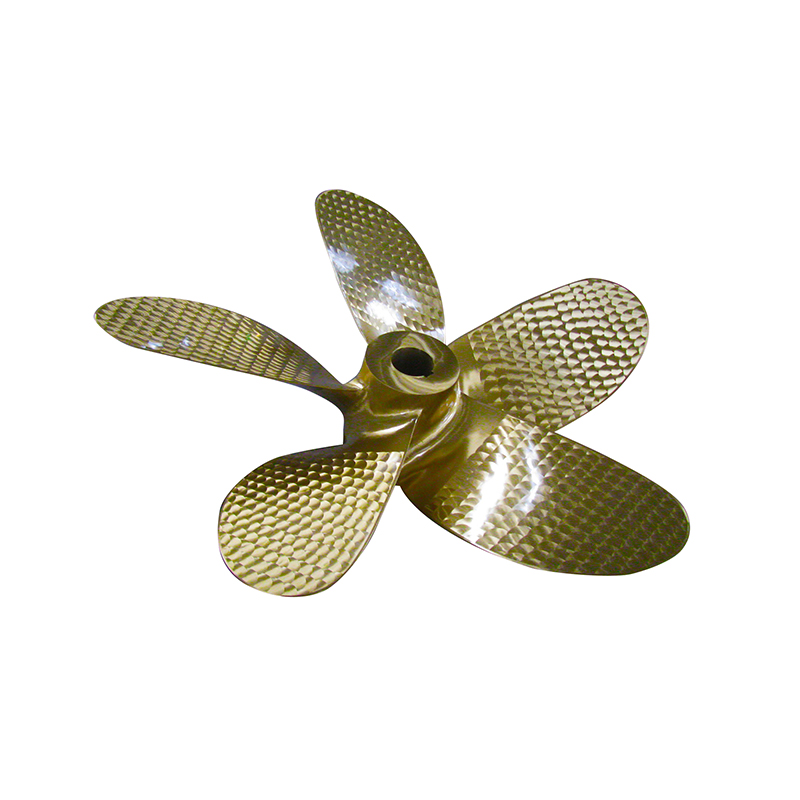
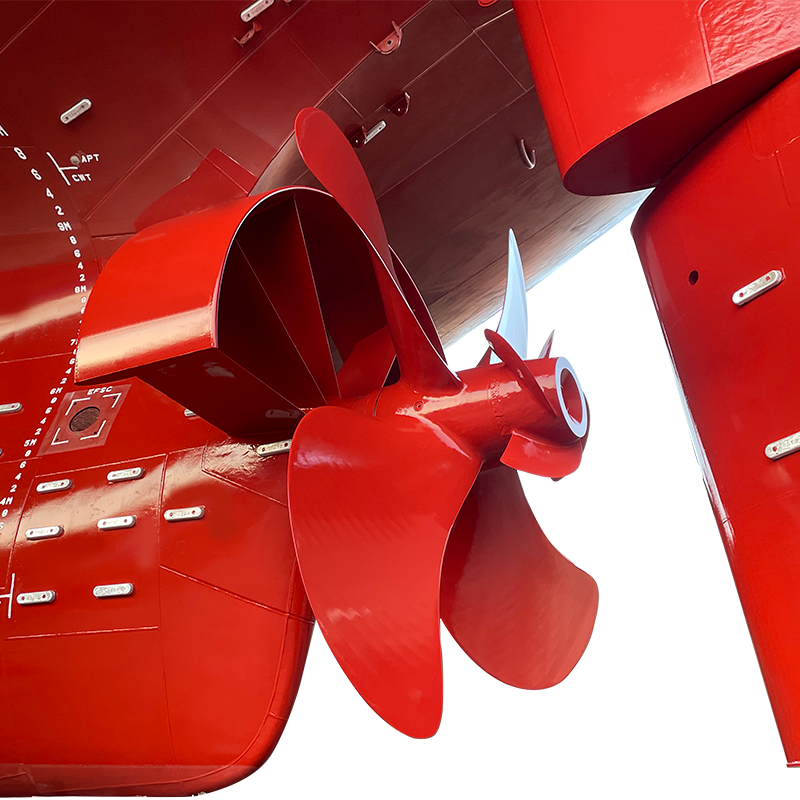
A Controllable Pitch Propeller (CPP) is designed to adjust the angle of its blades dynamically while the shaft continues to rotate, allowing a vessel to control thrust magnitude and direction without altering engine speed. This fundamental capability makes CPP systems the propulsion technology of choice wherever precise maneuverability, fuel efficiency, and operational flexibility are required — from large commercial ferries and naval vessels to specialized workboats such as tugboats, fishing vessels, and icebreakers.
How a Controllable Pitch Propeller Works
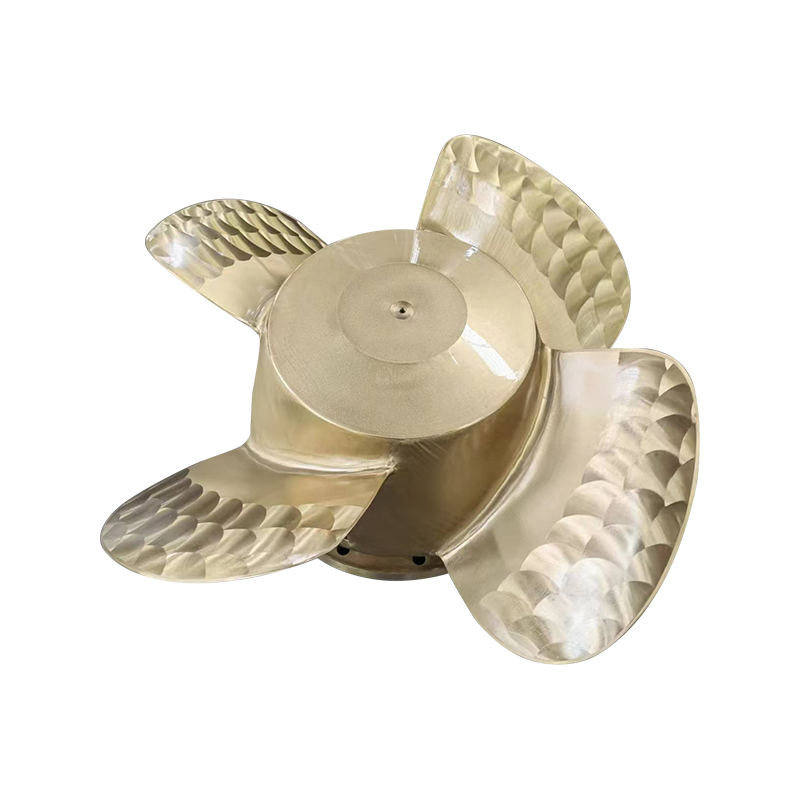
Unlike a fixed-pitch propeller — where blade angle is permanently set at manufacture — a CPP incorporates a hydraulic or electro-hydraulic mechanism housed inside the propeller hub. A central oil distribution box delivers pressurized hydraulic fluid through the hollow propeller shaft to pistons or crank mechanisms within the hub. As hydraulic pressure acts on these internal components, each blade rotates about its own longitudinal axis, changing its pitch angle simultaneously and symmetrically.
The pitch angle — the angle at which the blade face meets the water — directly determines how much water the blade displaces per revolution and therefore how much thrust is generated. By continuously modulating this angle, the ship's operator or automated control system can vary thrust from full ahead, through zero thrust, to full astern, all while the main engine turns at its most efficient rpm. The key components that make this possible include:
- Propeller hub: The central structural element that houses the blade-rotation mechanism and hydraulic pistons.
- Oil cylinder: Converts hydraulic pressure into the linear force needed to rotate the blades to the commanded pitch angle.
- Hollow propeller shaft: Carries hydraulic oil lines to and from the rotating hub without leakage.
- Oil distribution box (OD box): The stationary-to-rotating interface that transfers hydraulic fluid from the fixed ship structure to the spinning shaft assembly.
- Pitch control system: An electronic or electro-hydraulic controller that receives commands from the bridge and actuates blade movement with precision and speed.
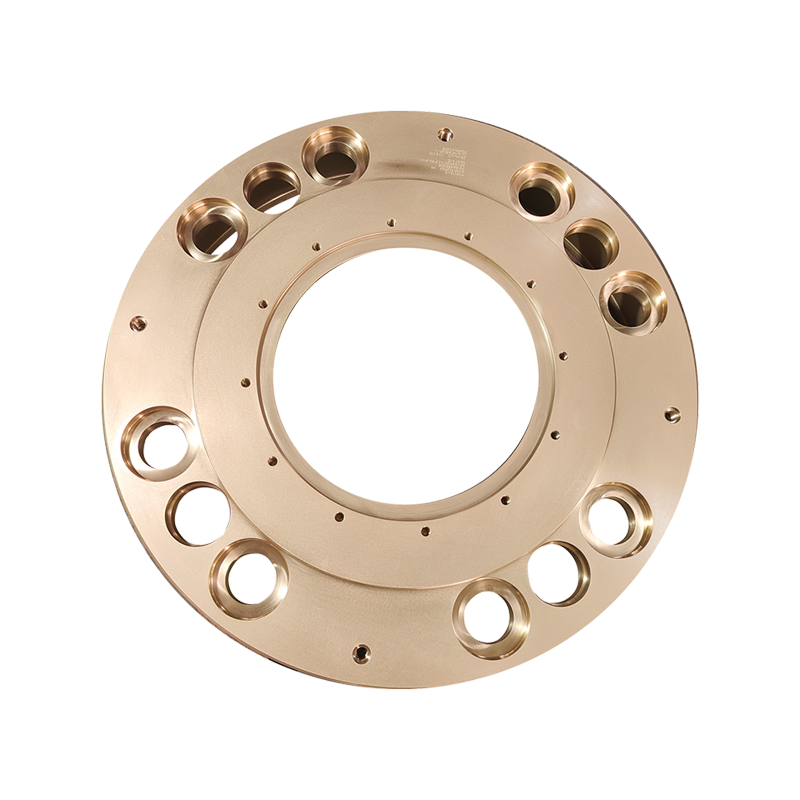
Primary Purpose: Thrust Control Without Engine Speed Changes
The central purpose of a CPP is to decouple thrust control from engine speed control. In a fixed-pitch propeller installation, the only way to vary thrust is to change engine rpm — which means repeatedly accelerating and decelerating the main engine. This is mechanically stressful, thermally inefficient, and slow to respond.
With a CPP, the main engine can be held at a constant, optimally efficient speed — often near its rated maximum continuous rating (MCR) — while blade pitch is varied to deliver any required level of thrust. Pitch changes can typically be executed in under 10 seconds for most commercial CPP systems, providing a rapid and smooth response to maneuvering demands that no engine speed change can match. This has several direct operational consequences:
- The engine runs at its most fuel-efficient operating point regardless of vessel speed or load condition.
- Thermal and mechanical stress on the engine is minimized, reducing maintenance intervals and extending overhaul periods.
- Thrust reversal for braking or astern movement is achieved by moving pitch through zero to negative angles — no engine reversal required.
- Auxiliary power generation linked to the main shaft (shaft generators) remains stable since engine speed is constant.
Fuel Efficiency and Optimized Propulsion Performance
Fuel economy is one of the most compelling reasons to choose a CPP system. Modern diesel engines operate with peak thermal efficiency within a relatively narrow band of rpm. A CPP allows the operator to keep the engine within this optimal band at all times. Studies on commercial ferry and ro-ro vessel operations have shown that CPP-equipped vessels can achieve fuel savings of 8–15% compared to fixed-pitch equivalents across typical mixed-speed duty cycles, depending on route profile and load variation.
The efficiency gain comes from two directions. First, the engine itself burns fuel more efficiently at its design speed. Second, the propeller blade pitch can be continuously optimized for the actual vessel speed and resistance at any given moment — accounting for variables like hull fouling, sea state, and cargo load. In contrast, a fixed-pitch propeller is designed to be optimal at only one specific speed and loading condition; all other operating points represent a compromise.
For vessels that operate across a wide range of speeds — such as patrol vessels that alternate between transit speed and loiter speed, or fishing vessels that switch between steaming to grounds and slow trawling — this continuous pitch optimization delivers significant cumulative fuel savings over a vessel's service life.
Enhanced Maneuverability and Vessel Controllability
The rapid, smooth, and precise thrust modulation that CPP systems provide translates directly into superior vessel handling. This is especially important in confined waters, port approaches, and dynamic operational environments. Key maneuverability benefits include:
Fast and Smooth Ahead/Astern Transitions
A vessel with a fixed-pitch propeller must stop the engine, reverse its rotation, and restart it to go from ahead to astern thrust — a process that can take 30–60 seconds or more and places considerable stress on the engine and gearbox. A CPP transitions from full ahead to full astern simply by moving the pitch control lever, with the propeller passing through zero pitch in a matter of seconds. This dramatically shortens stopping distances and improves port entry safety.
Dynamic Positioning Support
Offshore support vessels, crane barges, and research ships that require station-keeping in waves and current depend on near-instantaneous thrust response. CPP systems, often combined with azimuth thrusters and dynamic positioning (DP) computers, can adjust thrust within fractions of a second, maintaining vessel position to within 1–2 meters in open sea conditions. Fixed-pitch propellers cannot achieve the responsiveness required by DP class ratings.
Precision Operations for Specialized Vessels
Tugboats must deliver precisely metered thrust to guide large vessels without sudden jolts. Fishing trawlers need to maintain exact trawl speeds across varying sea conditions. Icebreakers must modulate thrust continuously as ice resistance fluctuates. In all of these use cases, the CPP's ability to deliver infinitely variable thrust from zero to maximum in both directions — without touching the engine throttle — is operationally essential and practically irreplaceable.
Reduction of Cavitation, Vibration, and Noise
Cavitation — the formation and violent collapse of vapor bubbles on propeller blade surfaces — is one of the most destructive phenomena in marine propulsion. It erodes blade material, generates intense noise, causes vibration that fatigues hull structure, and reduces propulsive efficiency. CPP systems help manage and reduce cavitation through several mechanisms:
- Optimized blade loading at all speeds: Because pitch can be adjusted to match the actual advance speed of the vessel, the blade angle of attack — and therefore blade loading — can be kept within cavitation-free limits across the full operating envelope.
- Avoidance of over- and under-pitch conditions: A fixed-pitch propeller inevitably operates at non-optimal pitch when the vessel deviates from its design point. These off-design conditions increase susceptibility to cavitation. A CPP eliminates this by always operating at the correct pitch.
- Reduced hull-borne vibration: By maintaining uniform, optimized blade loading, CPP systems generate smoother, more periodic hydrodynamic forces on the hull, significantly reducing vibration levels in accommodation spaces and machinery rooms.
For passenger vessels and naval ships where crew comfort and acoustic signature are critical, these vibration and noise reductions are as important as the efficiency gains.
Extended Service Life of the Propulsion System
The combination of constant engine speed, reduced cavitation, lower vibration levels, and smoother load transitions all contribute to significantly longer service intervals for every component in the propulsion train. Main engine manufacturers typically specify longer times between overhaul (TBO) for engines operating in CPP installations compared to direct-reversing fixed-pitch installations, because the engine is spared the thermal cycling and mechanical shock of repeated start-stop and reversal sequences.
Propeller blades themselves also last longer when operating at optimized pitch, since cavitation erosion — one of the primary causes of blade damage requiring repair or replacement — is substantially reduced. For operators managing large fleets, the reduction in dry-docking frequency and repair costs represents a major economic advantage that compounds over the vessel's 25–30 year operational life.
CPP vs. Fixed Pitch Propeller: A Direct Comparison
Selecting between a CPP and a fixed-pitch propeller (FPP) involves weighing operational requirements against mechanical complexity and initial investment. The table below outlines the key differences:
| Criterion | Fixed Pitch Propeller (FPP) | Controllable Pitch Propeller (CPP) |
|---|---|---|
| Thrust control method | Engine speed change | Blade pitch change |
| Thrust reversal time | 30 – 90 seconds (engine reversal) | Under 10 seconds (pitch change) |
| Engine efficiency | Varies with speed demand | Constant at optimal rpm |
| Fuel savings over mixed duty cycle | Baseline | 8 – 15% improvement typical |
| Cavitation risk at off-design speeds | Elevated | Minimized |
| Mechanical complexity | Simple, minimal maintenance | Higher (hydraulics, hub mechanism) |
| Dynamic positioning capability | Not suitable | Well suited |
| Best suited for | Simple point-to-point routes, small vessels | Ferries, tugs, naval, offshore, fishing |
Vessel Types That Benefit Most from CPP Systems
While any vessel can benefit from the efficiency and control that a CPP provides, certain vessel types derive outsized value from the technology:
Tugboats
Tugboat operations involve constant, rapid changes in thrust direction and magnitude as the tug assists, repositions, or holds a large vessel. A CPP enables the tug master to deliver smooth, metered force transitions that protect both the towed vessel and the tug's own propulsion system from shock loads. Most modern azimuth and conventional tugboats of 2,000 kW and above are fitted with CPP systems as a matter of operational standard.
Fishing Vessels
Fishing vessels — particularly trawlers — must maintain precise, slow trawl speeds of 2–4 knots for hours at a time while also steaming to and from grounds at 10–14 knots. A fixed-pitch propeller optimized for trawling would be hopelessly inefficient at transit speed and vice versa. A CPP eliminates this compromise entirely, delivering optimal efficiency at both extremes and every point in between. Catch quality also benefits: by reducing vibration transmitted through the hull, the CPP reduces stress on onboard refrigeration and processing equipment.
Ferries and Ro-Ro Vessels
Ferries perform dozens of port approach and departure maneuvers every day. The CPP's ability to rapidly transition thrust — combined with precise control at low speeds — makes docking safer and faster, reducing port turnaround time. Passenger comfort also improves due to the reduction in vibration and the smoother acceleration and deceleration profiles that CPP control enables.
Icebreakers and Ice-Class Vessels
Ice resistance is inherently unpredictable — a vessel moving through pack ice encounters rapidly fluctuating resistance as ice channels open and close. Without pitch control, the propeller and engine would experience violent load swings as resistance changes. A CPP absorbs these fluctuations by automatically adjusting pitch to maintain constant engine load, protecting the propulsion system from overload and providing the steady thrust needed to maintain headway through ice.
Naval vessels require silent running at low speed, maximum sprint capability, and rapid maneuvering on demand. CPP systems support all three requirements simultaneously. At low speed, reduced pitch minimizes cavitation and radiated noise. At full power, optimal pitch delivers maximum thrust efficiency. And in tactical situations, instantaneous thrust reversal capability provides the evasion and braking response that operational demands require.
Integration with Modern Ship Control and Automation Systems
Contemporary CPP installations are rarely standalone systems. They are integrated into broader ship automation architectures that coordinate pitch control with engine management, shaft generator operation, rudder control, bow thruster deployment, and in some cases full dynamic positioning systems. This integration delivers several advanced capabilities:
- Combined pitch/rpm control: Advanced controllers simultaneously optimize both pitch angle and engine rpm to find the lowest fuel consumption operating point for any required vessel speed — often called a "combinator curve" control mode.
- Load control: Automatic limiting of pitch to prevent engine overload in heavy seas, headwinds, or when hull fouling increases resistance — protecting the engine without requiring crew intervention.
- Shaft generator integration: Since engine speed is held constant, the shaft-mounted generator produces stable frequency and voltage, enabling reliable power generation for hotel loads without auxiliary diesel generators.
- Remote and automated bridge control: Single-lever bridge control systems send pitch commands directly to the CPP hydraulic control unit, simplifying watchkeeping and reducing the possibility of operator error during critical maneuvering phases.
Materials and Manufacturing Quality in CPP Production
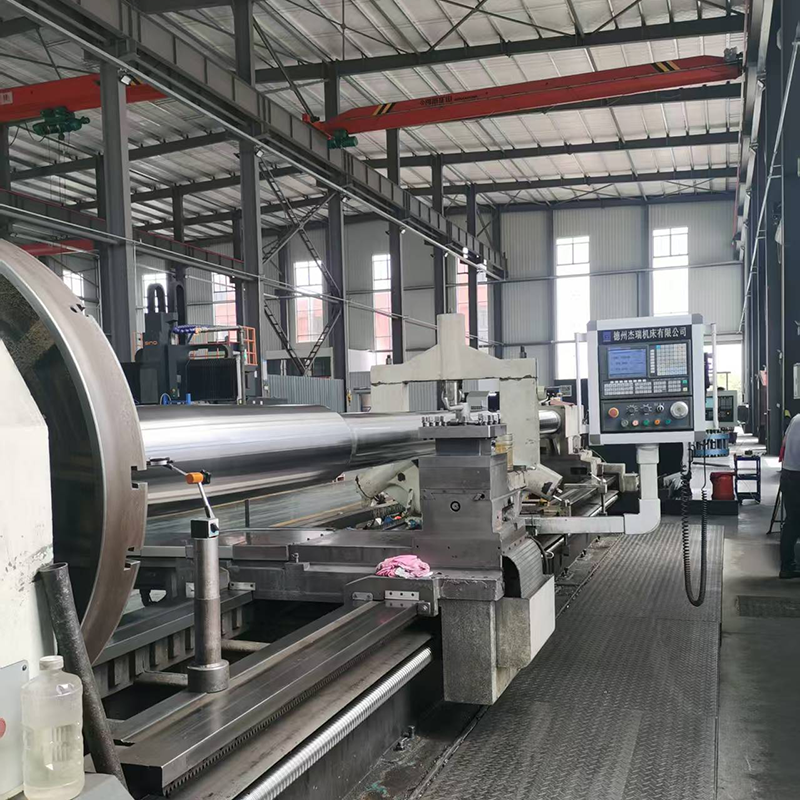
The performance and reliability of a CPP system depend heavily on the quality of materials and manufacturing precision applied to its components. Propeller blades are typically cast from high-strength marine copper alloys — nickel-aluminum bronze (NAB) being the most common — which offer excellent resistance to seawater corrosion, good fatigue strength, and natural anti-fouling properties. Hub components and oil cylinders are machined to extremely tight tolerances to ensure hydraulic seal integrity and smooth blade rotation over decades of service.
Zhenjiang Jinye Propeller Co., Ltd., established in 2005 and located in Zhenjiang Jin Kou Science and Technology Industrial Park, specializes in the production and manufacture of marine copper alloy propellers and propulsion accessories. Operating across a facility of more than 20,000 square meters, the company produces a comprehensive range of propulsion components including fixed-pitch propellers, controllable pitch propellers, propeller hubs, oil cylinders, cap fins, and related attachments. This integrated production capability — covering blades, hubs, and hydraulic components under one roof — ensures dimensional consistency and material traceability across the complete CPP assembly.
Maintenance Considerations for CPP Systems
The additional mechanical complexity of a CPP compared to a fixed-pitch propeller requires attention to a specific set of maintenance requirements. Operators should be aware of the following:
- Hydraulic oil condition: The hydraulic oil used to actuate blade pitch must be monitored for contamination, moisture ingress, and viscosity degradation. Water contamination is particularly damaging to hydraulic seals and can cause corrosion in the hub mechanism. Oil sampling at regular intervals is recommended.
- Hub seal inspection: Seals between the rotating hub and the fixed oil distribution box are subject to wear and must be inspected and replaced at intervals specified by the manufacturer, typically at each dry-docking cycle.
- Blade bearing condition: Each blade rotates about its own bearing surface within the hub. These bearings carry significant hydrodynamic loads and should be checked for wear, corrosion, and proper lubrication during each underwater inspection.
- Pitch feedback calibration: The sensors that report actual blade pitch position to the control system should be calibrated periodically to ensure that commanded pitch and actual pitch remain in close agreement — a discrepancy here affects both performance and safety.
- Hydraulic pump and valve maintenance: The shipboard hydraulic power unit driving the pitch system requires routine filter changes, pump wear inspection, and pressure relief valve testing.
When maintained according to manufacturer specifications, modern CPP hubs routinely achieve 5-year service intervals between major overhauls, consistent with standard dry-docking cycles for most commercial vessel classes.
Summary: The Core Purposes of a Controllable Pitch Propeller
The controllable pitch propeller serves multiple interconnected purposes that together define its value in modern marine propulsion:
| Purpose | How CPP Achieves It | Operational Outcome |
|---|---|---|
| Thrust control | Blade pitch varied hydraulically | Full range ahead/astern without engine reversal |
| Fuel efficiency | Engine held at optimal rpm | 8 – 15% fuel saving over mixed duty cycles |
| Maneuverability | Rapid pitch response (<10 sec) | Safe port operations, dynamic positioning |
| Cavitation reduction | Optimized blade loading at all speeds | Less blade erosion, lower noise and vibration |
| Engine protection | Constant speed, automatic load limiting | Extended TBO, lower lifecycle maintenance cost |
| Power generation stability | Constant shaft speed enables shaft generators | Reliable onboard power, fewer auxiliary generators |
For any vessel where efficiency, rapid maneuvering, and propulsion system longevity are priorities, the controllable pitch propeller remains the most comprehensive and operationally capable propulsion solution available in conventional marine engineering. Its ability to simultaneously optimize engine operation, blade hydrodynamics, and thrust response — across a wide range of operating conditions — makes it a technology whose purpose goes far beyond simple propulsion, representing an integrated approach to ship performance management.
PREV:What is the working principle of a Fixed Pitch Propeller (FPP)?
NEXT:What are the main advantages of FPP Fixed Pitch Propellers?
NEXT:What are the main advantages of FPP Fixed Pitch Propellers?
Interested in working together or need more info?
Related products
Get in Touch Now!
We're Here to Assist with
All Your Requirements
© Copyright Zhenjiang Jinye Propeller Co.,Ltd. All Rights Reserved. China Marine Copper Propeller Manufacturers Custom Marine Propeller Factory
