


 English
  中文简体
中文简体  русский
  Español
  عربى
عربى  Français
  Português
  Deutsch
  Türk
Türk
JINYE
JINYE
JINYE
JINYE
JINYE
JINYE
JINYE
JINYE
JINYE
JINYE
JINYE
JINYE
JINYE
JINYE
JINYE
JINYE

How to Inspect a Controllable Pitch Propeller
Inspecting a Controllable Pitch Propeller means checking five core areas in order: the blade surfaces, the hub sealing, the hydraulic oil and pressure system, the pitch-change mechanism function, and any cavitation or erosion damage. Most operational failures trace back to seal leakage or hydraulic contamination rather than blade damage, so these two areas deserve the most attention during routine checks. A full inspection typically takes between two and four hours for a mid-sized vessel when performed by a trained technician with the propeller accessible in dry dock or via diver survey.
Skipping any one of these five steps increases the risk of unplanned downtime. According to the International Association of Classification Societies (IACS), unified requirements for propulsion shafting call for periodic surveys of controllable pitch systems at intervals tied to class notation, typically every five years for special survey, with intermediate checks recommended annually.
Visual and Blade Surface Inspection
Start with a close visual pass over each blade. Look for pitting, cracks, bent edges, and any signs of impact damage from debris or grounding. Use a bright handheld light and run a hand along the leading edge to feel for irregularities that are not visible under normal lighting.
What to look for on the blade surface
- Pitting or small craters, often the first sign of cavitation erosion
- Hairline cracks near the blade root, which carry the highest stress load
- Discoloration or scoring from debris strikes
- Uneven wear pattern between blades, which can indicate a pitch imbalance
Measure blade thickness at the tip and mid-span with an ultrasonic thickness gauge if cavitation is suspected. A loss greater than 10 percent of original thickness at any point is generally flagged by classification societies such as DNV as a threshold requiring closer monitoring or repair.
Hub and Blade Root Sealing Check
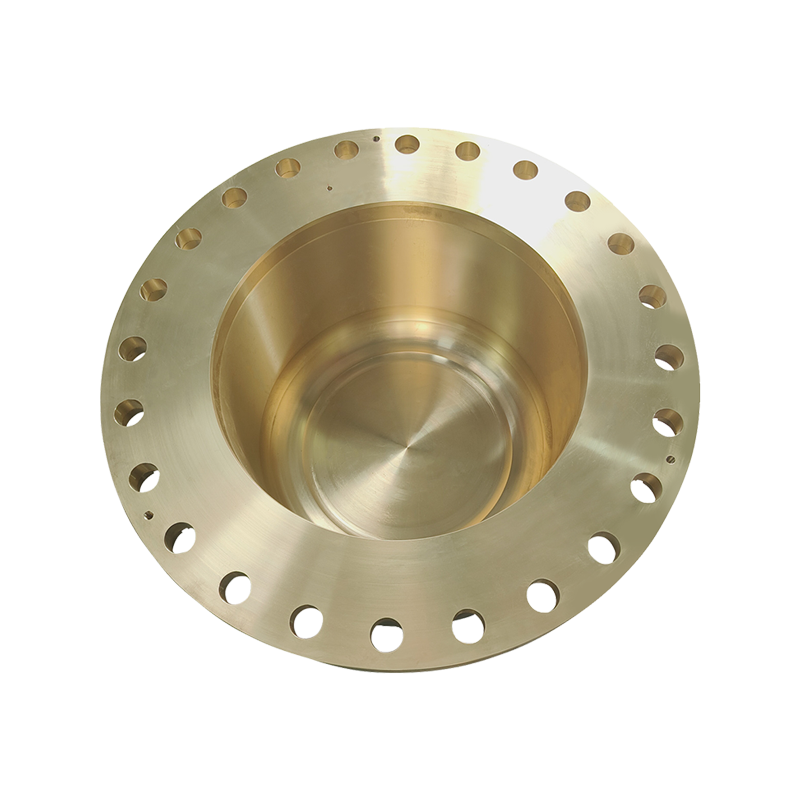
The hub houses the mechanical linkage that rotates each blade around its axis, and this is where most leaks originate. Wipe down the hub exterior and check for oil streaks trailing from the blade root seals, which indicate seal wear or hub pressure loss.
Common seal issues found during inspection
| Oil sheen around blade root | Early-stage seal wear, monitor closely |
| Visible oil trail in water | Seal failure, requires immediate replacement |
| Water intrusion in hub oil sample | Seal breach, hub must be opened for repair |
A quick field test is drawing an oil sample from the hub and checking for a milky appearance, which signals water contamination. Clean amber oil generally means the sealing system is intact.
Hydraulic Oil and Pressure System Testing
The pitch-change mechanism on a controllable pitch propeller relies on hydraulic pressure delivered through the shaft to the hub piston. Draw an oil sample from the hydraulic power unit and check for particulate contamination, water content, and viscosity drift.
Standard oil test benchmarks
- Water content should stay below 0.1 percent by volume
- Particle count should meet ISO 4406 cleanliness code as specified by the equipment manufacturer
- Viscosity should not deviate more than 10 percent from the fresh oil baseline
Also check the hydraulic pump pressure gauge during a static pitch-change test. A drop of more than 15 percent from rated operating pressure often points to internal pump wear or a leaking distributor valve.
Pitch Mechanism Function Test
With the vessel secured and engine at idle, run the pitch control through its full range, from full ahead to full astern, while observing blade angle response time and smoothness. Any hesitation, jerky movement, or failure to reach the commanded angle indicates a mechanical or hydraulic fault.
Steps for a basic function test
- Confirm the control lever position matches the actual blade angle indicator
- Cycle from zero pitch to full ahead and record response time
- Cycle to full astern and repeat the timing check
- Compare results against the manufacturer's baseline response time
Well-maintained systems, including the Controllable Pitch Propeller units built by Jinye, are designed to respond within a few seconds under normal hydraulic pressure, so any response time exceeding double the rated figure should be treated as a maintenance flag.
Cavitation and Erosion Damage Assessment
Cavitation occurs when pressure drops on the blade's suction side, causing vapor bubbles that collapse violently against the metal surface. Over time this creates a rough, sponge-like texture on the blade, most commonly near the tip and trailing edge.
Document any cavitation damage with photographs and measurements at each inspection interval so wear can be tracked over time rather than assessed in isolation. A blade losing more than 2 to 3 percent efficiency per year from cavitation erosion, based on typical fleet maintenance data reported by ship classification surveys, is a signal to review the operating profile or upgrade blade material.
Recommended Inspection Intervals
Inspection frequency depends on vessel type, operating hours, and classification requirements. The table below outlines a general schedule used across commercial fleets.
| Daily visual check while underway | Check pitch indicator against control command |
| Monthly | Hydraulic oil sample and pressure test |
| Annual | Full visual inspection, seal check, and blade thickness measurement |
| Every five years | Special survey per classification society requirements, including hub disassembly |
Tools and Equipment Checklist
Having the right tools on hand before starting an inspection saves time and improves accuracy of the readings collected.
- Ultrasonic thickness gauge for blade wear measurement
- Oil sampling kit with water-contamination test strips
- Pressure gauge kit compatible with the hydraulic power unit
- Digital camera for damage documentation
- Calipers or a pitch gauge to verify blade angle accuracy
When to Schedule Professional Servicing
Routine visual and oil checks can be handled by ship's engineering staff, but certain findings call for a qualified propeller service technician. These include any seal failure, hydraulic pressure loss beyond acceptable range, cracked blade roots, or pitch response times that fall well outside the manufacturer's baseline.
Working with a manufacturer that offers direct technical support, such as Jinye's Controllable Pitch Propeller product line, gives operators access to original design specifications and replacement parts, which shortens repair turnaround and keeps the inspection data consistent across the life of the propeller.
PREV:How a Controllable Pitch Propeller Works
NEXT:What is the working principle of a Fixed Pitch Propeller?
NEXT:What is the working principle of a Fixed Pitch Propeller?
Interested in working together or need more info?
Related products
Get in Touch Now!
We're Here to Assist with
All Your Requirements
© Copyright Zhenjiang Jinye Propeller Co.,Ltd. All Rights Reserved. China Marine Copper Propeller Manufacturers Custom Marine Propeller Factory
