


 English
  中文简体
中文简体  русский
  Español
  عربى
عربى  Français
  Português
  Deutsch
  Türk
Türk
JINYE
JINYE
JINYE
JINYE
JINYE
JINYE
JINYE
JINYE
JINYE
JINYE
JINYE
JINYE
JINYE
JINYE
JINYE
JINYE

What are the advantages of a Controllable Pitch Propeller?
A Controllable Pitch Propeller (CPP) offers a decisive advantage over fixed-pitch alternatives: it adjusts blade angle dynamically without changing engine speed, delivering precise thrust control across all operating conditions. This single capability cascades into fuel savings, superior maneuverability, reduced mechanical wear, and quieter operation — making CPP the preferred propulsion solution for vessels that demand performance and reliability.
How a Controllable Pitch Propeller Works
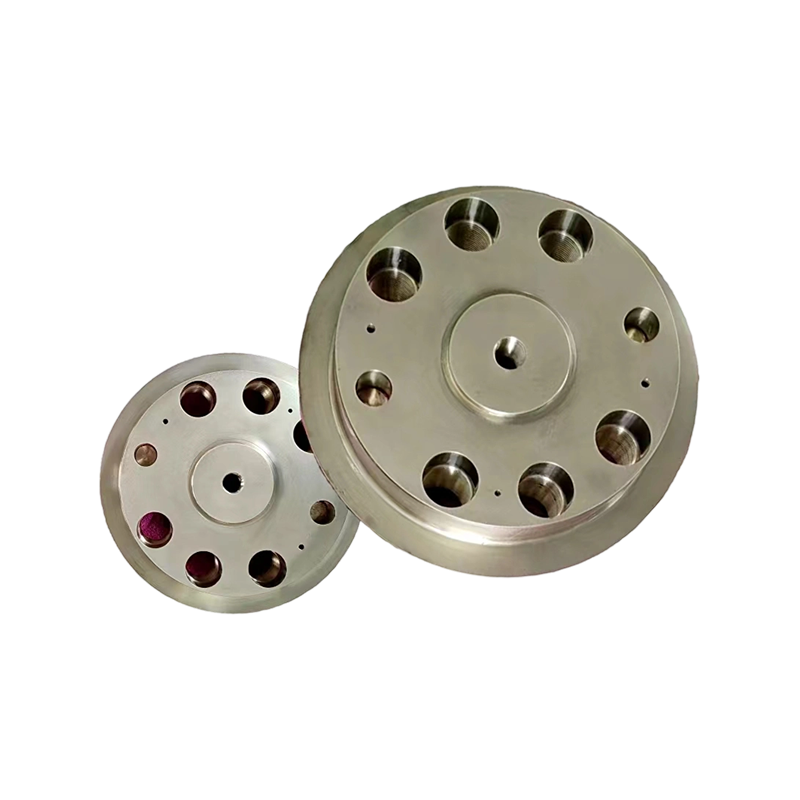
Unlike a fixed-pitch propeller where blade angle is permanently set at manufacture, a CPP uses a hydraulic or electro-hydraulic mechanism inside the propeller hub to rotate each blade around its own longitudinal axis. The pitch angle — the angle at which blades "bite" into the water — can be varied continuously from maximum ahead thrust through zero thrust to full astern, all while the main engine maintains a constant rotational speed.
This means the engine always runs within its optimal RPM band, regardless of whether the vessel is maneuvering at low speed in a port or running at full sea speed. The propulsion control system receives commands from the bridge and adjusts pitch angle within seconds, enabling responsive and smooth thrust management.
Superior Fuel Efficiency Across All Operating Profiles
One of the most measurable advantages of a CPP is fuel economy. Because the main engine always operates near its most efficient speed, fuel consumption is significantly lower compared to fixed-pitch systems that must throttle the engine up and down to change thrust.
Studies on commercial ferry and cargo operations have reported fuel savings of 8–15% when switching from fixed-pitch to controllable-pitch systems, depending on route profiles with frequent speed changes. At a constant sea speed, a well-matched CPP system can sustain propulsive efficiency above 70%, compared to 60–65% for fixed-pitch arrangements in off-design conditions.
| Operating Condition | Fixed Pitch Propeller Efficiency | Controllable Pitch Propeller Efficiency |
|---|---|---|
| Full sea speed | 68–72% | 70–75% |
| Partial load / slow steaming | 50–60% | 65–72% |
| Port maneuvering | 30–45% | 55–65% |
| Dynamic positioning | Not feasible | 60–70% |
Enhanced Maneuverability Without Stopping the Engine
A CPP eliminates the need to stop and restart — or reverse — the main engine during maneuvering. On a fixed-pitch vessel, reversing requires either a reversing gearbox or stopping the engine, both of which introduce delay, mechanical stress, and risk. A CPP simply adjusts the pitch from positive to negative, generating reverse thrust instantaneously while the shaft continues spinning at the same speed.
This capability is critical for vessel types that operate in confined or demanding environments:
- Tugboats — require immediate thrust reversal multiple times per hour during harbor towing operations
- Ferries — benefit from rapid deceleration and reversal when approaching terminals, reducing docking time
- Icebreakers — must apply varying levels of forward and reverse thrust in rapid succession to crack and clear ice
- Offshore supply vessels — need dynamic positioning capability, which requires continuous fine thrust adjustments
- Research vessels — must maintain precise station-keeping while equipment is deployed or retrieved
In practice, the pitch response time of modern CPP systems is under 5 seconds for a full pitch range sweep, enabling real-time thrust adjustments that a fixed-pitch system simply cannot match.
Constant Engine Speed Reduces Mechanical Wear
Every time a diesel engine is accelerated, decelerated, or reversed, it experiences thermal and mechanical stress — wear that accumulates over thousands of operating hours. A CPP removes the need for these speed fluctuations. The main engine maintains a stable RPM, typically close to its rated continuous output speed, which translates directly into longer overhaul intervals and lower maintenance costs.
Engine overhaul intervals on CPP-equipped vessels are commonly reported at 20,000–25,000 hours, versus 12,000–16,000 hours for vessels with fixed-pitch propellers in equivalent service. The reduction in thermal cycling also lowers the risk of cracked cylinder heads, warped valves, and turbocharger fatigue — all costly failure modes in marine diesel engines.
Key Mechanical Benefits
- Reduced engine start/stop cycles — less starter motor and battery stress
- Stable lubrication conditions — oil pressure and temperature remain consistent
- Lower peak torque loading on the shaft line — extends bearing and seal life
- Gearbox operates at constant input speed — reduces fatigue on gear teeth and clutch packs
Reduced Cavitation, Vibration, and Underwater Noise
Cavitation — the formation and collapse of vapor bubbles on propeller blades — is one of the primary causes of blade erosion, hull vibration, and radiated underwater noise. It occurs most aggressively when a propeller operates far from its design point, which is common in fixed-pitch systems during off-design conditions such as partial load or maneuvering.
A CPP maintains an optimized blade loading at every speed and thrust condition by continuously adjusting pitch. This keeps the propeller operating within its cavitation-free envelope for a much wider range of conditions. Blade erosion rates on CPP systems can be 30–50% lower than on fixed-pitch equivalents operating over comparable mission profiles.
Lower cavitation directly reduces hull-borne vibration — a significant comfort and structural concern on passenger vessels — and substantially cuts underwater radiated noise. This is particularly valuable for:
- Naval vessels — acoustic signature reduction is a tactical requirement
- Oceanographic research ships — low noise floors are mandatory for hydroacoustic sensor operation
- Passenger cruise vessels — vibration comfort directly affects guest satisfaction ratings
Dynamic Positioning and Fine Thrust Control
Dynamic Positioning (DP) — the ability of a vessel to maintain its position and heading automatically using its own propulsion — is only achievable with propulsion systems capable of rapid, fine thrust modulation. CPP systems are a core enabler of DP capability, particularly when combined with azimuth thrusters.
In offshore oil and gas operations, DP Class 2 and Class 3 vessels routinely depend on CPP-equipped main propellers to hold station within 1–2 meters in sea conditions up to Beaufort scale 6. The pitch control loop responds to the DP computer's thrust demand commands multiple times per second, providing the continuous micro-adjustments that station-keeping requires.
For fishing vessels operating trawl nets, CPP allows the skipper to maintain exact trawling speed regardless of net resistance variations — improving catch quality and reducing net damage. The ability to apply precise, repeatable thrust increments as small as 1–2% of maximum is not possible with a throttle-controlled fixed-pitch propeller.
Simplified Power Plant Configurations
Because the CPP decouples thrust demand from engine speed, naval architects gain flexibility when designing the propulsion plant. A single prime mover can power a wide range of operational profiles without needing a complex variable-speed transmission or multiple engines for different speed regimes.
This also enables diesel-electric or hybrid-electric propulsion integration. When the main shaft is driven by an electric motor at constant speed, the CPP controls thrust output independently, allowing the power generation system to be optimized for electrical load rather than propulsive demand. This architecture is increasingly used on cruise ships, ferries, and offshore vessels to reduce fuel consumption and emissions simultaneously.
CPP in Hybrid Propulsion Contexts
- Enables shaft generator operation — the propulsion shaft drives an alternator at constant speed to generate onboard electricity
- Supports power take-in (PTI) mode — an electric motor assists the diesel engine during peak demand without increasing fuel consumption disproportionately
- Compatible with battery hybrid systems — pitch adjustment absorbs load variations smoothly while battery buffers power peaks
Operational Safety Advantages
From a safety standpoint, CPP systems provide redundancy and fail-safe modes that enhance operational reliability. Most designs include a mechanical lock or hydraulic fail-safe that moves the blades to a preset "harbor pitch" position in the event of control system failure, maintaining minimal thrust for controlled navigation rather than complete propulsion loss.
Emergency stopping distance is also improved. A vessel equipped with a CPP can apply full reverse thrust within seconds of a stop command, reducing stopping distance by 20–30% compared to fixed-pitch vessels that must slow the engine before reversing. In collision avoidance scenarios, this margin can be critical.
Considerations and Trade-offs
CPP systems are not without trade-offs. Their higher initial cost — typically 30–60% more expensive than an equivalent fixed-pitch propeller installation — reflects the added complexity of the hub mechanism, hydraulic pitch control unit, and associated piping and electronics. Maintenance requires specialized skills and access to hydraulic system components that are not universally available at all ports.
Hub size constraints also mean that CPP blade area is somewhat limited compared to fixed-pitch designs optimized purely for hydrodynamic efficiency at a single design point. For vessels that operate exclusively at one speed with no maneuvering requirements — such as some bulk carriers or very large tankers on fixed routes — the cost premium of CPP may not be justified by the operational benefits.
The decision to specify a CPP should therefore be driven by mission profile analysis: vessels with variable speed requirements, frequent maneuvering, dynamic positioning needs, or hybrid propulsion integration gain the most from CPP technology, while simple point-to-point cargo vessels may find a well-optimized fixed-pitch propeller more cost-effective.
PREV:How Do Propeller Energy Saving Devices Work?
NEXT:What is the major advantage of a fixed pitch propeller?
NEXT:What is the major advantage of a fixed pitch propeller?
Interested in working together or need more info?
Related products
Get in Touch Now!
We're Here to Assist with
All Your Requirements
© Copyright Zhenjiang Jinye Propeller Co.,Ltd. All Rights Reserved. China Marine Copper Propeller Manufacturers Custom Marine Propeller Factory
