1. How Does the Structural Design of Propeller Flange Cover Ensure Sealing Performance?
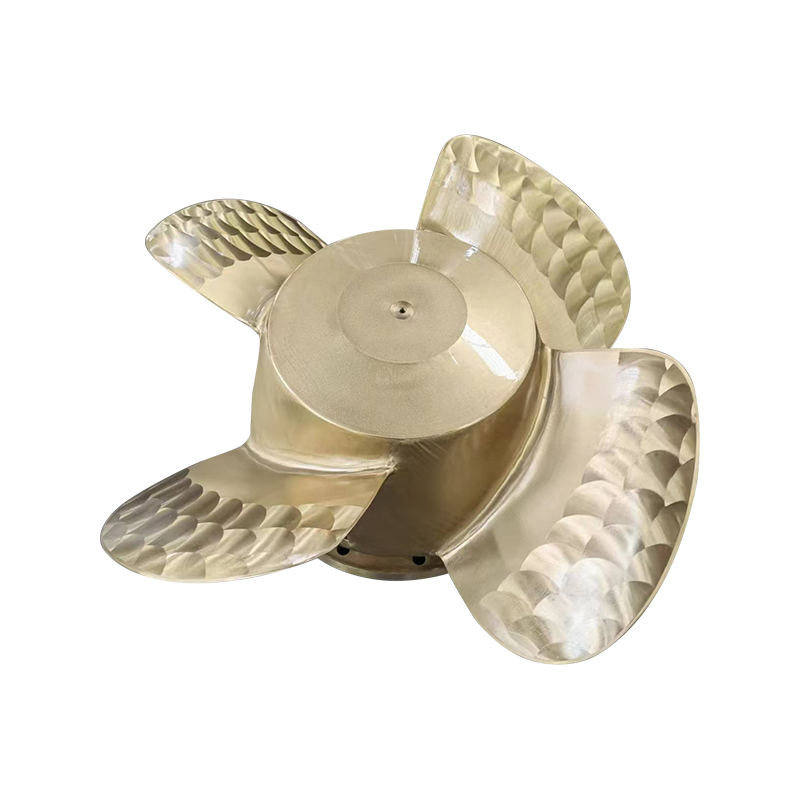
The sealing performance of Propeller Flange Cover starts with scientific structural design, and every detail is closely related to preventing fluid leakage or gas infiltration. First, the "fit clearance" between the flange cover and the propeller flange is a core factor. High-quality products will control the clearance within 0.1-0.3mm. Too large a clearance will lead to direct leakage, while too small a clearance may cause friction and wear during operation, damaging the sealing surface.
Second, the "sealing groove and gasket matching" structure is widely used. The flange cover is usually designed with a circular sealing groove with a depth of 2-5mm (adjusted according to the flange diameter). The groove is embedded with a flexible gasket (such as rubber or graphite). When the flange cover is fastened, the gasket is compressed to form a "deformation seal"—the gasket fills the micro-irregularities on the flange surface, blocking the leakage channel. In addition, some large-diameter propeller flange covers will add a "double-sealing ring" structure: the inner ring is responsible for primary sealing (resisting medium pressure), and the outer ring is for secondary sealing (preventing external dust or moisture from entering), further improving the sealing reliability.
It is also worth noting the "fastening point distribution". The number of bolts (or screws) on the flange cover should be evenly distributed according to the diameter. For example, a flange cover with a diameter of 200mm needs at least 8 fastening points, and the distance between adjacent bolts should not exceed 80mm. This ensures that the pressure on the sealing gasket is uniform during fastening, avoiding local gaps caused by uneven pressure and leading to sealing failure.
2. What Material Properties of Propeller Flange Cover Are Key to Sealing?
The material of Propeller Flange Cover itself directly affects the sealing stability, especially in harsh working conditions (such as high temperature, corrosion, or high pressure). First, "material rigidity and deformation resistance" are essential. If the flange cover material is too soft (such as ordinary plastic), it will deform under the pressure of the medium or the tension of the fastening bolts, resulting in the sealing surface not fitting tightly; if it is too hard (such as cast iron), it is easy to crack when subjected to impact, and the micro-cracks will become leakage channels. Therefore, most industrial-grade flange covers choose medium-rigidity materials, such as aluminum alloy (6061-T6) or carbon steel (Q235 with anti-corrosion treatment)—their yield strength is between 200-300MPa, which can maintain shape stability while avoiding excessive brittleness.
Second, "surface smoothness of the sealing surface" is a hidden factor affecting sealing. The flange cover's contact surface with the propeller flange needs to be polished, and the surface roughness (Ra) should be controlled below 1.6μm. If the surface is too rough (Ra > 3.2μm), the gasket cannot completely fill the surface pits, and the medium will seep through the pits. Some high-precision scenarios (such as marine propellers) will even use "mirror polishing" (Ra < 0.8μm) on the sealing surface to maximize the fit with the gasket.
In addition, "corrosion resistance" of the material is crucial for long-term sealing. If the propeller is used in seawater (marine environment) or chemical medium (such as wastewater treatment equipment), the flange cover material must resist corrosion. For example, 316 stainless steel has excellent resistance to seawater corrosion (the corrosion rate is less than 0.01mm/year in seawater), while PTFE (polytetrafluoroethylene) flange covers are suitable for strong acid/alkali environments (resistant to most chemicals except molten alkali metals). If the material is not corrosion-resistant, the sealing surface will be corroded and pitted over time, directly destroying the sealing effect.
3. How to Match Propeller Flange Cover Materials with Specific Working Conditions?
The "mismatch between material and working conditions" is one of the main reasons for the failure of Propeller Flange Cover sealing. To avoid this problem, it is necessary to select materials according to three core working conditions: medium type, temperature range, and pressure level.
First, "matching with medium type". If the propeller is in contact with fresh water (such as river ships or water pumps), aluminum alloy flange covers (with anodized coating) are cost-effective—they are lightweight and have good freshwater corrosion resistance. If the medium is seawater, 316 stainless steel or titanium alloy materials must be used: titanium alloy has almost no corrosion in seawater, but the cost is high, so 316 stainless steel is more commonly used in general marine scenarios. For chemical media (such as sulfuric acid or ammonia), PTFE or glass fiber-reinforced plastic (FRP) flange covers are better choices—PTFE is inert to most chemicals, and FRP has high corrosion resistance and mechanical strength.
Second, "matching with temperature range". Different materials have obvious differences in high-temperature resistance. For low-temperature environments (such as propellers in cold regions, temperature -20℃ to 50℃), ordinary rubber gaskets (such as NBR) and carbon steel flange covers can be used. For medium-temperature environments (50℃ to 200℃, such as industrial fan propellers), silicone gaskets and aluminum alloy flange covers are suitable—silicone can maintain elasticity at 200℃, and aluminum alloy will not deform at this temperature. For high-temperature environments (above 200℃, such as propellers in thermal power plants), graphite gaskets and 304 stainless steel flange covers are required: graphite can resist high temperatures up to 600℃, and 304 stainless steel has stable performance at high temperatures without oxidation peeling.
Third, "matching with pressure level". For low-pressure working conditions (pressure < 0.6MPa, such as household water pump propellers), plastic flange covers (such as PP) with EPDM gaskets are sufficient—they are low-cost and can meet the sealing requirements of low pressure. For medium-pressure conditions (0.6MPa to 4.0MPa, such as industrial pipeline propellers), aluminum alloy flange covers with nitrile rubber gaskets are suitable—aluminum alloy can bear medium pressure, and nitrile rubber has good pressure resistance (compression deformation rate < 15% under 4.0MPa). For high-pressure conditions (above 4.0MPa, such as marine propellers of large ships), carbon steel (Q345) or 316 stainless steel flange covers with metal gaskets (such as copper gaskets) are necessary: carbon steel can resist high pressure without deformation, and metal gaskets have high compression strength, which can avoid being crushed under high pressure and losing sealing ability.
4. What Common Problems Affect the Sealing of Propeller Flange Cover? How to Avoid Them?
Even with reasonable structural design and material selection, improper use or maintenance may lead to the loss of sealing performance of Propeller Flange Cover. The first common problem is "gasket aging and hardening". Gaskets (especially rubber materials) will age due to long-term contact with the medium, temperature changes, or oxygen in the air—their elasticity decreases, and they cannot fit the sealing surface tightly. To avoid this, it is necessary to replace the gasket regularly: for ordinary working conditions, the replacement cycle is 6-12 months; for harsh conditions (high temperature, corrosion), it should be shortened to 3-6 months. When replacing, the old gasket residue on the sealing surface must be cleaned to prevent the residue from affecting the fit of the new gasket.
The second problem is "sealing surface damage caused by improper installation". During installation, if the flange cover is not aligned with the propeller flange (the deviation exceeds 0.5mm), the sealing surface will be under uneven pressure, and local leakage will occur; if the fastening bolts are over-tightened (the torque exceeds the material's bearing limit), the sealing surface will be crushed (especially for soft materials such as aluminum alloy), forming indentations. To avoid this, installers should use a "torque wrench" to fasten the bolts, and the torque value should be determined according to the material and diameter of the flange cover (for example, M8 bolts on aluminum alloy flange covers should use a torque of 15-20N·m). At the same time, before installation, use a straightedge to check the alignment of the two flanges to ensure that the deviation is within the allowable range.
The third problem is "medium erosion leading to sealing failure". If the medium contains solid particles (such as sand in river water) or has strong fluidity (high-speed flow), the particles will wear the sealing surface over time, and the high-speed fluid will form "local eddy current" at the sealing gap, increasing the leakage pressure. To solve this, for media with solid particles, a "filter screen" can be installed at the inlet of the propeller to reduce particle entry; for high-speed fluid media, the "sealing gap" of the flange cover can be reduced (from 0.3mm to 0.1mm) and a "wear-resistant coating" (such as tungsten carbide coating) can be sprayed on the sealing surface to improve wear resistance.
5. How to Test the Sealing Performance of Propeller Flange Cover After Installation?
After installing the Propeller Flange Cover, it is necessary to conduct a sealing test in time to confirm that there is no leakage before putting it into formal use. The choice of test method depends on the working conditions of the propeller.
The first common method is the "pressure test" (suitable for medium-pressure and high-pressure scenarios). First, close the propeller's inlet and outlet valves, fill the internal cavity with a test medium (usually clean water or compressed air), and raise the pressure to 1.2-1.5 times the normal working pressure (for example, if the normal working pressure is 2.0MPa, the test pressure is 2.4-3.0MPa). Keep the pressure stable for 30-60 minutes, and observe two points: ① whether the pressure gauge shows a pressure drop (if the drop exceeds 5%, there is a leak); ② whether there is water seepage or air leakage at the flange cover's sealing joint (you can wipe the joint with a dry paper towel—if the paper towel is wet, it means there is a leak). For large-diameter flange covers, soapy water can be applied to the sealing joint—if bubbles are generated, it indicates a leak point.
The second method is the "vacuum test" (suitable for low-pressure or negative-pressure scenarios, such as vacuum pump propellers). Use a vacuum pump to extract the air in the propeller's internal cavity, making the pressure reach -0.08MPa to -0.09MPa (absolute pressure). Maintain the vacuum state for 2 hours, and observe the vacuum gauge: if the vacuum degree decreases by more than 0.005MPa within 2 hours, there is a sealing problem. This method is especially suitable for scenarios where even small leaks will affect the propeller's working efficiency (such as vacuum drying equipment's propellers).
The third method is the "medium replacement test" (suitable for special media, such as toxic or flammable media). Since direct testing with toxic media is dangerous, clean water (or inert gas such as nitrogen) can be used instead of the working medium for the sealing test. The test steps are the same as the pressure test or vacuum test. If the test with the replacement medium shows no leakage, it can be inferred that the sealing performance meets the requirements for the working medium. After the test, the replacement medium in the cavity must be completely drained to avoid mixing with the subsequent working medium and affecting the propeller's operation.



 English
  中文简体
中文简体  русский
  Español
  عربى
عربى  Français
  Português
  Deutsch
  Türk
Türk