


 English
  中文简体
中文简体  русский
  Español
  عربى
عربى  Français
  Português
  Deutsch
  Türk
Türk
JINYE
JINYE
JINYE
JINYE
JINYE
JINYE
JINYE
JINYE
JINYE
JINYE
JINYE
JINYE
JINYE
JINYE
JINYE
JINYE

Comprehensive Analysis of Controllable Pitch Propeller: From Principles to Fault Prevention
Home / News / Industry News / Comprehensive Analysis of Controllable Pitch Propeller: From Principles to Fault Prevention
Search
Categories
Content
- 1 What is a Controllable Pitch Propeller?
- 2 How to Achieve Flexible Pitch Control?
- 3 What are the Advantages Compared to Traditional Propellers?
- 4 Which Ship Types is it Suitable for?
- 5 What are the Key Points of Daily Maintenance?
- 6 How to Solve Common Faults?
- 7 Comprehensive Strategies for Preventing Common Faults in Controllable Pitch Propellers
- 7.1 Hydraulic Pitch-changing System: Fortifying the Power Transmission Line
- 7.2 Electric Pitch-changing System: Ensuring the Reliability of Electric Drive
- 7.3 Blades and Hub: Resisting External Environmental Erosion
- 7.4 Protective Measures for Blades and Hub Against Extreme Sea Conditions
- 7.5 Feedback Device: Ensuring Control Accuracy and Stability
- 8 Monitoring and Management in Daily Operation
Comprehensive Analysis of Controllable Pitch Propeller: From Principles to Fault Prevention
In the field of marine power propulsion, the Controllable Pitch Propeller (CPP) has become an important propulsion device for modern ships due to its unique performance advantages. Every aspect of CPP, from its basic structure to practical applications, from its advantages to fault prevention, is worthy of in-depth exploration. This article will comprehensively analyze CPP, presenting a complete picture of this "intelligent wing" of marine propulsion.
What is a Controllable Pitch Propeller?
As the name suggests, "Controllable" means maneuverable, "Pitch" refers to the propeller pitch, and "Propeller" is the propeller itself. It is a type of propeller device that can change the angle between the blades and the axis of rotation through a specific mechanism during the ship's operation, thereby adjusting the pitch. Unlike traditional fixed-pitch propellers, CPP breaks through the limitation of fixed pitch, endowing ships with more flexible propulsion performance.
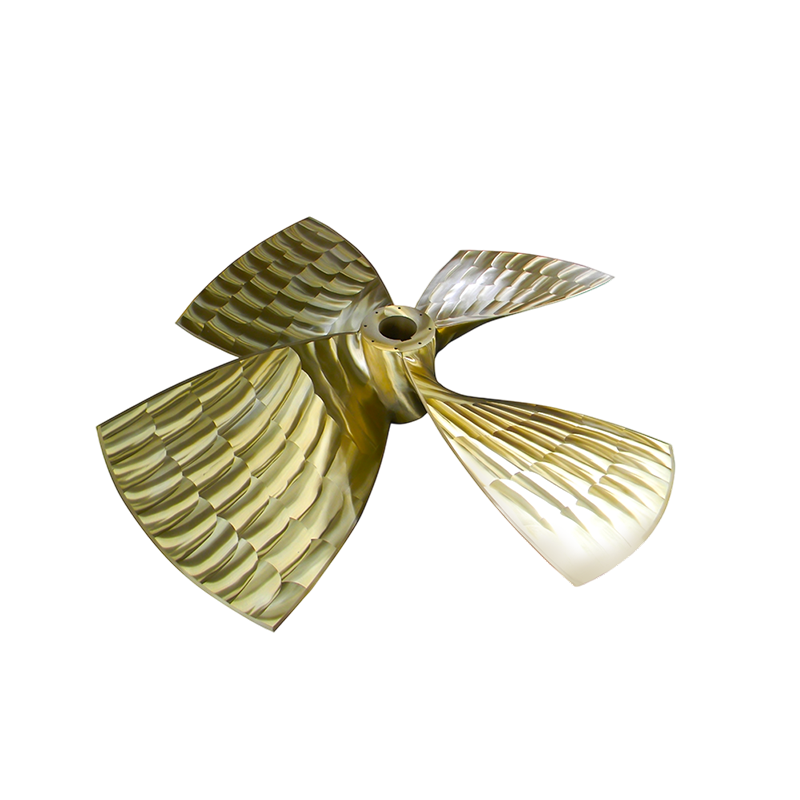
Its basic structure includes a hub, blades, and a complex pitch-changing mechanism. The blades are usually made of high-strength and corrosion-resistant materials such as bronze and stainless steel, which not only have to withstand the erosion of seawater but also the huge hydrodynamic impact when the ship sails at high speed. The blades generally have different configurations such as four or five blades, and different numbers of blades have their own advantages in different ship types and working conditions. For example, four-bladed propellers may have better propulsion efficiency under certain working conditions, while five-bladed propellers perform better in reducing vibration and noise. The blades are mounted on the hub, which is the core component of the entire propeller. It not only connects the blades and the transmission shaft but also provides installation space for the pitch-changing mechanism. The pitch-changing mechanism is cleverly hidden inside or connected to the hub. The design of the pitch-changing mechanism is extremely precise, and it contains a series of mechanical transmission components such as gears, connecting rods, and hydraulic cylinders (depending on different pitch-changing methods). When the ship needs different propulsion forces or speeds, the pitch-changing mechanism starts to work, precisely rotating the blades, changing their angles, and thus adjusting the pitch. For example, when a ship is fully loaded and needs more thrust, increasing the pitch allows the propeller to push more water backward per revolution, thereby generating greater propulsion. When the ship is unloaded and pursuing high speed, reducing the pitch enables the propeller to rotate more quickly at the same main engine speed, increasing the ship's sailing speed. This ability to flexibly adjust the pitch allows the ship to maintain good operating conditions under various complex working conditions, which is beyond the reach of fixed-pitch propellers.
How to Achieve Flexible Pitch Control?
So, how does the Controllable Pitch Propeller accurately achieve pitch control? This mainly relies on hydraulic systems or electric systems.
The hydraulic pitch-changing system is a widely used method at present. When the ship's driver issues a command to change the pitch, the command signal is first transmitted to the hydraulic control system. The hydraulic pump starts to work, acting like the "heart" of the entire system. It draws low-pressure oil through the suction pipeline, pressurizes it, and then delivers the high-pressure oil through a series of precision pipelines to the hydraulic cylinder installed inside or near the hub. These pipelines are usually made of high-strength metal materials and undergo special sealing treatment to ensure that high-pressure oil does not leak during transportation. The piston in the hydraulic cylinder displaces under the action of oil pressure, and this displacement is transmitted to the blades through a well-designed mechanical structure such as a connecting rod, causing the blades to rotate around their axis, thereby changing the pitch. In addition, the system is equipped with a feedback device, which acts like an "inspector" to monitor the actual angle of the blades in real-time and feed the information back to the control system. This feedback device generally uses a high-precision angle sensor, which can accurately measure the angle change of the blades and transmit the measurement data back to the control system in the form of electrical signals. Once there is a deviation between the actual angle and the set angle, the control system will quickly adjust the output of the hydraulic pump, such as changing the displacement or output pressure of the hydraulic pump, to ensure that the pitch accurately reaches the set value. This closed-loop control method greatly improves the accuracy and reliability of pitch adjustment, enabling the ship to operate stably under various working conditions.
The electric pitch-changing system uses an electric motor to rotate the blades. The motor is connected to the blades through a reduction device, which converts the high-speed, low-torque output of the motor into a low-speed, high-torque output suitable for driving the blades. When receiving a pitch-changing command, the motor rotates forward or reverse according to the command, and after the torque is amplified by the reduction device, it drives the blades to rotate to change the pitch. The advantage of the electric system is its fast response speed and high control precision, which can quickly and accurately execute various complex pitch-changing operations. For example, when the ship needs emergency braking or to quickly change the direction of travel, the electric pitch-changing system can complete the pitch adjustment in a very short time, providing a strong guarantee for the safe operation of the ship. At the same time, with the continuous development of power electronics technology and control algorithms, the intelligence level of the electric pitch-changing system is getting higher and higher, enabling deep integration with other ship systems, further improving the overall performance of the ship.
What are the Advantages Compared to Traditional Propellers?
Compared with traditional fixed-pitch propellers, the Controllable Pitch Propeller has many significant advantages.
In terms of propulsion efficiency, traditional fixed-pitch propellers can only achieve optimal efficiency under specific ship working conditions. Once the working conditions change, such as changes in the ship's load, sailing speed adjustment, or encountering different sea conditions, their efficiency will drop significantly. For example, when the ship is fully loaded, the fixed-pitch propeller may not make full use of the main engine power due to the fixed pitch, resulting in low propulsion efficiency and increased fuel consumption. CPP, on the other hand, can flexibly adjust the pitch according to real-time working conditions, keeping the propeller in a high-efficiency operating state. During the process of the ship from full load to no load, by gradually reducing the pitch, the propeller can make full use of the main engine power under different loads, thereby improving propulsion efficiency and reducing fuel consumption. Relevant research data show that in some typical changes in ship operating conditions, ships using CPP can increase propulsion efficiency by 10%-20% compared with ships using fixed-pitch propellers, and fuel consumption is correspondingly reduced by 10%-15%, which can save a lot of fuel costs in long-term ship operations.
In terms of ship maneuverability, CPP has unparalleled advantages. It can realize the ship's forward, backward, and rapid braking by quickly adjusting the pitch without changing the direction and speed of the main engine. This greatly improves the flexibility and safety of maneuvering for ships sailing in narrow waters, entering and exiting ports, or needing frequent starts and stops. Take a tugboat operating in a busy port as an example. When assisting large ships to berth, the port waters are narrow and there are many surrounding ships, making the situation complex and changeable. A tugboat equipped with CPP can quickly adjust the propeller pitch, accurately control the thrust and direction of the tugboat, respond to the berthing needs of large ships in a very short time, and efficiently complete the towing task. If a fixed-pitch propeller is used, the tugboat often needs to frequently change the main engine speed and direction to adjust the thrust and direction, which is complicated to operate and has a slow response speed, making it difficult to meet the high efficiency and safety requirements of port operations. In addition, CPP can effectively reduce the rolling and pitching of the ship during maneuvering, improve the stability of the ship, and provide a safer and more comfortable environment for personnel and cargo on board.
Which Ship Types is it Suitable for?
Due to its excellent performance characteristics, Controllable Pitch Propellers are widely used in various ship types.
For tugboats, their working nature determines that they need to frequently change thrust and direction. When assisting large ships to enter and exit ports and berth or depart from docks, tugboats must be able to respond quickly and provide precise thrust. CPP can meet this demand, enabling tugboats to operate flexibly in complex operating environments, greatly improving the efficiency and safety of towing operations. In actual port operations, tugboats may need to switch from pushing large ships to pulling them in a short time, or quickly adjust their positions in narrow spaces. Tugboats equipped with CPP can easily cope with these complex operations, achieving precise control of thrust and direction by quickly adjusting the pitch, ensuring that large ships can berth or depart safely and accurately, and avoiding accidents such as ship collisions due to improper operation.
On fishing boats, the propulsion requirements of the ship vary greatly in different fishing operation stages. During the voyage to the fishing ground, a higher speed is needed to save time and reach the operation area as soon as possible; while in trawling operations, a larger thrust is required to drag the fishing net and overcome the water flow resistance. CPP can easily adjust the pitch according to different operation needs, ensuring the efficient operation of fishing boats under different working conditions, and reducing the frequent speed regulation of the main engine, thus prolonging the service life of the main engine. For example, when going to the fishing ground, the fishing boat can reduce the pitch to increase the speed; when arriving at the fishing ground and starting trawling operations, increase the pitch to provide sufficient thrust to drag the fishing net. This flexible adjustment method avoids additional wear of the main engine due to frequent speed regulation, reduces maintenance costs, and improves the overall operation efficiency of the fishing boat.
In addition, ships with high requirements for maneuverability and propulsion efficiency, such as ferries, passenger ships, and oil tankers, are increasingly using Controllable Pitch Propellers to improve operational efficiency and service quality. Ferries and passenger ships usually operate in crowded waters, need to frequently dock at different piers, and have extremely high requirements for the maneuverability and safety of the ship. CPP allows ferries and passenger ships to precisely control their speed and position when berthing, reducing docking time, improving transportation efficiency, and providing passengers with a more stable and comfortable riding experience. Oil tankers, which carry a large amount of flammable and explosive oil products, have particularly strict requirements for the safety and stability of the ship. While ensuring the efficient propulsion of oil tankers, CPP can effectively improve the maneuverability of the ship during navigation and berthing, reduce the risk of accidents caused by improper operation, and ensure the safety of oil transportation.
What are the Key Points of Daily Maintenance?
The structure of the Controllable Pitch Propeller is relatively complex, and doing a good job in daily maintenance is crucial to ensuring its normal operation.
|
System/Component |
Maintenance Item |
Maintenance Cycle |
Specific Content |
|
Hydraulic Pitch-changing System |
Hydraulic oil level and quality check |
Monthly |
Check if the oil level is normal and if the oil quality has impurities, moisture, or emulsification. |
|
Hydraulic Pitch-changing System |
Hydraulic oil replacement and tank cleaning |
Every six months to one year |
Replace with new oil that meets the requirements and thoroughly clean the internal impurities and sediments in the tank. |
|
Hydraulic Pitch-changing System |
Hydraulic pipeline inspection |
Weekly |
Check if the pipeline connections are tight and if there is any leakage, focusing on pipe joints, valves, and hydraulic cylinder seals. |
|
Electric Pitch-changing System |
Motor operation status check |
Weekly |
Check the operating temperature, abnormal noise, and bearing lubrication. |
|
Electric Pitch-changing System |
Motor bearing grease filling |
Every certain operating hours or every few months |
Fill with an appropriate amount of lithium-based grease according to the frequency of use and environment. |
|
Electric Pitch-changing System |
Reduction gear lubricating oil inspection and replacement |
Every six months |
Check the oil level and quality, replace deteriorated and contaminated lubricating oil to ensure smooth reduction transmission. |
|
Blades and Hub |
Blade surface cleaning |
Quarterly |
Remove marine growth attachments and debris to reduce water resistance. |
|
Blades and Hub |
Blade damage inspection |
Monthly |
Check for cracks, deformation, and other damages, and repair or replace in time. |
|
Blades and Hub |
Hub seal inspection and replacement |
Quarterly |
Check if the seals are aging or damaged, and replace them in time to ensure sealing performance. |
For the hydraulic pitch-changing system, it is necessary to regularly check the oil level and quality of the hydraulic oil. A too-low oil level will lead to insufficient oil supply in the system, affecting pitch adjustment, such as slow or even impossible pitch adjustment. Deteriorated oil quality, such as mixing with impurities and moisture, will aggravate the wear of hydraulic pumps, hydraulic cylinders, and other components. When replacing hydraulic oil, it is necessary to strictly follow the operating procedures to ensure that the quality of the new oil meets the requirements, and at the same time, thoroughly clean the inside of the oil tank to remove impurities and sediments. In addition, check if the connections of the hydraulic pipelines are tight and if there is any leakage. If leakage is found, replace the seals or pipelines in time. Leakage of hydraulic pipelines will not only reduce the performance of the hydraulic system but also may cause safety hazards. For example, during the ship's navigation, hydraulic oil leaking onto high-temperature components may cause a fire. Therefore, the inspection of hydraulic pipelines should be detailed and comprehensive, including key parts such as pipe joints, valves, and hydraulic cylinder seals.
For the electric pitch-changing system, regularly inspect the motor to check if its operating temperature is normal and if there is any abnormal noise. The motor will generate a certain amount of heat during operation, but if the temperature is too high, it may indicate a fault in the motor, such as a short circuit in the windings or bearing wear. Abnormal noise is also an important signal of motor failure, which may be caused by loose mechanical parts, lack of oil, etc. The bearings of the motor need to be regularly filled with grease to ensure good lubrication. In addition, the lubricating oil of the reduction device should also be regularly checked and replaced to ensure smooth reduction transmission. During long-term operation of the reduction device, the lubricating oil will gradually deteriorate and become contaminated, reducing the lubrication effect, affecting the normal operation of the reduction device, and may even lead to serious faults such as gear wear and fracture.
Blades and hubs are also key parts for maintenance. It is necessary to regularly clean the marine growth attachments and debris on the blade surfaces, as these attachments will increase water resistance and reduce propulsion efficiency. In some seawater environments, marine organisms grow rapidly and can form a thick layer of attachments on the blade surfaces in a short time. Studies have shown that when the amount of marine growth attachments on the blade surface reaches a certain level, the propulsion resistance of the ship can increase by 10%-20%, leading to a significant increase in fuel consumption. At the same time, check the blades for cracks, deformation, and other damages. Under the long-term hydrodynamic impact and seawater corrosion, the blades may have cracks or deformation, which will seriously affect the performance and safety of the propeller. The sealing performance of the hub is also crucial to prevent seawater from entering and damaging the pitch-changing mechanism. Seawater is highly corrosive, and once it enters the hub, it will severely corrode the precision components in the pitch-changing mechanism, resulting in the failure of the pitch-changing function. Therefore, regularly check the seals of the hub, and replace them in time if aging or damage is found to ensure the tightness of the hub.
How to Solve Common Faults?
During long-term use, Controllable Pitch Propellers will inevitably have some faults. How to solve these common faults?
|
Fault Phenomenon |
Possible Causes |
Solutions |
|
Inflexible or unable to adjust pitch (hydraulic system) |
Insufficient hydraulic oil, hydraulic pump failure, hydraulic cylinder stuck |
Check the oil level and replenish if insufficient; test the output pressure of the hydraulic pump, repair or replace if faulty; disassemble the hydraulic cylinder for maintenance, remove internal impurities or replace worn parts. |
|
Inflexible or unable to adjust pitch (electric system) |
Motor failure, reduction device damage, control circuit failure |
Check the control circuit, repair open circuits, short circuits, etc.; check the motor and reduction device, repair or replace faulty parts. |
|
Abnormal propeller vibration |
Unbalanced blades, blade damage, excessive installation clearance |
Repair or replace damaged blades, remove debris; check and adjust installation clearance; conduct dynamic balance test to eliminate unbalanced factors. |
When the pitch adjustment is inflexible or impossible, for the hydraulic system, the reasons may be insufficient hydraulic oil, hydraulic pump failure, hydraulic cylinder stuck, etc. First, check the hydraulic oil level, which can be intuitively viewed through the oil level indicator on the hydraulic tank. If the oil level is normal, check if the hydraulic pump is working properly and if there is output pressure. A professional hydraulic testing instrument can be connected to the pressure measuring point of the hydraulic system to detect whether the output pressure of the hydraulic pump meets the specified value. If the hydraulic pump is normal, the hydraulic cylinder may be stuck. In this case, it is necessary to disassemble the hydraulic cylinder for maintenance, remove internal impurities or replace worn parts. When disassembling the hydraulic cylinder, care should be taken to protect each part to avoid secondary damage during operation. For the electric system, the reasons may be motor failure, reduction device damage, or control circuit failure. First, check if there are open circuits, short circuits, etc. in the control circuit. Use tools such as a multimeter to detect each line and component in the control circuit, find the fault point and repair it. Then check the operation of the motor and reduction device. Determine if the motor is normal by observing its operation status and measuring its current and voltage; for the reduction device, check the wear of its gears and the condition of the lubricating oil, and repair or replace according to the cause of the fault.
If abnormal vibration of the propeller is found, it may be due to unbalanced blades, blade damage, or excessive installation clearance. First, check if the blades are damaged or have unevenly attached debris. Carefully check the blade surfaces for cracks, gaps, and other damages. For minor damages, repairs can be made, such as welding and grinding; if the damage is severe, the blades need to be replaced. At the same time, remove the attachments on the blade surfaces to ensure they are clean. If the blades are in good condition, check the installation clearance between the blades and the hub. Use professional measuring tools to measure the clearance and adjust it to an appropriate range. If necessary, conduct a dynamic balance test. Mount the propeller on a dynamic balancing machine and eliminate unbalanced factors by adding or removing counterweights to keep the propeller stable during high-speed rotation and reduce vibration damage to the ship's structure and equipment.
Comprehensive Strategies for Preventing Common Faults in Controllable Pitch Propellers
As a core component of a ship's propulsion system, the Controllable Pitch Propeller (CPP) directly affects the ship's navigation safety and operational efficiency. Due to its complex structure and long-term operation in harsh environments such as seawater erosion and high-load operation, the risk of failure is relatively high. Therefore, establishing a systematic prevention mechanism is crucial.
Hydraulic Pitch-changing System: Fortifying the Power Transmission Line
In terms of hydraulic oil management, it is necessary to strictly follow the equipment manual to select the appropriate type of hydraulic oil. Mixing different brands and types of oil should be strictly prohibited to prevent oil degradation due to chemical conflicts. It is recommended to conduct an oil quality test every three months, analyzing the impurity content, moisture ratio, and emulsification degree in the oil through professional instruments. When the test results exceed the standard, the hydraulic oil must be replaced immediately, and the oil tank must be thoroughly cleaned - first rinse the inner wall with a special cleaning agent, then dry it with compressed air, and finally remove iron filings, sludge, and other impurities deposited at the bottom of the tank. When adding new oil, it must pass through a three-stage filtration device (oil tank filler filter, oil pump suction filter, system return filter) to control pollutant particles within NAS 8 level, avoiding impurities from entering hydraulic components and causing wear.
For hydraulic components and pipelines, a periodic inspection mechanism should be established: conduct weekly visual inspections, focusing on observing the surface temperature of hydraulic pumps, hydraulic cylinders, directional valves, and other components (the hydraulic pump housing temperature should not exceed 65°C), vibration frequency, and noise level (normal operation noise should be below 85 decibels). If abnormalities are found, shut down for inspection. Monthly disassemble and inspect high-pressure oil pipe joints, flange sealing surfaces, and other leakage-prone parts, replacing aging O-rings or combined seals - the seals should be made of oil-resistant nitrile rubber or fluororubber, and special grease should be applied during installation to avoid scratches. Conduct disassembly and maintenance of hydraulic pumps and cylinders every six months, measuring the side clearance of gear pumps (should be less than 0.1mm) and the fit clearance between plungers and cylinder blocks of plunger pumps (need to be controlled between 0.02-0.03mm), and replace excessively worn parts.
Maintaining system cleanliness is also crucial. When performing pipeline disassembly, component replacement, and other operations, clean the work area in advance and cover unconnected interfaces with dust covers. Parts cleaning should use special hydraulic oil or kerosene, and use an ultrasonic cleaner (power 500W, frequency 40kHz) to process precision parts. After cleaning, dry with nitrogen to avoid residual moisture. During assembly, tools must be degreased, operators must wear lint-free gloves, and it is strictly prohibited to directly wipe the sealing surface with cotton yarn.
Electric Pitch-changing System: Ensuring the Reliability of Electric Drive
Motor maintenance should start with insulation, lubrication, and operating parameter monitoring. Measure the winding insulation resistance with a 2500V megohmmeter every quarter, which should not be less than 1MΩ at room temperature. Otherwise, drying treatment is required (hot air circulation method can be used, with the temperature controlled at 70±5°C). Bearing lubrication requires lithium-based grease (NLGI 2 grade), which is added through the grease nipple monthly. The filling amount should be 1/3-1/2 of the bearing cavity volume to avoid excessive lubrication leading to poor heat dissipation. During operation, real-time monitor the three-phase current unbalance (should be ≤5%), stator core temperature (temperature rise not exceeding 80K), and vibration acceleration (≤11.2mm/s²). If abnormalities are found, shut down immediately for inspection.
The maintenance of the reduction device focuses on gear meshing status and lubricating oil performance. Replace the gear oil every six months, recommended to use extreme pressure industrial gear oil (viscosity grade ISO VG 320). Before changing the oil, run it under no load for 10 minutes to warm up the oil, then completely drain the old oil and flush the inside of the gearbox with new oil (the flushing amount is 1/5 of the tank volume). Conduct a disassembly inspection every year, measure the gear tooth thickness wear (should not exceed 10% of the original tooth thickness), tooth surface contact spots (should be ≥60% along both tooth length and tooth height directions), check bearing clearance (radial clearance of ball bearings should be ≤0.03mm), and replace parts that exceed the standard in a timely manner. At the same time, check the oil seal condition weekly. If oil leakage is found, replace the double-lip skeleton oil seal, ensuring that the spring ring does not fall off during installation.
The reliability maintenance of the control circuit needs to cover both hardware and software. During weekly inspections, use an infrared thermometer to detect the temperature of contactor and relay contacts (should be ≤70°C), polish oxidized contacts with fine sandpaper, and replace severely burned components. Conduct insulation tests on PLC modules and sensor lines every six months (insulation resistance ≥10MΩ), and check the tightening torque of terminal blocks (copper terminals should reach 1.2-1.5N·m). For position detection components such as pulse encoders, clean the dust cover monthly and check the grounding resistance of the signal cable shield (should be ≤4Ω) to avoid electromagnetic interference causing signal distortion.
Blades and Hub: Resisting External Environmental Erosion
As components in direct contact with seawater, the prevention measures for blades and hubs need to target three major risks: structural damage, marine growth attachment, and seal failure.
Blade maintenance requires a combination of regular inspection and active protection. Conduct underwater video inspections monthly, focusing on identifying whether there are cracks on the blade surface (penetrant inspection agent can be used to detect surface microcracks) and whether there is curling at the edge (allowable error ≤2mm). Conduct ultrasonic flaw detection every six months (probe frequency 5MHz, sensitivity ≥Φ2 flat-bottom hole) to check for internal defects in the stress concentration area at the blade root. Marine growth attachment prevention and control can adopt a "physical cleaning + chemical protection" combination plan: rinse the blade surface with a high-pressure water gun (pressure 30MPa) every quarter, and apply tin-free self-polishing antifouling paint (dry film thickness ≥150μm) during dry dock inspections every year, which has an effective protection period of up to 18 months.
In terms of blade materials, in addition to common bronze and stainless steel, some new composite materials are gradually being used in blade manufacturing. For example, carbon fiber-reinforced composite materials have high strength and low density, which can effectively reduce blade weight, lower inertial force, and have excellent corrosion resistance. However, when maintaining such composite blades, care must be taken to avoid severe collisions because their impact resistance is relatively weaker than that of metal materials. During monthly inspections, special attention should be paid to whether there are delamination, fiber exposure, and other phenomena on the surface of composite blades. Once found, timely repairs are required, and special composite repair agents can be used for filling and curing.
The maintenance of the hub sealing system requires strict control of sealing performance and internal lubrication. Conduct pressure tests on the sealing cavity through a dedicated interface every quarter (test pressure 0.3MPa, pressure drop ≤0.02MPa within 30 minutes of pressure holding), check the lip wear of the V-shaped combined seal, and replace aging springs. The inside of the hub needs to be filled with extreme pressure lithium-based grease (dropping point ≥180°C), which is replenished every 500 hours of operation to ensure sufficient lubrication of the gear meshing area and bearing raceway. For oil-air lubrication systems, check the working status of the oil-air distributor weekly to ensure the accurate and stable mixing ratio of lubricating oil and compressed air (usually 1:200).
In addition, the gears, bearings, and other transmission components inside the hub also need regular inspection. Conduct a disassembly inspection of the hub every year, check if the gear tooth surfaces have wear, pitting, gluing, etc., measure the backlash and addendum clearance of the gears. If they exceed the allowable range (backlash generally does not exceed 0.2mm, addendum clearance depends on the gear module), the gears need to be replaced in a timely manner. For bearings, check if their raceways and rolling elements have wear, cracks, and if there is abnormal noise during rotation. If there are problems, replace the bearings, and select high-precision bearings matching the original model during replacement to ensure smooth transmission.
Blade balance accuracy directly affects the vibration level. After repairing or replacing the blades, a dynamic balance test must be conducted (balance grade should reach G2.5), and the unbalance (≤5g・m) should be adjusted by adding counterweights (made of brass) on the blade back. Conduct on-site dynamic balance verification every two years, using a portable balancer (measurement accuracy ±0.1g・m) to detect at rated speed. If the vibration value exceeds 6.3mm/s, re-calibration is required. In addition, regularly check the connecting bolts between the blades and the hub, and tighten them with a torque wrench (accuracy ±3%) according to the specified torque (usually 300-500N・m, depending on the model) every six months to prevent blade wobble due to loose bolts and increased wear.
In terms of coping with extreme sea conditions, such as typhoons, huge waves, and other bad weather, the blades and hub are prone to greater impact. Therefore, before extreme sea conditions arrive, a comprehensive inspection of the blades is required to ensure that there is no obvious damage and the connecting bolts are tightened. At the same time, the ship's speed can be appropriately reduced to reduce the hydrodynamic load on the blades. During navigation, closely monitor the operation status of the propeller. If abnormal vibration or noise is found, take measures such as deceleration and shutdown in a timely manner to avoid more serious damage. After extreme sea conditions, conduct detailed inspections and maintenance on the blades and hub, focusing on checking if the blades are deformed or cracked and if the hub seal is intact, and handle the found problems in a timely manner to ensure their normal operation.
Protective Measures for Blades and Hub Against Extreme Sea Conditions
Extreme sea conditions (such as typhoons, strong storms, huge waves, etc.) can cause severe impact on the blades and hub of the ship's Controllable Pitch Propeller, requiring a protection system built from four dimensions: early warning preparation, dynamic protection, emergency treatment, and post-event maintenance.
In the early warning preparation stage, it is necessary to activate the protection plan 72 hours in advance based on meteorological warnings. First, strengthen and fix the blades: adjust the blades to the "zero pitch" state (blades parallel to the water flow direction) to reduce the force area of the water-facing surface. At the same time, lock the blades on the hub through a dedicated locking device (such as a hydraulic lock pin), and the locking force must reach more than 1.5 times the rated thrust to prevent unexpected rotation of the blades caused by wind and wave impact. For the hub sealing system, additional seal enhancer (such as PTFE-based sealant) needs to be added to form a temporary reinforcement layer on the lip of the seal to improve water pressure resistance. In addition, check the pre-tightening force of the connecting bolts between the blades and the hub, and use the "heating and tightening method" (heat the bolts to 150°C and then tighten) to make the bolts generate higher pre-tightening force after cooling, ensuring that the connection strength is increased by 30% compared to the conventional state.
Dynamic protection during navigation needs to adjust the operation strategy according to real-time sea conditions. When the ship encounters winds above force 8 or waves above 3 meters, the "low-speed following wave" navigation mode should be adopted, with the speed controlled within 5 knots, allowing the ship to sail along the wave direction to reduce the direct impact of the blades with huge waves. At the same time, real-time monitor the blade vibration frequency (through the acceleration sensor installed on the hub). When the vibration value exceeds 11.2mm/s (corresponding to the alarm threshold in ISO 10816-5 standard), immediately reduce the main engine speed by 10%-20%, and adjust the pitch to "negative pitch" (the blades reverse to generate reverse thrust) through the CPP control system to reduce the blade force by using water flow buffering. For ships equipped with retractable hub shields, the shields (made of high-strength aluminum alloy, thickness ≥10mm) need to be activated under extreme sea conditions, with the gap between the shield body and the hub controlled at 5-8mm, which can effectively block the impact of floating objects in the sea (such as tree trunks, container debris) on the blades.
The emergency treatment mechanism needs to respond quickly to sudden damage. If a crack is detected on the blade (through the underwater acoustic monitoring system to identify the characteristic sound waves during crack propagation), the "emergency sealing plan" should be activated immediately: inject two-component epoxy resin adhesive (curing time ≤30 minutes) through the glue injection channel reserved in the hub to temporarily seal the crack and prevent seawater intrusion. If the hub seal fails and causes seawater leakage (alarmed by the internal humidity sensor), start the backup lubrication system and inject high-pressure nitrogen (pressure 0.4MPa) into the hub to form an air resistance barrier to prevent further seawater infiltration. At the same time, reduce the pitch to the minimum working state to reduce the relative movement wear of internal components.
The maintenance process after extreme sea conditions needs to cover in-depth detection and performance recovery. First, use an underwater robot (equipped with a 3D scanner) to perform 3D modeling of the blade surface, compare it with the original model to identify the deformation (allowable error ≤3mm/m). If it exceeds the threshold, thermal correction is required (heating temperature depends on the material: 350-400°C for bronze blades, 500-600°C for stainless steel blades). For the inside of the hub, disassemble and inspect the impact damage on the gear meshing surface, use magnetic particle inspection (sensitivity ≥Φ0.5mm magnetic mark) to detect bearing raceway cracks, replace all damaged seals (even if there is no obvious damage on the appearance), and re-conduct pressure tests (pressure drop ≤0.01MPa within 1 hour of pressure holding). Finally, conduct a full working condition test run, test the propulsion efficiency at each point within the 0-100% pitch range, and ensure that the performance is restored to more than 95% of the rated value before re-commissioning.
Feedback Device: Ensuring Control Accuracy and Stability
The feedback device is the "nerve ending" of the CPP closed-loop control, and its fault prevention needs to ensure the accuracy of angle measurement and the reliability of mechanical transmission.
The maintenance of the angle sensor needs to consider both hardware status and calibration accuracy. Check the induction gap of the magnetoelectric sensor monthly (should be maintained at 0.5-1mm), and clean the oil and dirt on the surface of the signal gear plate (can be wiped with anhydrous ethanol). Calibrate with a laser angle meter (accuracy ±2") every six months, adjust the sensor installation position to ensure the measurement error ≤0.1°. For grating sensors, check the cleanliness of the dust-proof glass weekly, wipe with a dedicated lens paper to avoid dust blocking the light path and causing counting errors.
The maintenance of the mechanical components of the feedback mechanism is also important. Check the swing flexibility of the connecting rod joint bearing weekly, and add special bearing grease (seawater-resistant type). Measure the gear meshing gap monthly (should be ≤0.1mm), and compensate by adjusting the gasket thickness. Conduct radial runout detection on the transmission shaft every quarter (allowable error ≤0.05mm/m). If bending is found, straightening treatment is required (using pressure straightening method, deformation controlled within 0.1mm/m).
Monitoring and Management in Daily Operation
In addition to targeted maintenance of various systems and components, the following monitoring and management work should be done in daily operation:
- Real-time monitoring of operating parameters: Use the ship's monitoring system to real-time monitor the operating parameters of CPP, such as pitch, speed, thrust, hydraulic system pressure, motor current, temperature, etc. Set parameter alarm values, and when parameters exceed the normal range, send alarm signals in a timely manner so that operators can take measures promptly.
- Standardize operating procedures: Formulate strict CPP operating procedures. Operators must receive professional training and be familiar with the performance and operation methods of the equipment. When adjusting the pitch, starting, stopping, and other operations, strictly follow the operating procedures to avoid equipment damage due to improper operation. For example, before the ship sets sail, the pitch should be adjusted slowly to avoid sudden loading; when the ship is docking, the pitch should be controlled reasonably to avoid sudden stops and turns.
- Keep operation records: Establish a CPP operation record ledger, detailing the equipment's operating time, operating parameters, maintenance conditions, fault handling conditions, etc. By analyzing the operation records, grasp the operating status and fault rules of the equipment, timely find potential problems, and take preventive measures in advance. At the same time, formulate a reasonable maintenance plan based on the operation records to improve the pertinence and effectiveness of maintenance.
- Regular technical training: Organize regular technical training for operators and maintenance personnel to improve their professional quality and operational skills. The training content should include the working principle, structure characteristics, maintenance methods, fault diagnosis and handling of CPP. Through case analysis and on-site operation practice, enable them to better master the relevant knowledge and skills, and effectively deal with various problems in the operation and maintenance process.
- Establish a spare parts management system: Establish a sound spare parts management system, ensure that key spare parts (such as seals, bearings, gears, sensors, etc.) are properly stored and available in sufficient quantity. Formulate a reasonable spare parts procurement plan based on the equipment's service life, maintenance cycle and usage frequency, to avoid the situation that the equipment cannot be repaired in time due to the lack of spare parts. At the same time, regularly check the quality and performance of spare parts to ensure that they meet the requirements.
- Carry out regular technical evaluation: Regularly carry out technical evaluation of CPP, invite professional technical personnel or institutions to conduct comprehensive inspection and evaluation of the equipment's performance, technical status and remaining service life. Based on the evaluation results, formulate targeted improvement measures and maintenance plans, and timely update and upgrade the equipment if necessary to ensure that it can adapt to the changing operating environment and operational requirements.
In conclusion, the Controllable Pitch Propeller, as a key equipment in the field of marine propulsion, its excellent performance and reliable operation are crucial to the safe and efficient navigation of ships. By in-depth understanding of its working principle, structural characteristics, advantages and applicable ship types, and doing a good job in daily maintenance, fault prevention and daily operation monitoring and management, we can effectively improve the service life and operational efficiency of CPP, reduce the occurrence of faults, and provide a strong guarantee for the development of the maritime industry. With the continuous progress of science and technology, it is believed that the Controllable Pitch Propeller will be more intelligent, efficient and reliable in the future, making greater contributions to the green and sustainable development of the maritime industry.
PREV:Comprehensive Analysis of Fixed Pitch Propellers (FPP)
NEXT:Green Shipping Drives Propeller technology innovation
NEXT:Green Shipping Drives Propeller technology innovation
Interested in working together or need more info?
Related products
Get in Touch Now!
We're Here to Assist with
All Your Requirements
Keep in Touch
No.186 Jianxin Road, Industrial Park, Jingkou District, Zhenjiang City, Jiangsu Province, ChinaWhat’s News
© Copyright Zhenjiang Jinye Propeller Co.,Ltd. All Rights Reserved. China Marine Copper Propeller Manufacturers Custom Marine Propeller Factory
