


 English
  中文简体
中文简体  русский
  Español
  عربى
عربى  Français
  Português
  Deutsch
  Türk
Türk
JINYE
JINYE
JINYE
JINYE
JINYE
JINYE
JINYE
JINYE
JINYE
JINYE
JINYE
JINYE
JINYE
JINYE
JINYE
JINYE

Why the Propeller Blade Carrier is the Critical Link in Controllable Pitch Propeller Performance and Reliability
Understanding the Role of the Propeller Blade Carrier in Modern Propulsion
In the sophisticated world of marine engineering, the Controllable Pitch Propeller (CPP) stands as a pinnacle of efficiency, allowing vessels to maintain optimal engine RPM while adjusting thrust through blade pitch modification. At the heart of this complex assembly lies the Propeller Blade Carrier. This component serves as the mechanical bridge between the hydraulic actuation system and the propeller blades themselves. Without a precision-engineered carrier, the seamless transition of power and the delicate adjustment of angles would be impossible, leading to mechanical failure and decreased fuel efficiency.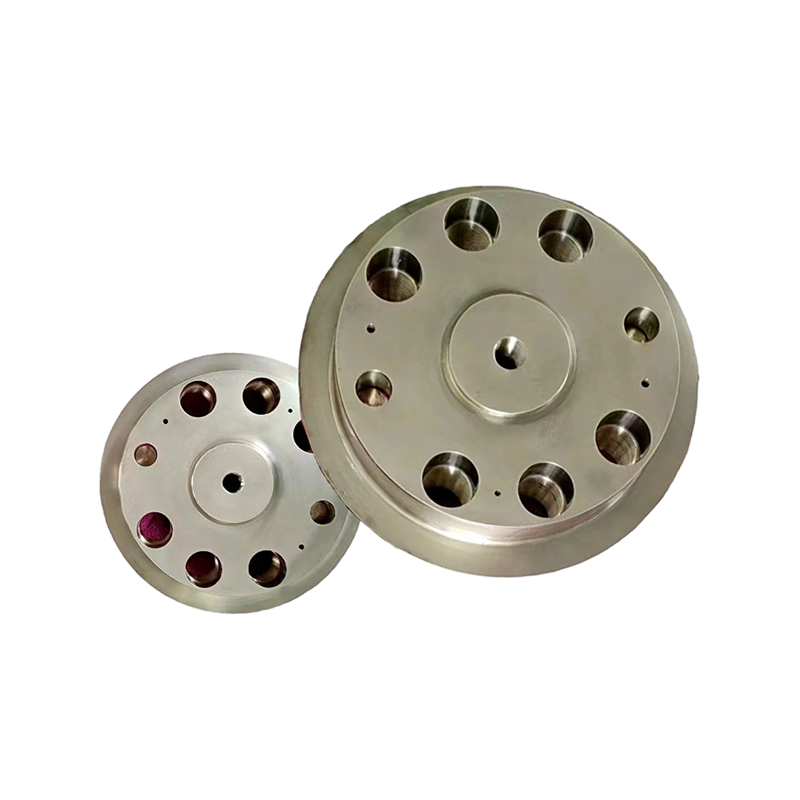
The primary function of the Propeller Blade Carrier is two-fold: it must support the immense centrifugal and hydrodynamic loads of the blades while simultaneously transmitting torque from the main shaft. For instance, in a large commercial container ship, the torque forces can exceed several hundred kilonewton-meters. The carrier ensures that these forces are distributed evenly, preventing localized stress fractures that could compromise the entire CPP system.
Technical Composition and Load-Bearing Design
To withstand the brutal environment of the open ocean, the Propeller Blade Carrier is manufactured from specialized high-quality alloy steel and premium stainless steel. These materials undergo rigorous heat treatment processes to enhance their fatigue resistance. In heavy-duty offshore engineering vessels, where frequent pitch changes are required for dynamic positioning, the carrier must manage constant mechanical cycling without deformation.
Key Material Properties for CPP Components
The selection of materials for a Propeller Blade Carrier is not arbitrary. Engineers prioritize a balance of tensile strength and ductility. The following table illustrates the typical performance metrics expected from high-tier carrier components:
| Material Feature | Standard Requirement | Operational Benefit |
|---|---|---|
| Yield Strength | > 550 MPa | Prevents structural warping under load |
| Corrosion Resistance | High (Ni-Al Bronze/Stainless) | Extends dry-docking intervals |
| Surface Hardness | 280-320 HBW | Reduces wear on slider interfaces |
Precision Machining and Dynamic Adjustment Mechanism
A Propeller Blade Carrier must operate with surgical precision. Utilizing advanced CNC machining technology, the carrier is shaped to micrometer-level tolerances. This ensures an exact match with the CPP blades, pistons, and sliders. Any deviation in machining could lead to "pitch slop," where the blades do not respond uniformly to hydraulic commands, resulting in vibration and potential bearing damage.
The dynamic adjustment capability is the standout feature of this component. Under the command of the ship's bridge, a hydraulic piston moves an internal slider. The Propeller Blade Carrier translates this linear motion into rotational motion. By rotating the angle of the carrier, the pitch of the blade is changed instantly. This allows a warship to transition from full ahead to full astern without changing the direction of engine rotation, providing unmatched maneuverability in tight corridors or combat scenarios.
Maintenance, Modular Design, and Longevity
Marine operators are increasingly focused on reducing "Total Cost of Ownership" (TCO). The Propeller Blade Carrier facilitates this through a modular design. Instead of replacing an entire hub assembly, the carrier and its associated bolts can be inspected and serviced independently. This is particularly advantageous for commercial fleets that operate on tight schedules.
Key Maintenance Advantages:
- Specialized anti-corrosion coatings reduce the frequency of surface polishing and barnacle removal.
- Simplified bolt-on connections allow for faster blade replacements during emergency dry-docking.
- High-strength alloy materials ensure the carrier often outlasts the vessel's initial 10-year service life cycle.
In real-world applications, such as on offshore engineering vessels, the ability to perform rapid maintenance on the Propeller Blade Carrier can save operators upwards of $50,000 per day in avoided downtime. The precision-machined interfaces ensure that friction loss is minimized, which directly translates to a 2-3% improvement in propulsion efficiency compared to worn or inferior components.
Frequently Asked Questions (FAQ)
How does the Propeller Blade Carrier change the pitch?
The carrier is connected to a hydraulic piston via a slider mechanism. When the piston moves, the slider forces the Propeller Blade Carrier to rotate on its axis, which in turn rotates the attached blade to the desired angle.
What materials are best for a Propeller Blade Carrier in saltwater?
High-strength stainless steel and specifically treated alloy steels are preferred. These materials offer the necessary corrosion resistance and mechanical strength to handle the galvanic environment of the ocean.
Can the carrier be repaired, or must it be replaced?
Depending on the wear level, carriers can often be refurbished through precision grinding and re-coating. However, if structural cracks are detected during ultrasonic testing, replacement is required to ensure maritime safety.
Is the Propeller Blade Carrier compatible with all CPP models?
While the modular design makes them adaptable, each Propeller Blade Carrier is typically custom-machined or selected to match the specific dimensions and torque requirements of the vessel's CPP system.
PREV:Why the 56M Engineering Ship Fixed Pitch Propeller is the Top Choice for High-Load Marine Operations
NEXT:How Does the 30M Patrol Ship Fixed Pitch Propeller Optimize High-Speed Interception and Stealth?
NEXT:How Does the 30M Patrol Ship Fixed Pitch Propeller Optimize High-Speed Interception and Stealth?
Interested in working together or need more info?
Related products
Get in Touch Now!
We're Here to Assist with
All Your Requirements
© Copyright Zhenjiang Jinye Propeller Co.,Ltd. All Rights Reserved. China Marine Copper Propeller Manufacturers Custom Marine Propeller Factory
